Telegram Mini Apps: What Businesses Need to Know in 2026
Complete guide to Telegram Mini Apps for businesses. Learn how to build, integrate, and leverage these powerful tools for customer engagement and growth.

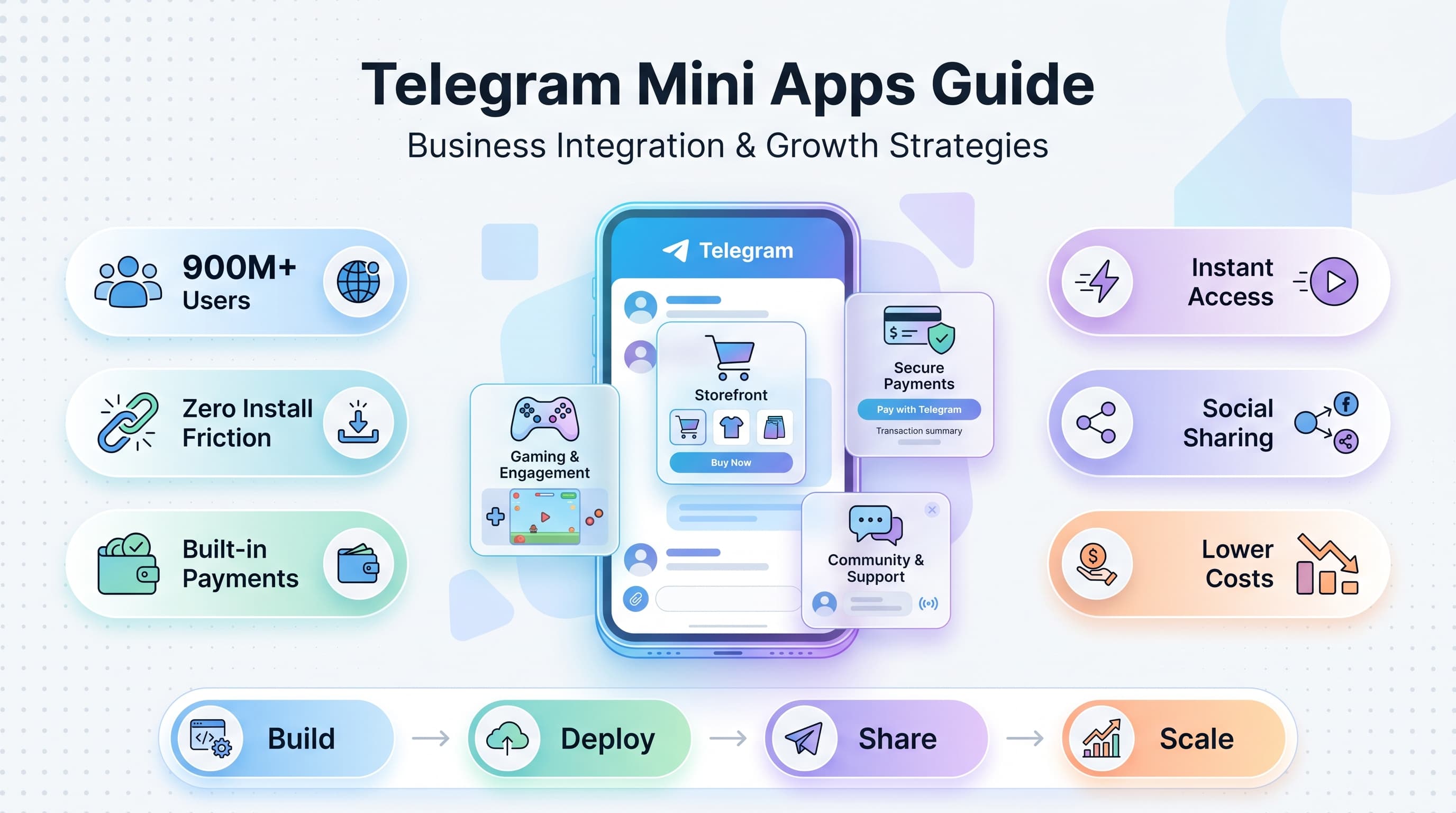
Telegram Mini Apps are changing how businesses connect with their customers. These lightweight applications run directly inside Telegram, giving businesses a direct line to over 900 million active users without requiring separate app downloads. Try our Telegram scheduling.
See It in Action
This is what scheduling a Telegram post looks like in Schedulala
But what exactly are Telegram Mini Apps, and why should your business care? More importantly, how can you use them to grow your customer base and boost engagement in 2026? See our our guide on telegram polls and guide.
Try Schedulala for free
Schedule posts to Bluesky, Twitter, and 8 other platforms from one dashboard.
Get started for free→What are Telegram Mini Apps
Telegram Mini Apps are web applications that run inside Telegram's interface. Think of them as mini websites that users can access without leaving their chat app. They're built using standard web technologies like HTML, CSS, and JavaScript, but they integrate seamlessly with Telegram's ecosystem. Learn more about telegram analytics track your.
Unlike traditional mobile apps that require downloads from app stores, Mini Apps launch instantly when users click a link or button. This removes the biggest barrier to user adoption: the friction of downloading and installing new software. Try our telegram engagement tips get.
Key characteristics of Telegram Mini Apps
- Run directly inside Telegram's interface
- Built with standard web technologies
- No installation required
- Access to Telegram's user data (with permission)
- Support payments through Telegram's system
- Can send notifications through Telegram
The technology launched in 2021 but gained serious traction in 2023 when major brands started building Mini Apps for e-commerce, customer service, and user engagement. By 2026, they've become a standard tool for businesses looking to reach Telegram's massive user base. Try our telegram line break generator.
Why businesses should consider Telegram Mini Apps
The numbers tell a compelling story. Telegram has over 900 million monthly active users, with particularly strong adoption in markets like Russia, Eastern Europe, the Middle East, and parts of Asia. But beyond raw user numbers, Mini Apps offer unique advantages that traditional mobile apps and websites can't match. See our telegram font generator guide.
1. Zero installation friction
The biggest advantage is obvious: users don't need to download anything. When someone shares your Mini App link in a chat, recipients can try your service immediately. This removes the biggest conversion killer in mobile marketing.
Traditional app marketing involves convincing users to leave their current app, go to an app store, read reviews, download a large file, and then return to what they were doing. Mini Apps skip all of that.
2. Built-in payment system
Telegram's payment system handles transactions directly within Mini Apps. Users can pay with saved payment methods without entering card details repeatedly. The system supports major payment processors and cryptocurrencies in supported regions.
For businesses, this means faster checkout processes and potentially higher conversion rates. The payment flow stays within Telegram's trusted interface, which users are already comfortable with.
3. Social sharing built-in
Every Mini App can be shared instantly in any Telegram chat. Users can send your app to friends, family, or groups with a single tap. This creates organic distribution channels that traditional apps struggle to replicate.
Some successful Mini Apps have grown primarily through word-of-mouth sharing within Telegram communities and channels.
4. Access to Telegram's ecosystem
Mini Apps can integrate with Telegram bots, channels, and groups. They can access user profile information (with permission), send messages, and even initiate payments. This level of integration creates seamless user experiences.
Businesses can use this to create sophisticated workflows that combine automated messaging, user interactions, and transactions all within Telegram's interface.
Types of businesses using Mini Apps successfully
Telegram Mini Apps work particularly well for certain types of businesses and use cases. Understanding where they excel helps determine if they're right for your business model.
E-commerce and retail
Online stores use Mini Apps to create streamlined shopping experiences. Customers can browse products, read reviews, and make purchases without leaving Telegram. The built-in payment system makes checkout particularly smooth.
Fashion brands have found success by creating Mini Apps that let users browse catalogs and place orders directly from Telegram channels where they share new arrivals and style content.
Food delivery and restaurants
Restaurants create Mini Apps for ordering and delivery. Users can view menus, customize orders, and track delivery status. The social aspect works well here since people often order food in groups and can share menu links in group chats.
Some restaurants integrate their Mini Apps with location services to show delivery times and availability based on the user's area.
Gaming and entertainment
Simple games and entertainment apps perform well as Mini Apps. The easy sharing mechanism helps games grow organically when users share high scores or challenge friends.
Trivia games, puzzle apps, and social gaming experiences have found particular success in the Mini App format.
Financial services
Payment services, cryptocurrency exchanges, and financial tools use Mini Apps to provide quick access to account information and transactions. The integration with Telegram's existing payment infrastructure makes financial Mini Apps particularly powerful.
Some services let users check balances, make transfers, or trade cryptocurrencies directly within Telegram conversations.
Customer service and support
Companies create Mini Apps for customer support that combine chatbot functionality with interactive interfaces. Users can track orders, submit support tickets, or access account information through the Mini App while still being able to chat with support agents.
This hybrid approach often provides better user experiences than pure chatbots or traditional support websites.
How to build a Telegram Mini App
Building a Telegram Mini App requires web development skills, but the process is more straightforward than creating native mobile apps. Here's what you need to know about the development process.
1. Set up your development environment
Start by creating a bot through Telegram's BotFather. This bot will serve as the container for your Mini App. You'll need to configure the bot with basic information and obtain an API token.
Next, set up your web development environment. Mini Apps are essentially web applications, so you'll use familiar tools like HTML, CSS, JavaScript, and any framework you prefer (React, Vue, vanilla JS, etc.).
2. Understand the Mini App API
Telegram provides a JavaScript API that lets your Mini App interact with Telegram's interface. This includes functions to access user information, handle payments, send data back to chats, and control the app's appearance.
The API also handles device-specific features like haptic feedback, theme detection, and closing the Mini App. Spend time reading Telegram's official documentation to understand these capabilities.
3. Design for the Mini App interface
Mini Apps run within Telegram's interface, which means you need to design for a constrained space. The app appears in a modal-like overlay, so prioritize essential functions and keep navigation simple.
Consider Telegram's design language and color schemes. Users expect Mini Apps to feel integrated with Telegram, not like separate websites. Test your design on different devices and screen sizes.
4. Implement core functionality
Build your Mini App's core features using web technologies. Focus on fast loading times since users expect instant responses. Optimize images, minimize JavaScript bundles, and consider using a Content Delivery Network (CDN).
Implement error handling gracefully. If your Mini App fails to load or encounters errors, users will likely abandon it immediately since they have no investment in a downloaded app.
5. Add Telegram-specific features
Integrate features that take advantage of Telegram's ecosystem. This might include sharing results to chats, accessing user profile information, or implementing Telegram's payment system.
Test these integrations thoroughly since they're what differentiate your Mini App from a regular website.
6. Deploy and test
Host your Mini App on a reliable web server with HTTPS enabled (required for Mini Apps). Configure your bot to point to your Mini App URL and test the complete user experience.
Test on different devices and with different Telegram clients (mobile, desktop, web) to ensure consistent functionality.
Marketing and distribution strategies
Building a great Mini App is only half the challenge. Getting users to discover and use your Mini App requires different strategies than traditional app marketing.
Leverage Telegram channels and groups
Create or partner with relevant Telegram channels in your industry. Many successful Mini Apps grow by providing value to existing Telegram communities rather than trying to attract users from outside the platform.
Join groups where your target audience is already active. Share your Mini App when it provides genuine value to ongoing conversations, but avoid spamming groups with promotional content.
Design for viral sharing
Build sharing mechanisms directly into your Mini App experience. Games can share high scores, shopping apps can share product discoveries, and productivity apps can share completed tasks or achievements.
Make sharing feel natural and valuable to users rather than forced. The best viral Mini Apps create content worth sharing as part of their core functionality.
Integrate with existing business channels
If you already have customers on other platforms, introduce them to your Telegram Mini App through email campaigns, website banners, or social media posts. Highlight the convenience advantages of using your service within Telegram.
Create incentives for customers to try your Mini App, such as exclusive features, discounts, or faster service when accessed through Telegram.
Partner with influencers and content creators
Find Telegram channel owners and content creators who reach your target audience. Many Telegram influencers are open to partnerships, especially for Mini Apps that provide genuine value to their followers.
Consider creating Mini Apps specifically designed for influencer partnerships, such as tools that help content creators engage with their audiences or manage their channels.
Common challenges and how to solve them
Businesses often encounter specific challenges when building and launching Telegram Mini Apps. Understanding these issues ahead of time helps you avoid common pitfalls.
Limited discovery mechanisms
Unlike app stores, Telegram doesn't have a central directory for Mini Apps. Users discover them through sharing, channels, or direct links. This makes organic growth more challenging but also means less competition for attention.
Solution: Focus on creating Mini Apps that naturally encourage sharing and word-of-mouth growth. Build features that are inherently social or provide value when shared with others.
Platform dependency
Your Mini App's success depends entirely on Telegram's platform. Changes to Telegram's policies, features, or user base directly impact your business. This creates more risk than having your own independent app.
Solution: Treat your Mini App as one channel in a diversified digital strategy. Collect user contact information when possible to maintain relationships outside of Telegram.
Technical limitations
Mini Apps have constraints that native apps don't face. They can't access all device features, storage is limited, and performance depends on web technologies rather than native code.
Solution: Design your Mini App around these constraints rather than fighting them. Focus on features that work well in a web environment and don't require extensive device access.
User retention challenges
Since users don't install Mini Apps, they may forget about them more easily than traditional apps. There's no app icon on their home screen to remind them of your service.
Solution: Use Telegram's messaging capabilities to maintain engagement. Send useful updates through your bot, and create reasons for users to return to your Mini App regularly.
Measuring success and analytics
Tracking Mini App performance requires different metrics than traditional web or mobile apps. The integrated nature of Mini Apps within Telegram creates unique measurement opportunities and challenges.
Key metrics to track
Activation rate: The percentage of users who interact meaningfully with your Mini App after their first visit. This might mean completing a purchase, creating an account, or using a key feature.
Sharing rate: How often users share your Mini App with others. This is more important for Mini Apps than traditional apps since sharing is the primary growth mechanism.
Return visit rate: Since users don't install Mini Apps, tracking how many users return is crucial for understanding retention and long-term value.
Session duration: How long users spend in your Mini App during each visit. Longer sessions often indicate higher engagement and satisfaction.
Analytics implementation
Use web analytics tools like Google Analytics, but configure them for the Mini App environment. Set up custom events to track Mini App-specific actions like sharing, payments through Telegram, and interactions with Telegram features.
Telegram provides some built-in analytics through the Bot API, including user interaction data and message statistics. Combine this with your web analytics for a complete picture.
User feedback collection
Implement feedback mechanisms within your Mini App, but keep them lightweight. Users are less likely to complete long surveys in a Mini App environment than they would be in a dedicated app or website.
Use Telegram's messaging features to follow up with users who have had negative experiences. The direct communication can help resolve issues and improve your service.
Future outlook for Telegram Mini Apps
The Mini App ecosystem is still evolving rapidly. Understanding current trends and future possibilities helps businesses make informed decisions about investing in Mini App development.
Telegram continues to expand Mini App capabilities with new API features, better payment integration, and improved development tools. The platform is actively courting developers and businesses to build on their ecosystem.
Emerging trends in 2026
AI integration: More Mini Apps are incorporating AI features like chatbots, personalization, and automated content generation. The combination of AI and Telegram's messaging platform creates powerful user experiences.
Cryptocurrency features: With Telegram's strong presence in crypto communities, Mini Apps increasingly integrate blockchain features, NFT functionality, and cryptocurrency transactions.
Business automation: Companies use Mini Apps to automate customer service, sales processes, and internal workflows. The integration with Telegram's messaging makes these automations feel more personal than traditional chatbots.
Market expansion opportunities
Telegram is growing rapidly in markets where other messaging platforms face restrictions or competition. This creates opportunities for businesses to establish early presence in emerging markets through Mini Apps.
The platform is particularly strong in Eastern Europe, the Middle East, and parts of Asia where businesses might struggle to reach audiences through traditional app stores or social media platforms.
Try Schedulala for free
Schedule posts to Bluesky, Twitter, and 8 other platforms from one dashboard.
Get started for free→