YouTube Shorts vs TikTok: Which Platform Should You Choose in 2026?
YouTube Shorts vs TikTok compared head-to-head. Discover which short-form video platform fits your goals, audience, and content strategy in 2026.

Quick answer
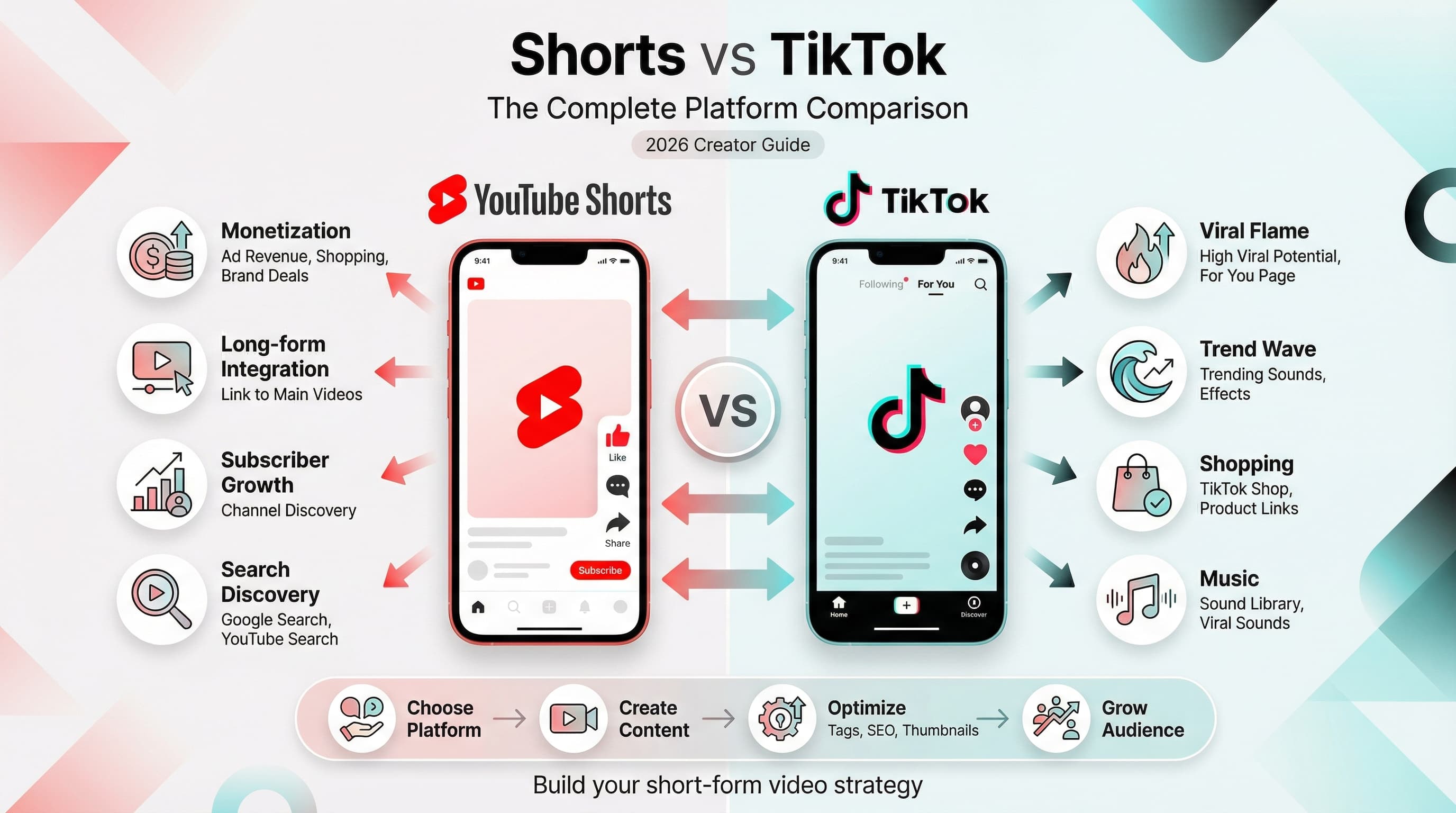
YouTube Shorts has better monetization and search longevity, while TikTok offers stronger virality and trend-driven discovery for new creators.
- •YouTube Shorts: 45% ad revenue share, content lives forever in search, 2B+ logged-in users monthly
- •TikTok: higher organic reach for new accounts, stronger trend culture, 1.5B monthly users
- •YouTube Shorts content continues getting views months after posting via search
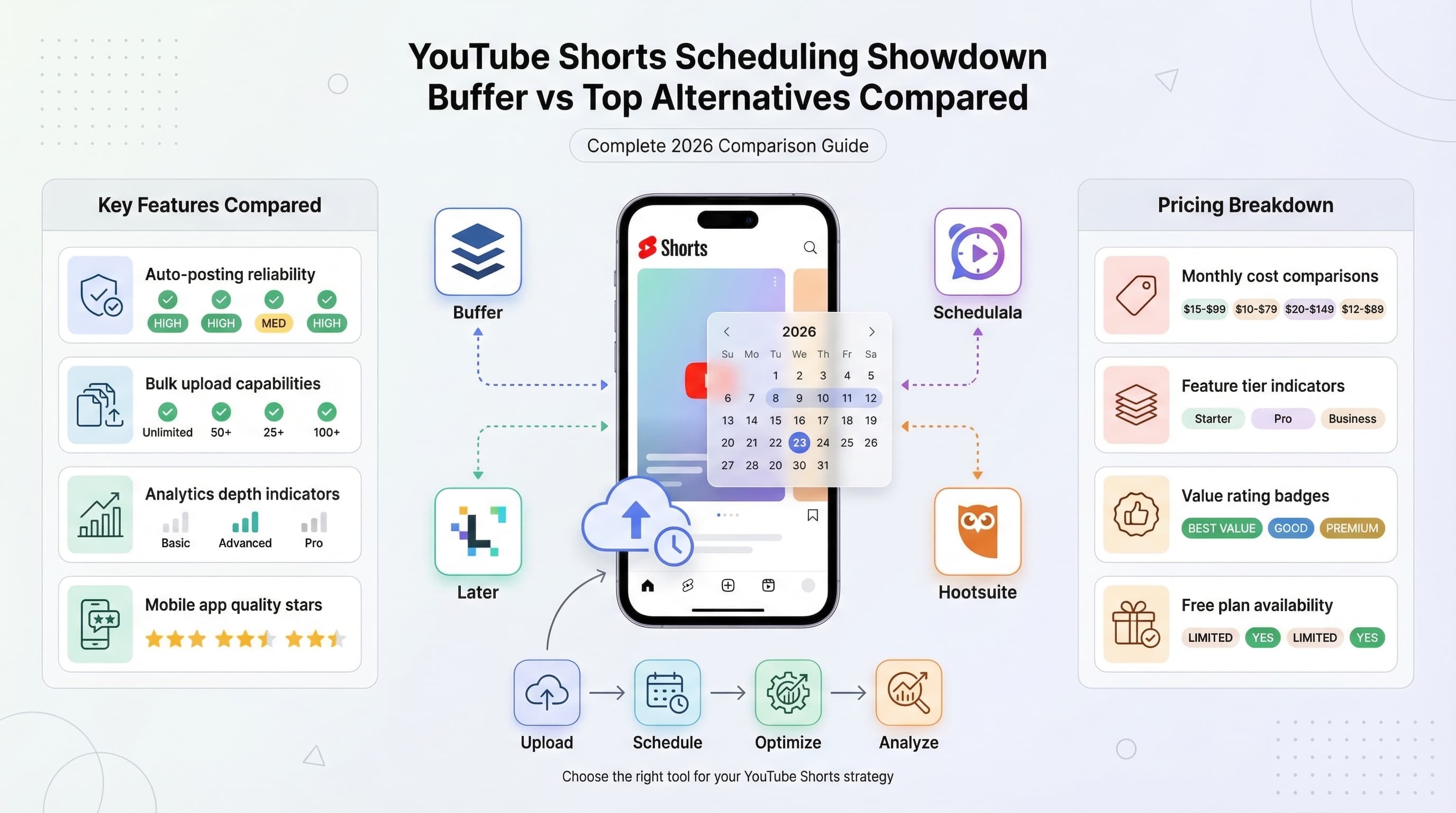
- •Schedule to both platforms with Schedulala for $9/month with unlimited posts
You have 60 seconds to capture someone's attention. Maybe less. The short-form video war is real, and you're caught in the middle of it.
TikTok pioneered the format. YouTube Shorts crashed the party with a billion-dollar creator fund. Now both platforms are fighting for the same eyeballs, the same creators, and the same advertising dollars.
So which one deserves your time and creative energy? The answer isn't as simple as "pick the bigger platform." Your choice depends on your goals, your audience, and how you want to build your presence online.
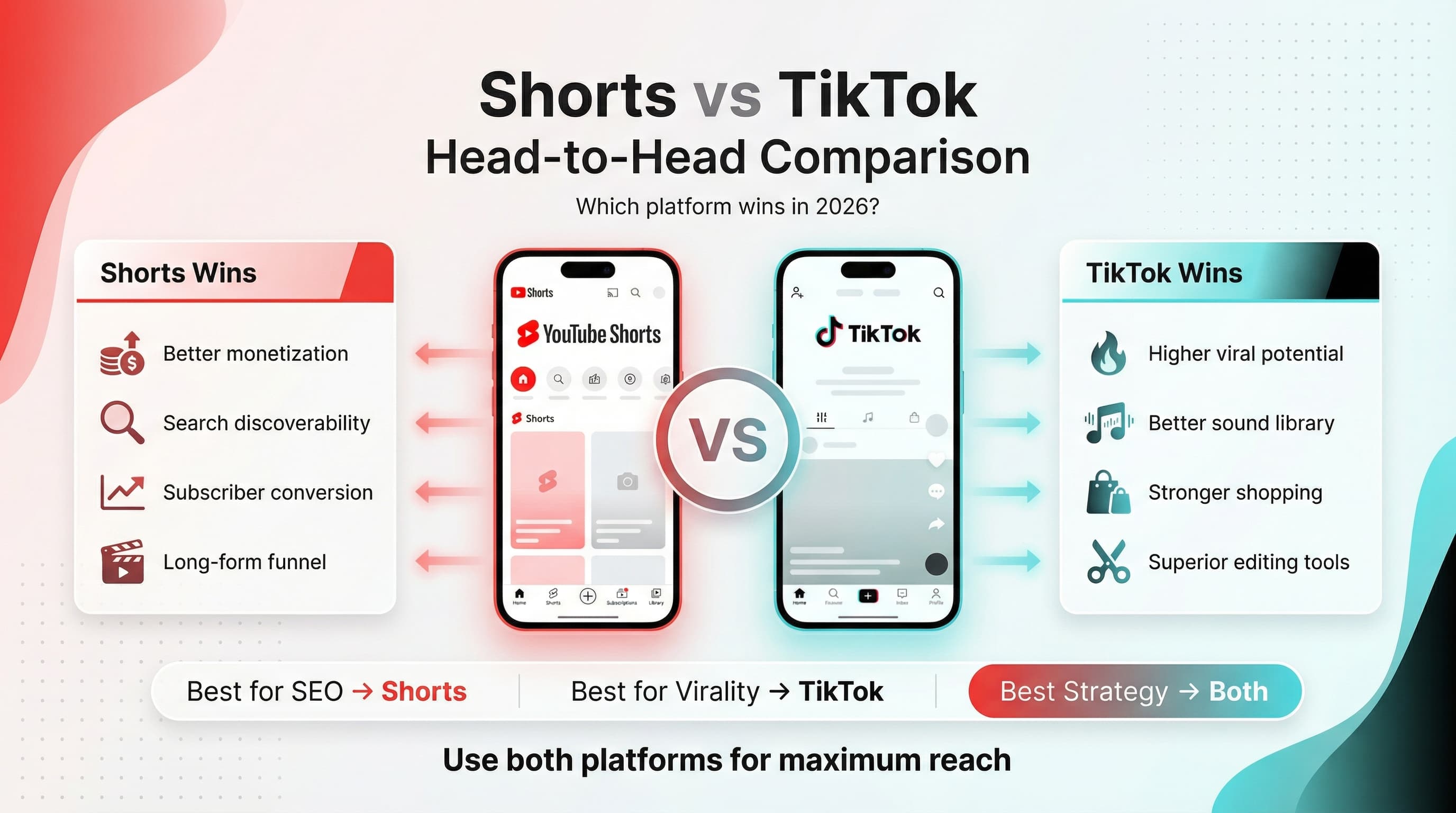
TikTok wins for viral potential and trend-driven content. YouTube Shorts wins for long-term growth and monetization. If you're serious about building a sustainable creator business, YouTube Shorts edges ahead. Check out scheduling across platforms. If you want maximum reach and cultural relevance right now, TikTok is hard to beat. The best strategy? Post to both, but prioritize based on your specific goals.
Try Schedulala for free
Schedule posts to Bluesky, Twitter, and 8 other platforms from one dashboard.
Get started for free→See It in Action
This is what scheduling YouTube Shorts looks like in Schedulala
Platform overview: what you're working with
Before we get into the weeds, let's establish what each platform actually offers. Both have evolved significantly since their launches, and the 2026 versions look quite different from where they started.
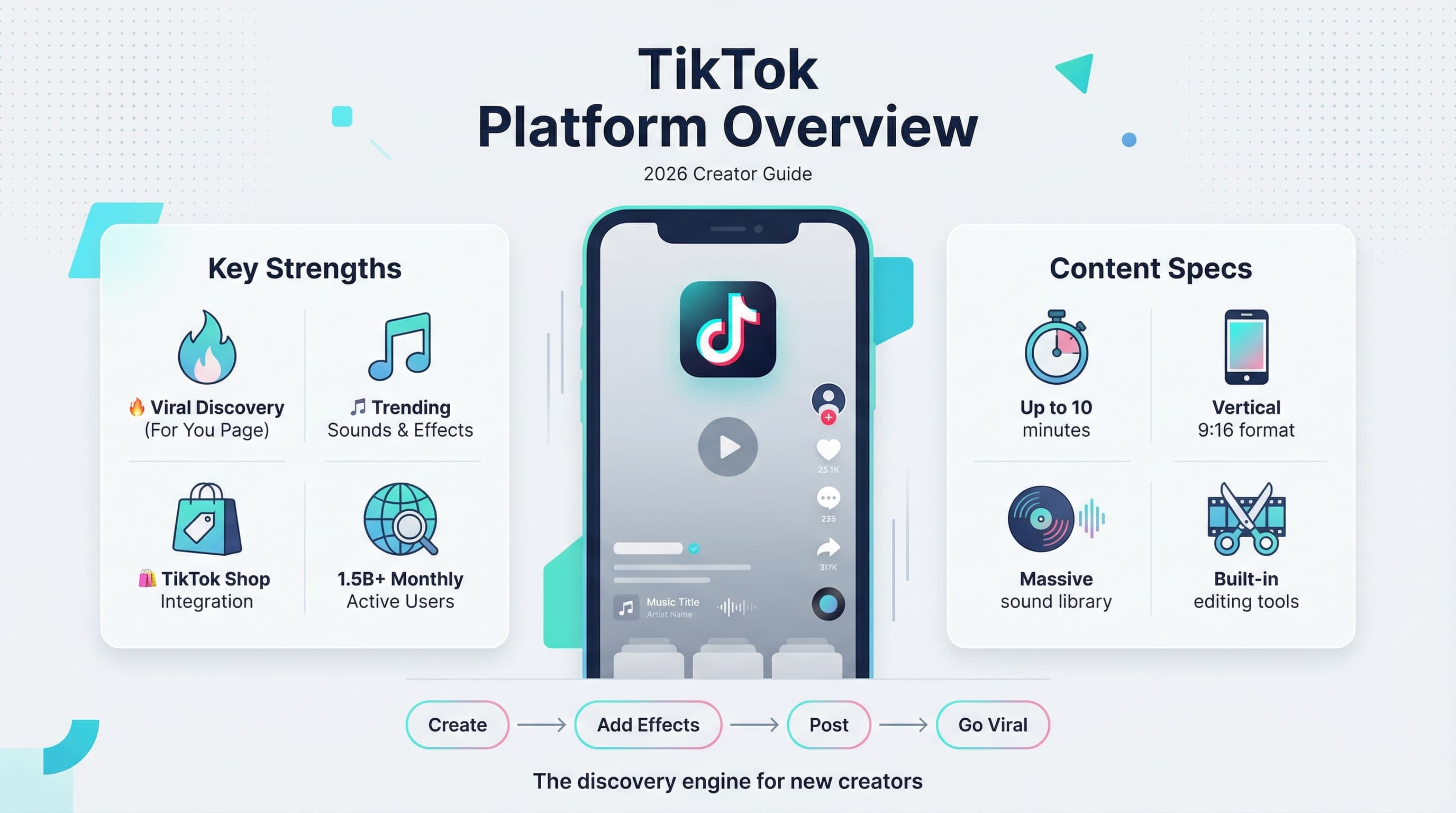
TikTok: the original short-form king
TikTok launched internationally in 2018 after merging with Musical.ly. Itdidn't invent short-form video, but it perfected it. The algorithm-driven For You Page became the gold standard for content discovery, and the platform's cultural influence is undeniable.
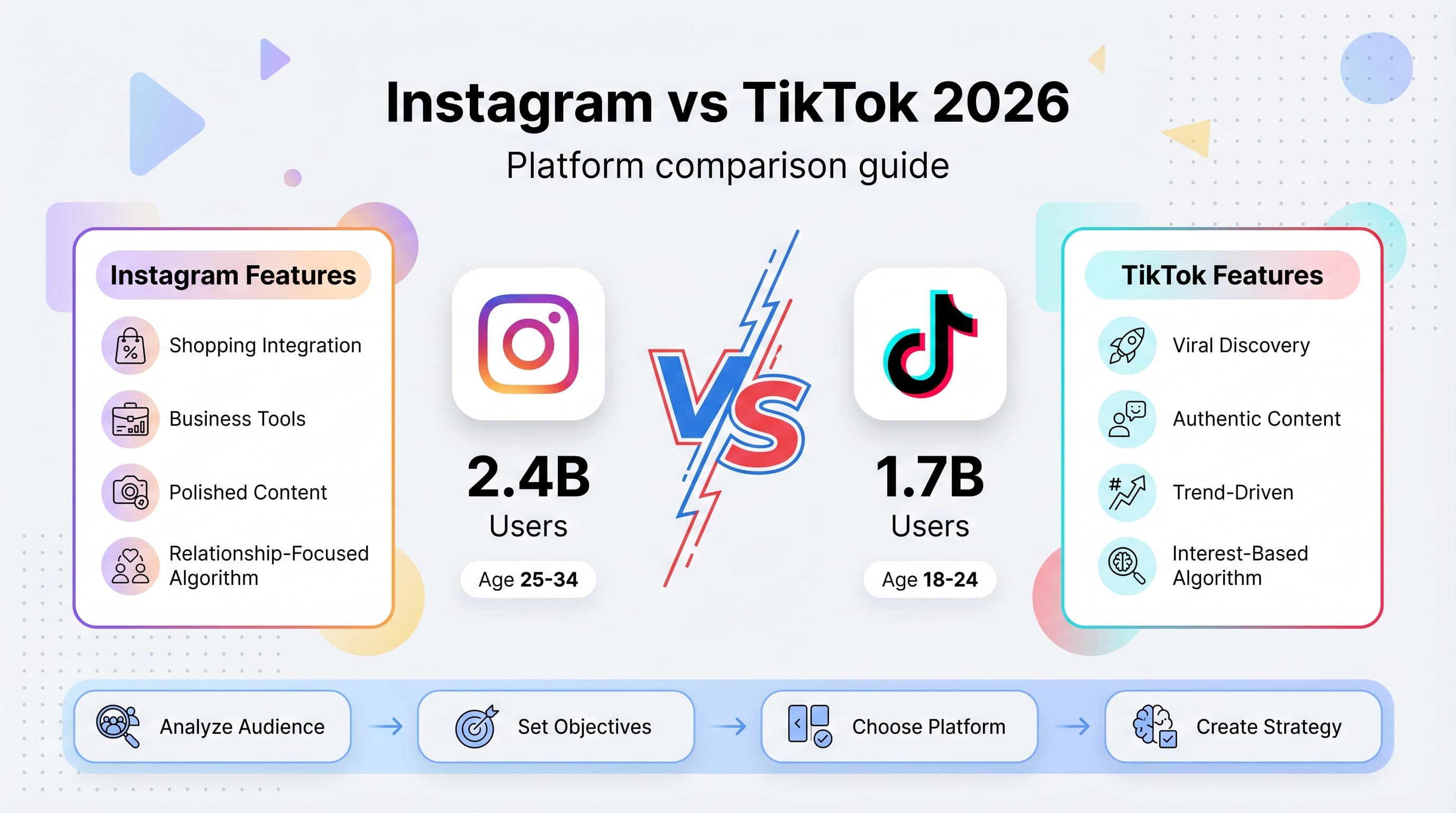
As of early 2026, TikTok boasts over 1.5 billion monthly active users globally. The platform has expanded beyond its Gen Z roots, with users aged 25-44 now representing the fastest-growing demographic. Videos can now run up to 10 minutes, though the sweet spot remains under 60 seconds for most creators.
TikTok's strength lies in its discovery engine. New creators can go viral overnight with zero followers. The platform rewards content quality over account size, which makes it incredibly appealing for newcomers who want fast results.
The monetization landscape has matured considerably. The Creator Fund (now called the Creativity Program) pays significantly better than it did in previous years, and brand partnerships remain the primary income source for most successful TikTokers. TikTok Shop has also become a major revenue driver for creators who sell products directly through the platform.
YouTube Shorts: the late bloomer with deep pockets
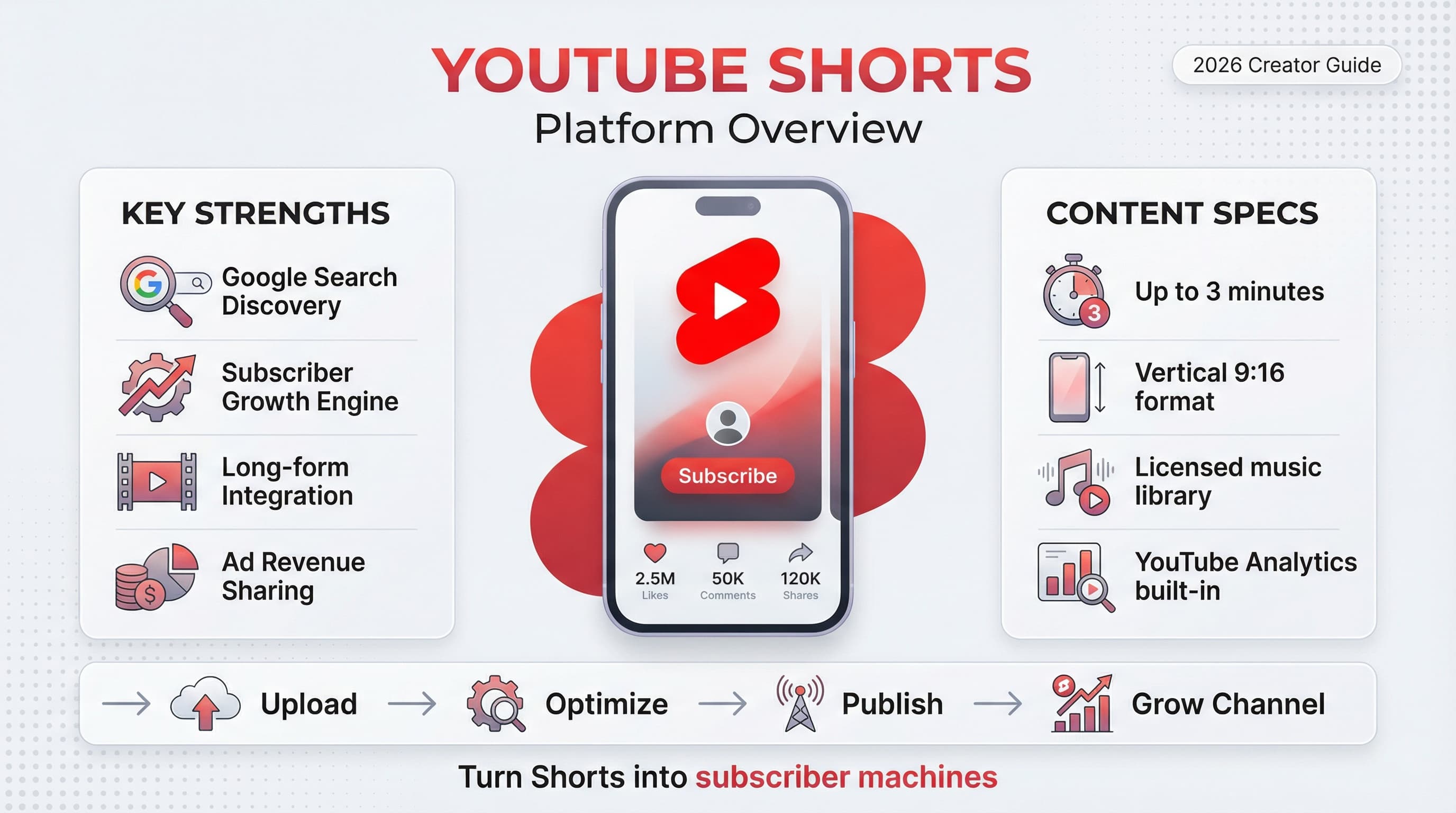
YouTube launched Shorts in September 2020 as a direct response to TikTok's explosive growth. If you're already posting Shorts, check out YouTube scheduling to save time. Critics dismissed it as a copycat feature. Those critics were wrong. By 2026, Shorts generates over 70 billion daily views and has become a legitimate standalone product.
YouTube's massive advantage is integration with the broader YouTube ecosystem. Shorts viewers can easily transition to your long-form content, subscribe to your channel, and become part of your community in ways that TikTok doesn't facilitate as naturally.
The platform now supports videos up to 3 minutes (increased from the original 60 seconds), though shorter content still performs best. YouTube's algorithm prioritizes watch time and engagement, similar to how it handles long-form content.
Monetization is where YouTube Shorts really shines. The revenue sharing model launched in 2023 has proven more lucrative than TikTok's Creator Fund for many mid-tier creators. You earn a percentage of ad revenue from ads shown between Shorts in the feed, which creates a more predictable income stream.
Head-to-head comparison: the numbers that matter
Let's cut through the marketing speak and look at what actually matters for creators. I've compiled data from platform reports, creator surveys, and industry analyses to give you the real picture.
| Criteria | TikTok | YouTube Shorts | Winner |
|---|---|---|---|
| Monthly Active Users | 1.5+ billion | 2+ billion (YouTube total) | TikTok (dedicated users) |
| Daily Views (Shorts/FYP) | ~50 billion | ~70 billion | YouTube Shorts |
| Average Watch Time | 95 minutes/day | ~70 minutes/day (YouTube total) | TikTok |
| Video Length | Up to 10 minutes | Up to 3 minutes | TikTok (flexibility) |
| Monetization (RPM) | $0.02-0.05 per 1K views | $0.04-0.08 per 1K views | YouTube Shorts |
| Discovery Potential | Very high | High | TikTok |
| Long-term Growth | Moderate | Very high | YouTube Shorts |
| Algorithm Transparency | Limited | Better (Creator Studio) | YouTube Shorts |
| Content Repurposing | Limited | Excellent (to long-form) | YouTube Shorts |
| Editing Tools | Excellent | Good | TikTok |
The numbers tell an interesting story. TikTok wins on engagement depth and content discovery. YouTube Shorts wins on monetization and ecosystem integration. Neither platform dominates across the board, which is exactly why this decision is so difficult for creators.
Discovery and algorithm: how each platform finds your audience
The algorithm is everything in short-form video. Your content quality matters less than whether the platform decides to show it to people. Understanding how each algorithm works gives you a significant advantage.
TikTok's recommendation engine
TikTok's algorithm remains the most aggressive content discovery system ever built. The For You Page serves content based on user behavior signals, not follower relationships. Every video gets tested with a small audience first, and performance in that initial test determines how widely it gets distributed.
The key signals TikTok uses include watch time (especially rewatch rate), comments, shares, and profile visits after viewing. Completion rate matters enormously. If viewers consistently watch your entire video and then replay it, the algorithm takes notice.
What makes TikTok special is the lack of follower dependency. A creator with 500 followers can outperform someone with 5 million if their content resonates better with test audiences. This democratization of reach is TikTok's killer feature for newcomers.
The downside? The algorithm is fickle. Viral success doesn't guarantee continued performance. Many creators experience boom-and-bust cycles where one video hits millions of views, and the next five barely crack a thousand. Building a stable audience on TikTok requires consistency over a long period.
YouTube Shorts algorithm mechanics
YouTube's Shorts algorithm operates similarly to TikTok's but with some important differences. The Shorts feed uses engagement signals to determine distribution, but YouTube also factors in your channel's overall performance and subscriber engagement.
Having an established YouTube channel with engaged subscribers gives you a meaningful advantage on Shorts. Your Shorts get shown to existing subscribers first, which can jumpstart engagement and signal to the algorithm that the content is worth promoting more broadly.
YouTube is more transparent about what works. Creator Studio provides detailed analytics on how viewers find your Shorts, retention curves, and traffic sources. You can see exactly when viewers drop off and adjust your content strategy accordingly.
The algorithm also rewards consistency more predictably than TikTok. Creators who post Shorts regularly tend to see steadier growth rather than the viral spikes and crashes common on TikTok. This predictability appeals to creators who prefer building sustainable momentum over chasing viral moments.
Monetization: where the money actually comes from
Let's talk about the reason most serious creators care about this comparison: getting paid. Both platforms have invested heavily in creator monetization, but the structures differ significantly.
TikTok monetization breakdown
TikTok's Creativity Program (the evolved Creator Fund) pays based on qualified video views. To participate, you need at least 10,000 followers, 100,000 video views in the last 30 days, and must be 18 or older. The rates have improved since the program launched, with most creators reporting $0.02 to $0.05 per 1,000 qualified views.
The math on direct payouts is rough. A video with 1 million views might earn $20 to $50. That's not enough to live on, even for creators posting daily. The real money on TikTok comes from brand deals, and this is where the platform excels.
TikTok's Creator Marketplace connects brands with creators for sponsored content. Rates vary wildly based on niche, engagement rate, and follower count, but mid-tier creators (100K to 500K followers) typically command $500 to $5,000 per sponsored post. Top creators in lucrative niches can earn $10,000+ per video.
TikTok Shop has emerged as a major income source for creators who sell products. You can schedule TikTok posts to stay consistent while focusing on sales. The platform takes a commission on sales, but the integration is seamless. Creators can showcase products directly in videos and live streams, with viewers purchasing without leaving the app. Some creators earn more from TikTok Shop than from all other monetization combined.
Live streaming also generates income through virtual gifts. Viewers purchase coins and send gifts during livestreams, which creators convert to real money (minus TikTok's 50% cut). Top live streamers earn thousands per session, though this requires significant time investment and works best for certain content types.
YouTube Shorts monetization structure
YouTube's Shorts monetization launched in February 2023 and has matured into a more creator-friendly system than TikTok's. Eligible creators (meeting Partner Program requirements) earn a share of ad revenue from ads displayed between Shorts in the feed.
Here's how it works: YouTube pools all Shorts ad revenue and distributes it based on view share. If your Shorts account for 0.1% of total Shorts views in a month, you get 0.1% of the creator pool. The creator share is 45% of total ad revenue, with YouTube keeping 55%.
The effective RPM (revenue per thousand views) for Shorts ranges from $0.04 to $0.08 for most creators, roughly double TikTok's rates. A video with 1 million views might earn $40 to $80. Still not life-changing money on its own, but the rates are consistently better.
The bigger monetization advantage is the YouTube ecosystem. Shorts can drive viewers to your long-form content, which pays significantly higher RPMs (often $2 to $10 per thousand views depending on niche). A successful Shorts strategy that converts viewers to long-form subscribers creates a compounding monetization effect that TikTok can't match. Schedule your YouTube Shorts to keep that pipeline flowing.
YouTube also offers channel memberships, Super Chat during premieres, merchandise shelf integration, and brand partnership opportunities. The platform's established advertiser relationships mean higher brand deal rates compared to TikTok for many creators.
Audience demographics: who's actually watching
Your ideal audience might heavily favor one platform over the other. Understanding demographic differences helps you fish where the fish are.
TikTok audience composition
TikTok's user base has aged up significantly since its early days as a teen-dominated platform. Current demographics show roughly 25% of users aged 18-24, 22% aged 25-34, 20% aged 35-44, and 33% aged 45+. The platform is no longer just for Gen Z, though that generation remains highly engaged.
Gender distribution skews slightly female at about 54% to 46%. Geographic distribution is heavily weighted toward the US, Indonesia, Brazil, and Mexico, with strong growth in European markets.
TikTok users are discovery-oriented. They open the app to be entertained and surprised, not necessarily to follow specific creators. This creates opportunities for new accounts but makes building loyal audiences more challenging.
Engagement patterns favor entertainment, education, and trend participation. Users spend an average of 95 minutes daily on the platform, consuming content in rapid-fire sessions. The median session involves watching 30+ videos, which means attention spans are short but overall consumption is high.
YouTube Shorts audience profile
YouTube's overall audience skews older and more male than TikTok's. For Shorts specifically, the audience is younger than YouTube's average but still older than TikTok's core demographic. Most Shorts viewers fall between 18 and 44, with relatively balanced gender distribution.
The key difference is intent. YouTube users often arrive with specific interests or creators in mind. The Shorts feed captures browsing behavior, but users are more likely to explore a creator's channel after watching compelling Shorts content.
YouTube's global reach exceeds TikTok's, with particularly strong presence in markets where TikTok faces restrictions or hasn't achieved dominance. India (where TikTok is banned) represents a massive YouTube audience that Shorts can reach exclusively.
Educational content performs exceptionally well on YouTube Shorts. The platform's audience is conditioned to learn from video content, which creates opportunities for tutorials, explainers, and informational content that might struggle on TikTok's entertainment-first platform.
| Demographic Factor | TikTok | YouTube Shorts |
|---|---|---|
| Core Age Group | 18-34 (47%) | 25-44 (est. 45%) |
| Gender Split | 54% female | ~50/50 |
| Daily Time Spent | 95 minutes | 70 minutes (YouTube total) |
| Primary Use Case | Entertainment/Discovery | Search + Browse |
| Purchase Intent | High (impulse) | High (researched) |
| Content Preference | Trends, entertainment | Education, how-to |
Content creation experience: tools and workflow
The actual experience of creating content differs between platforms. If you're going to post consistently (which you should), the creation workflow matters more than you might think.
Creating on TikTok
TikTok's editing tools remain the industry standard for in-app creation. The filters, effects, transitions, and audio library are unmatched. Creators can produce polished content entirely within the app, which lowers the barrier to entry significantly.
The audio library is TikTok's secret weapon. Trending sounds drive discovery, and the platform makes it easy to find what's popular and incorporate it into your content. Audio is so central to TikTok culture that soundless content rarely performs well.
Green screen effects, duets, stitches, and other interactive features encourage creative collaboration and trend participation. These features blur the line between consuming and creating content, which keeps users engaged longer.
The downside is reliance on the app. TikTok doesn't play well with externally edited content in some cases, and the compression can degrade quality. Creators who want cinematic production values sometimes struggle with the platform's native aesthetic.
Creating on YouTube Shorts
YouTube's Shorts creation tools have improved dramatically but still lag behind TikTok's. The basics are covered: text overlays, filters, speed controls, and audio library access. But the creative options feel more limited.
Where YouTube excels is accommodating externally edited content. If you produce Shorts using professional editing software, YouTube handles the upload and compression better than TikTok. This matters for creators who prioritize production quality.
The audio library has grown substantially, though it still can't match TikTok's cultural relevance. Trending sounds on TikTok become trending sounds on Shorts with a delay, so Shorts creators often feel like they're following rather than setting trends.
Integration with YouTube Studio provides powerful analytics and scheduling capabilities. You can analyze performance in detail, understand your audience, and plan content more strategically. For creators who approach content as a business, these tools matter.
Content strategy differences: what works where
The same video won't perform identically on both platforms. Understanding what resonates with each audience helps you optimize (or decide to create platform-specific content).
What crushes it on TikTok
Trend participation is the fastest path to visibility on TikTok. Jumping on trending sounds, challenges, and formats while they're still hot signals to the algorithm that your content is relevant. The window is tight though. Most trends peak within 3-5 days, so speed matters.
Personality-driven content outperforms polished production. TikTok users want authenticity (or at least the appearance of it). Relatable, slightly messy content often outperforms corporate-feeling production. Imperfection humanizes creators.
Storytelling hooks that create suspense or curiosity drive watch time. "Wait for it" and "Watch until the end" content capitalizes on TikTok's swipe-away culture. If viewers feel like they'll miss something by leaving, they stay.
Niche content works surprisingly well. The algorithm is good at finding audiences for specific interests, from obscure hobbies to professional expertise. Don't assume you need broad appeal to succeed.
Content types that consistently perform include reaction videos, day-in-the-life content, quick tutorials, hot takes, and behind-the-scenes glimpses. Comedy and entertainment remain the top categories, but educational content has grown substantially.
What performs on YouTube Shorts
Educational content dominates YouTube Shorts in a way it doesn't on TikTok. How-to videos, quick tips, and explainers tap into YouTube's search-and-learn culture. Viewers come to YouTube expecting to gain something, and Shorts that deliver value get rewarded.
Teaser content for longer videos works exceptionally well. Use Shorts to showcase the most interesting moments from your long-form content, then encourage viewers to watch the full video. This content-to-content pipeline is uniquely powerful on YouTube.
Satisfying content (think process videos, transformations, and compilations) generates high completion rates. YouTube's algorithm rewards videos that viewers watch to the end without the "suspense" tactics that work on TikTok.
Consistency in format matters more on YouTube. Creating a recognizable series or format helps build subscriber relationships. TikTok rewards individual video performance; YouTube rewards channel commitment.
Original content outperforms trends on Shorts. While trend participation can work, YouTube's algorithm doesn't prioritize trending audio the way TikTok's does. Evergreen content that stays relevant has longer shelf life on YouTube.
| Content Type | TikTok Performance | YouTube Shorts Performance |
|---|---|---|
| Trend/Challenge Videos | Excellent | Moderate |
| How-to/Tutorial | Good | Excellent |
| Entertainment/Comedy | Excellent | Good |
| Long-form Teasers | Moderate | Excellent |
| Day-in-the-Life | Excellent | Good |
| Product Reviews | Good | Excellent |
| Behind-the-Scenes | Excellent | Good |
| Storytelling | Excellent | Good |
| Educational/Info | Good | Excellent |
Growth timeline: how long does success take?
Patience is required on both platforms, but the growth curves look different. Setting realistic expectations helps you avoid burnout and make informed decisions.
TikTok growth trajectory
TikTok offers the fastest path to viral moments. New creators can hit millions of views on their first week if the content resonates. This explosive potential is unmatched by any other platform.
The flip side is instability. Viral success doesn't translate to guaranteed future performance. Many creators experience their biggest video early, then struggle to recapture that magic. The algorithm's willingness to show new content to everyone cuts both ways.
Building a sustainable audience (one that consistently engages with your content) typically takes 6-12 months of regular posting. Most successful creators post at least once daily, with many posting 3+ times per day during their growth phase.
Follower milestones on TikTok come faster than other platforms but mean less. A creator with 100K followers might get fewer views than someone with 10K if their recent content underperforms. Focus on engagement rates and view consistency rather than follower counts.
YouTube Shorts growth expectations
YouTube Shorts growth tends to be slower but more stable. Viral moments happen, but they're less common than on TikTok. The algorithm favors creators who've demonstrated consistent quality over time.
The connection to the broader YouTube ecosystem changes the growth equation. Shorts viewers who subscribe to your channel become long-term assets. They'll see your future Shorts and long-form content, creating compounding returns on your audience-building efforts.
Most creators need 3-6 months of consistent posting before seeing meaningful traction on Shorts. Posting 3-7 Shorts per week seems to be the sweet spot for most creators, balanced against quality and sustainability.
The payoff comes in channel growth rather than individual video performance. Creators who use Shorts strategically often double or triple their subscriber growth rate compared to long-form only strategies. Those subscribers become the foundation for monetization through multiple revenue streams.
Platform stability and future outlook
The elephant in the room: TikTok's regulatory challenges. This matters for your long-term strategy.
TikTok's regulatory situation
TikTok has faced ongoing scrutiny from governments worldwide, particularly in the United States. Ban threats, forced divestitures, and data security concerns have created uncertainty for creators who've built their audiences on the platform.
As of 2026, TikTok continues operating in most markets, but the regulatory environment remains unpredictable. Creators who've built exclusively on TikTok have experienced anxiety about potential disruptions that could eliminate their audience overnight.
The smart approach is diversification. Even if TikTok remains available indefinitely, having your audience spread across multiple platforms reduces platform-specific risk. Many successful TikTok creators now actively build presence on YouTube, Instagram, and other platforms.
YouTube's position
YouTube benefits from Google's massive infrastructure, advertiser relationships, and regulatory stability. The platform isn't going anywhere, and Shorts has become a permanent part of YouTube's strategy rather than an experimental feature.
YouTube continues investing heavily in Shorts, with regular feature updates, improved creator tools, and enhanced monetization options. The platform's commitment to competing with TikTok suggests long-term support for short-form creators.
The stability extends to monetization. YouTube's ad business is mature and relatively predictable. Creators can build financial plans around YouTube income in ways that TikTok's volatile creator fund doesn't support.
Who should choose what: specific recommendations
Let's get specific about which platform fits different creator profiles and goals.
Choose TikTok if you...
- Want maximum exposure and viral potential in the shortest time possible
- Create entertainment-focused, personality-driven content
- Target audiences under 35, especially Gen Z
- Thrive on trend participation and fast-paced content cycles
- Plan to monetize primarily through brand deals and product sales
- Have time to post multiple times daily during your growth phase
- Want to build a personal brand centered on relatability and authenticity
- Are comfortable with algorithm volatility and unpredictable performance
Choose YouTube Shorts if you...
- Want to build a sustainable creator business with predictable income
- Create educational, informational, or how-to content
- Plan to build a YouTube channel with long-form content as well
- Target audiences 25 and older or professional demographics
- Prioritize monetization through ad revenue and channel memberships
- Prefer slower, steadier growth over viral unpredictability
- Want platform stability and reduced regulatory risk
- Already have an established YouTube presence to leverage
Choose both if you...
- Have the bandwidth to create and post content consistently on multiple platforms
- Want to diversify your audience and reduce platform dependency
- Create content that works across both platforms with minimal modification
- Are building a brand or business that benefits from maximum reach
- Want to test which platform resonates better with your content style
For most serious creators, posting to both platforms makes sense. Use a scheduling tool like Schedulala to manage cross-posting efficiently without doubling your workload.
Common mistakes to avoid on each platform
Learning from others' failures saves you time and frustration. Here are the pitfalls I see creators stumble into most often.
TikTok mistakes that kill growth
Posting inconsistently is the biggest killer. TikTok's algorithm rewards active creators. Taking breaks (even short ones) can tank your reach for weeks. If you can't commit to daily posting, at least maintain a consistent schedule the algorithm can rely on.
Ignoring trends entirely puts you at a disadvantage. You don't have to participate in every trend, but completely avoiding trending sounds and formats means missing the algorithm's preference for timely content.
Over-producing content backfires. TikTok users expect authenticity. Polished, corporate-feeling content often underperforms compared to raw, relatable videos. Save the production value for YouTube.
Neglecting the hook dooms your videos. You have less than one second to stop the scroll. If your video doesn't grab attention immediately, viewers swipe away and your completion rate tanks. Front-load the interesting stuff.
Buying followers or engagement destroys your account. TikTok's algorithm detects fake engagement and penalizes accounts that use it. The inflated follower count isn't worth the algorithm suppression that follows.
YouTube Shorts mistakes to dodge
Cross-posting TikTok videos with visible watermarks signals to YouTube that your content isn't original. The algorithm deprioritizes watermarked content, so always remove TikTok branding before uploading to Shorts.
Ignoring the thumbnail matters on YouTube even for Shorts. While Shorts appear primarily in the feed, they also show up in search results and on your channel page. A good thumbnail increases click-through rate.
Not connecting Shorts to your broader channel strategy wastes the platform's biggest advantage. Use Shorts to drive traffic to long-form content, build subscribers, and create a cohesive channel experience.
Copying TikTok's ultra-casual aesthetic doesn't always translate. YouTube audiences expect slightly higher production value and clearer value delivery. You can be authentic without being sloppy.
Neglecting SEO elements limits discoverability. Shorts titles, descriptions, and tags still matter for search. Include relevant keywords and write descriptions that help YouTube understand your content.
Final verdict: which platform wins?
After analyzing every major factor, here's my honest take: neither platform is objectively "better." The right choice depends entirely on your goals, content style, and target audience.
TikTok wins for pure discovery potential, cultural relevance, and building a personal brand quickly. If you create entertainment-focused content and want to reach younger audiences, TikTok is probably your primary platform.
YouTube Shorts wins for sustainable monetization, ecosystem integration, and building a creator business. If you're thinking long-term about income and audience ownership, YouTube offers a more predictable path.
My recommendation for most creators: start with both platforms, posting the same content (without watermarks) to each. After 3-6 months of consistent posting, analyze which platform gives you better results for the effort invested. Then double down on the winner while maintaining a presence on the other.
The short-form video space will continue evolving. Instagram Reels, Snapchat Spotlight, and future competitors will enter the conversation. Building skills that transfer across platforms (video editing, storytelling, audience engagement) matters more than betting everything on a single platform.
Whatever you choose, consistency beats perfection. A mediocre video posted today beats a perfect video you never make. Start creating, analyze what works, and iterate. That's how you win on any platform.
Try Schedulala for free
Schedule posts to Bluesky, Twitter, and 8 other platforms from one dashboard.
Get started for free→