YouTube Shorts vs Reels: Complete Comparison for 2026
YouTube Shorts vs Reels: which short-form video platform deserves your time? Compare reach, monetization, features, and find your best fit.

Quick answer
YouTube Shorts offers better monetization and search discoverability, while Instagram Reels has stronger social engagement and shopping integration.
- •YouTube Shorts: up to 60 seconds, monetizable through YouTube Partner Program (45% revenue share)
- •Instagram Reels: up to 90 seconds, with product tagging and shopping integration
- •YouTube Shorts benefits from YouTube search; Reels benefits from Instagram's social graph
- •Schedule both with Schedulala for $9/month across 12 platforms including YouTube and Instagram
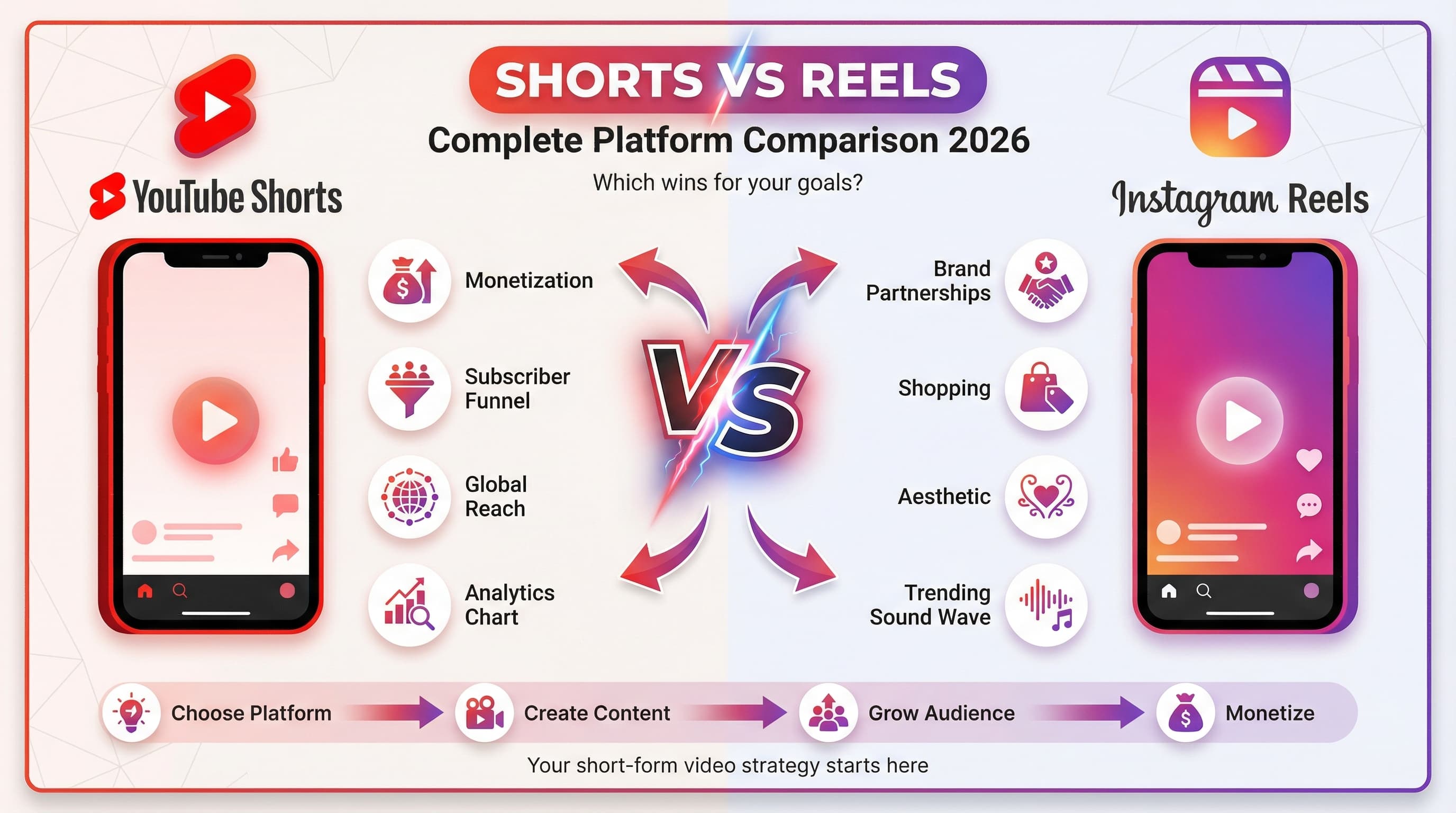
You have 60 seconds of vertical video gold. Now comes the hard part: where do you post it? Our Instagram scheduling can help.
YouTube Shorts and Instagram Reels both promise massive reach, viral potential, and the attention of millions. But they're not interchangeable. The algorithm works differently. The audience expects different things. And the monetization? Completely different ballparks. Try our scheduling across platforms.
So which platform actually deserves your creative energy in 2026? Learn more about how to repurpose content.
YouTube Shorts wins for long-term growth and monetization. If you're building a sustainable content business, Shorts feeds directly into YouTube's ecosystem where watch time converts to real revenue. But Instagram Reels takes the crown for brand partnerships, lifestyle content, and reaching a slightly older demographic with spending power. Your choice depends on whether you want to build a media property (Shorts) or a personal brand that attracts sponsorships (Reels).
Try Schedulala for free
Schedule posts to Bluesky, Twitter, and 8 other platforms from one dashboard.
Get started for free→See It in Action
This is what scheduling YouTube Shorts looks like in Schedulala
The platforms at a glance
Before we get into the weeds, let's establish what we're actually comparing. Both platforms launched their short-form video features to compete with TikTok, but they've evolved into distinct products with unique strengths. Our batch content creation can help.
YouTube Shorts: the basics
YouTube Shorts launched in September 2020 and has exploded to over 70 billion daily views as of late 2025. That number keeps climbing. The format allows videos up to 60 seconds (recently expanded from the original 15-second limit), and creators can use YouTube's built-in tools or upload pre-made content. Learn more about best time to post on instagram.
The magic of Shorts lies in integration. Your short-form content sits alongside your long-form videos, feeding subscribers back and forth between formats. A 45-second clip can drive viewers to your 20-minute deep dive. That funnel doesn't exist anywhere else. Learn more about instagram engagement calculator.
YouTube also brought Shorts into the Partner Program in 2023, meaning creators can earn ad revenue directly from their short-form content. The rates aren't as high as long-form (we'll get into specifics later), but it's real money that adds up.
Instagram Reels: the basics
Instagram Reels arrived in August 2020, and Meta has made it crystal clear this is their priority. The Explore page? Dominated by Reels. The algorithm? Heavily favoring Reels. Your grandma's feed? Probably 40% Reels at this point.
Reels allows videos up to 90 seconds, giving you a slight edge over Shorts in length. The platform shines in its editing tools, music library, and effect options. Instagram has always been about aesthetics, and Reels continues that tradition with polished, professional-looking features built right in.
The audience skews slightly older than TikTok (think 25-44 as the sweet spot) and tends to have higher purchasing power. That's why brands love Reels for influencer partnerships. The platform also integrates seamlessly with Instagram Shopping, making product discovery and purchase a smooth experience.
Head-to-head feature comparison
Let's break down the specifics. Numbers don't lie, and these specs matter when you're deciding where to invest your content creation hours.
| Feature | YouTube Shorts | Instagram Reels |
|---|---|---|
| Maximum length | 60 seconds | 90 seconds |
| Aspect ratio | 9:16 vertical | 9:16 vertical |
| Monthly active users | 2.7 billion (YouTube) | 2 billion (Instagram) |
| Daily views | 70+ billion | 200+ billion (Meta total) |
| Direct monetization | Yes (Partner Program) | Limited (Bonuses) |
| Music library | Extensive | Extensive |
| Duet/Remix feature | Yes | Yes |
| Shopping integration | Limited | Strong |
| Analytics depth | Detailed | Moderate |
| Cross-platform posting | Manual or third-party | Manual or third-party |
| Average engagement rate | 3-5% | 4-6% |
| Discoverability | Very high | High |
The numbers tell an interesting story. YouTube has more users overall, but Instagram users tend to be more engaged with short-form content specifically. Both platforms offer similar core features, but the ecosystem surrounding those features differs dramatically.
Monetization: where the money actually is
Let's talk cash. This is where YouTube Shorts pulls ahead for most creators, though the picture is more nuanced than "Shorts pays more."
YouTube Shorts monetization
YouTube introduced Shorts monetization in February 2023, and it's changed the game for short-form creators. Here's how it works: ads run between Shorts in the feed, and revenue gets pooled then distributed to creators based on views and music usage.
The RPM (revenue per mille, or per thousand views) typically ranges from $0.01 to $0.06. That sounds tiny until you realize that viral Shorts can rack up millions of views. A video hitting 10 million views at $0.04 RPM generates $400. Not life-changing, but not nothing either.
The real value is the funnel effect. Shorts viewers become channel subscribers. Subscribers watch your long-form content. Long-form content has RPMs of $2-8 or higher depending on your niche. One successful Short that drives 10,000 new subscribers could translate to thousands in long-form ad revenue over time.
To qualify for Shorts monetization, you need either 1,000 subscribers plus 10 million Shorts views in 90 days, or the traditional 1,000 subscribers plus 4,000 watch hours. The Shorts-specific path is actually achievable for dedicated creators within a few months.
Instagram Reels monetization
Instagram's approach to creator payments has been, frankly, inconsistent. The Reels Play Bonus program paid creators based on views, but it's been scaled back significantly. Many creators report bonuses being reduced or eliminated entirely in 2025.
The platform does offer Gifts, where viewers can send virtual gifts that convert to real money. The feature works, but engagement varies wildly. Some creators make decent supplemental income; others see almost nothing.
Where Reels shines is indirect monetization. Brand deals and sponsored content pay significantly better on Instagram than YouTube for most niches. A creator with 100,000 followers might command $1,000-3,000 per sponsored Reel, while the same creator might only get $500-1,500 for a YouTube Shorts integration.
Instagram Shopping also creates monetization opportunities. If you're selling products (your own or affiliate), Reels can drive direct purchases with shoppable tags. The path from "watch video" to "buy product" is shorter than on any other platform.
Algorithm and discoverability
Both platforms promise that anyone can go viral. And both deliver on that promise, just differently.
How the YouTube Shorts algorithm works
YouTube's algorithm for Shorts prioritizes watch time percentage above almost everything else. A 30-second video watched fully outperforms a 60-second video watched halfway. The platform wants to keep people scrolling, so content that holds attention gets pushed harder.
Initial distribution happens quickly. YouTube tests your Short with a small audience within hours of posting, then expands reach based on performance. Videos can continue getting pushed for weeks or even months if they perform well, which differs from Instagram's more time-sensitive approach.
Subscriber count matters less for Shorts than long-form YouTube. A channel with 100 subscribers can absolutely outperform one with 1 million if the content resonates. That said, having an established audience does give you a floor of initial views that helps with early algorithm signals.
YouTube also uses signals like click-through rate on thumbnails (yes, Shorts have thumbnails in some views), likes, comments, shares, and whether viewers visit your channel after watching. The more engagement signals, the more reach.
How the Instagram Reels algorithm works
Instagram's algorithm weighs engagement velocity heavily. How quickly does your Reel accumulate likes, comments, shares, and saves after posting? Fast early engagement signals quality content, triggering broader distribution.
The platform also considers your relationship with viewers. If someone regularly engages with your content, they're more likely to see your new Reels. This creates a bit of a chicken-and-egg situation for new creators, but Instagram does push Reels to non-followers through Explore.
Audio matters more on Reels. Using trending sounds can boost discoverability significantly, as Instagram surfaces content using popular audio to relevant users. The platform's music licensing deals make this easier than on some competitors.
Reels tend to have a shorter viral window than Shorts. Most of your views come within the first 24-48 hours, with a potential second wave if content gets picked up by Explore. After that initial push, views typically slow dramatically.
Content creation and editing tools
The tools you use to create content matter. Both platforms offer in-app editing, but the experiences differ.
YouTube Shorts creation tools
YouTube's Shorts camera is functional but basic. You can record clips, add music from the library, adjust speed, and add simple text. The timeline editor works for quick cuts. But it's not where professional creators spend their time.
Most successful Shorts creators use external tools (CapCut, Premiere Pro, DaVinci Resolve) and upload finished videos. YouTube accepts this without issue, and you maintain full creative control over effects, transitions, and text styling.
The music library is extensive thanks to YouTube's licensing deals. You can use most popular songs, though some tracks limit monetization or availability in certain countries. The "Create" tab makes it easy to remix other Shorts or sample from longer videos on the platform.
One nice feature: you can convert sections of your existing long-form videos into Shorts directly from YouTube Studio. Select a 60-second chunk, add some text, and publish. It's an efficient way to repurpose content.
Instagram Reels creation tools
Instagram has invested heavily in Reels editing, and it shows. The in-app tools include green screen effects, AR filters, speed controls, align tools for seamless transitions, and a robust text editor with animation options.
The music library rivals YouTube's, with most mainstream tracks available. Instagram's "Suggested Audio" feature surfaces trending sounds that could boost your content's reach, which is genuinely useful for trend-chasing creators.
Templates are a Reels-specific feature that I appreciate. You can use another creator's edit structure (timing, clips, transitions) as a template for your own content. It's perfect for participating in trends without figuring out the edit from scratch.
Collaboration tools are strong too. Remixing other Reels, duets, and collab posts make it easy to create content with other creators or respond to trending videos. These features feel more polished than YouTube's equivalents.
Audience demographics and behavior
Your content might be amazing, but if it's reaching the wrong people, growth stalls. The audiences on these platforms overlap but aren't identical.
Who watches YouTube Shorts
YouTube's overall audience skews slightly male (about 54%) and spans a wide age range. For Shorts specifically, the heaviest users are 18-34, though YouTube maintains strong viewership across demographics up to 55+.
The platform dominates for educational content, tutorials, gaming, tech reviews, and commentary. If your content falls into these categories, the built-in audience is enormous. YouTube viewers also tend to have higher intent, meaning they're actively looking for content rather than passively scrolling.
Geographically, YouTube's strength in India is particularly notable. If your content appeals to South Asian audiences, Shorts can deliver massive view counts. The platform is also strong across Latin America, Southeast Asia, and English-speaking markets.
Viewer behavior on Shorts differs from long-form. People watch Shorts in quick sessions, often while waiting in line or during short breaks. The content needs to hook immediately and deliver value fast.
Who watches Instagram Reels
Instagram's audience skews slightly female (about 57%) and centers on the 25-44 age bracket. This demographic has real spending power, which is why e-commerce and brand partnerships perform so well on the platform.
Lifestyle content dominates Reels. Fashion, beauty, fitness, food, travel, and personal branding all thrive here. The aesthetic expectations are higher than on YouTube. Polished, visually appealing content outperforms raw, unfiltered clips.
The platform is strongest in North America, Western Europe, and Brazil. Urban, style-conscious audiences are overrepresented. If your target customer hangs out in coffee shops and follows design trends, they're probably scrolling Reels.
Engagement behavior on Reels tends toward saves and shares over comments. Users curate content they want to revisit or send to friends. Creating "save-worthy" content (tips, tutorials, inspiration) performs better than purely entertaining content.
| Factor | YouTube Shorts | Instagram Reels |
|---|---|---|
| Primary age group | 18-34 | 25-44 |
| Gender skew | 54% male | 57% female |
| Top content types | Education, gaming, tech, commentary | Lifestyle, fashion, beauty, fitness |
| Strongest regions | India, US, Latin America, SE Asia | US, Europe, Brazil |
| Engagement style | Comments, subscriptions | Saves, shares, DMs |
| Purchase intent | Moderate | High |
| Session length | Short bursts | Medium sessions |
Best use cases: who should use what
Let's get specific. Based on your goals and content type, here's where you should focus your energy.
Choose YouTube Shorts if you want to:
- Build a sustainable content business: The funnel from Shorts to long-form to ad revenue is unmatched. If your end goal is a YouTube channel generating $5k+ monthly from ads, Shorts is your acquisition engine.
- Create educational or tutorial content: YouTube audiences actively search for how-to content. Your "5 Excel tricks in 60 seconds" Short can drive viewers to your 30-minute Excel masterclass.
- Reach a global audience: YouTube's international reach, especially in growth markets like India, gives you access to audiences other platforms can't match.
- Monetize through ads directly: While Shorts RPMs are lower than long-form, they're real and consistent. You're building equity in a monetized platform.
- Create commentary or reaction content: YouTube's audience loves takes, opinions, and analysis. The platform rewards creators who offer perspective.
Choose Instagram Reels if you want to:
- Land brand partnerships: Brands prefer Instagram for influencer marketing. The aesthetic quality and purchasing demographics make sponsored content more valuable here.
- Sell products directly: Instagram Shopping integration means viewers can buy what they see without leaving the app. For e-commerce, this is huge.
- Build a personal brand in lifestyle niches: Fashion, beauty, fitness, food, and travel all perform better on Reels. The audience expects and rewards this content.
- Connect with a North American or European audience: If your target market is Western millennials with disposable income, Reels puts you in front of them.
- Leverage existing Instagram following: Already have 10k+ Instagram followers? Reels will reach them more effectively than starting fresh on YouTube.
Consider both platforms if you:
- Have time to customize content for each: Repurposing works, but platform-native content performs better. If you can tweak hooks, text, and CTAs for each platform, do both.
- Create broadly appealing content: Entertainment, humor, and inspirational content can work on both platforms without major modifications.
- Want to diversify risk: Algorithm changes happen. Having presence on multiple platforms protects you from any single platform tanking your reach.
- Are testing what works: Not sure which audience will love your content? Post to both for three months and let the data decide.
Cross-posting strategies that actually work
Most creators don't have time to create unique content for every platform. Here's how to cross-post effectively without tanking your reach.
The right way to repurpose
Both YouTube and Instagram claim they don't penalize cross-posted content, but native-feeling content does perform better. The trick is making small adjustments that signal you understand each platform's norms.
For YouTube Shorts: remove any visible TikTok or Instagram watermarks (use SnapTik or similar tools to download clean versions). Avoid using trending sounds that only make sense in an Instagram context. Consider adding a verbal CTA to subscribe since YouTube rewards subscriber growth.
For Instagram Reels: current trending audio can boost reach, so consider swapping the sound for whatever's trending that week. Use text overlays that match Instagram's cleaner aesthetic. Add relevant hashtags (3-5 targeted ones, not 30 random ones).
The hook is everything on both platforms, but the style differs slightly. YouTube audiences respond well to curiosity gaps and bold claims. Instagram audiences respond to visually striking opening frames and relatable moments.
Timing your cross-posts
Don't post to both platforms simultaneously. Stagger by 24-48 hours to maximize each platform's algorithm window. Some creators post to their primary platform first, wait for performance data, then adjust the content for the secondary platform based on what worked.
Best posting times differ too. YouTube Shorts tends to perform well in the evening hours (7-10pm in your target time zone) when people are winding down. Reels often peaks during lunch breaks (11am-1pm) and evening commutes (5-7pm).
Common mistakes to avoid
I've seen creators sabotage their growth on both platforms through easily avoidable errors. Learn from their pain.
Mistakes on YouTube Shorts
- Ignoring the Shorts-to-long-form funnel: Shorts should drive viewers to your channel, not exist in isolation. Every Shorts strategy should include a plan for converting viewers into subscribers who watch longer content.
- Weak thumbnails: Yes, Shorts have thumbnails. They appear in search, suggested videos, and your channel page. Pick a compelling frame or upload a custom thumbnail.
- No call to action: Tell people what to do. "Subscribe for more" or "Check the link" gives viewers direction. Passive content gets passive results.
- Posting inconsistently: YouTube rewards regular uploads. One viral Short followed by three weeks of silence loses the momentum. Aim for at least 3-5 Shorts weekly when building.
- Starting slow: You have about 1-2 seconds to hook viewers. If your Short starts with a long intro or slow buildup, people swipe away before your content even begins.
Mistakes on Instagram Reels
- Ignoring aesthetics: Instagram is a visual platform. Poorly lit, grainy, or cluttered Reels underperform regardless of content quality. Invest in basic lighting and clean backgrounds.
- Using dead audio: Sound matters on Reels. Using outdated trending sounds or no sound at all limits discoverability. Check what's currently popular before posting.
- Hashtag stuffing: The days of 30 hashtags are over. Use 3-5 highly relevant hashtags. Quality targeting beats quantity.
- Neglecting Stories and Feed: Reels work best as part of a complete Instagram strategy. Cross-promote your Reels to Stories, engage in comments, and maintain a cohesive profile.
- Forgetting the caption: Reels captions can include context, CTAs, and keywords that help with discoverability. Don't post with empty or minimal captions.
Analytics and measuring success
What gets measured gets improved. Both platforms offer analytics, but the depth and usefulness vary.
YouTube Shorts analytics
YouTube Studio provides detailed Shorts analytics. You can see views, watch time, average view duration, traffic sources, and audience demographics. The data goes deep enough to make real strategic decisions.
Pay attention to average view duration as a percentage. If viewers watch 80%+ of your Short, the content is working. Under 50%? Your hook or content needs work.
Traffic sources show where views come from. Shorts feed, search, suggested videos, and external sources all behave differently. Understanding your traffic mix helps you optimize.
Subscriber conversion is trackable too. You can see exactly how many subscribers each Short generates, which helps identify what content types grow your channel fastest.
Instagram Reels analytics
Instagram Insights (available for professional accounts) provides Reels performance data including plays, likes, comments, saves, shares, and reach. The metrics are useful but less granular than YouTube's.
Saves and shares matter more than likes on Instagram. A Reel with fewer likes but high saves is performing well. That content has value people want to return to or pass along.
Reach versus follower count shows how much of your audience is coming from non-followers. High non-follower reach means the algorithm is pushing your content; low reach suggests you're only hitting existing audience.
Instagram doesn't provide the same traffic source breakdown as YouTube, which makes optimization harder. You're working with less data overall.
Future outlook: where are these platforms headed?
Predicting platform changes is risky business, but current trajectories give us some hints about 2026 and beyond.
YouTube Shorts trajectory
YouTube continues investing heavily in Shorts. The monetization program keeps expanding, with better revenue splits rumored for 2026. The integration with YouTube Music suggests more audio features coming.
Expect longer Shorts. The 60-second limit will likely expand to match or exceed Reels and TikTok. YouTube has hinted at this direction without committing to dates.
AI features are coming. YouTube's testing AI-powered editing tools, background music generation, and content suggestions. The platform wants to lower creation barriers.
The Shorts-to-long-form funnel will get more sophisticated. YouTube knows this is their competitive advantage and is building features to strengthen that connection.
Instagram Reels trajectory
Meta is doubling down on AI recommendations. Your Reels will increasingly reach people based on content similarity rather than follower relationships. This could be good for discovery, challenging for building loyal audiences.
Shopping integration will deepen. Instagram wants to be where people discover and buy products in one session. Reels will become more shoppable with better product tagging and in-video purchasing.
Monetization remains uncertain. Meta hasn't shown the same commitment to direct creator payments that YouTube has. Brand partnerships will likely remain the primary income path for Reels creators.
Threads integration is the wild card. As Meta's Twitter competitor grows, expect cross-posting and integration features between Threads and Reels.
Final verdict: YouTube Shorts vs Reels
Both platforms offer real opportunities. Neither is universally "better." But for most creators, one will serve your goals more effectively than the other.
Choose YouTube Shorts if you're building a content business focused on ad revenue, educational/tutorial content, or reaching global audiences. The monetization is real, the analytics are strong, and the funnel to long-form is unmatched.
Choose Instagram Reels if you're building a personal brand, working toward brand partnerships, selling products, or creating lifestyle content. The audience has money to spend, brands want to work with Reels creators, and the visual aesthetic fits polished content.
Choose both if you have the bandwidth to customize content for each platform's norms. Most successful short-form creators maintain presence on multiple platforms, but they lead with one and repurpose strategically to others.
The worst choice is paralysis. Pick a platform based on your goals, commit to it for 90 days, analyze results, then expand or pivot. The creators who win are the ones who start creating, not the ones who spend months deciding which platform to try first.
Whichever platform you choose, consistency beats perfection. A mediocre Short posted today beats a perfect Short that never gets made. Start now, improve as you go, and let the data guide your strategy.
Try Schedulala for free
Schedule posts to Bluesky, Twitter, and 8 other platforms from one dashboard.
Get started for free→
![Best YouTube Shorts Scheduler Tools [2026 Review]: 9 Platforms Tested and Compared](/_next/image?url=%2Fblog%2Fyoutube-shorts-scheduler%2Fheader.jpeg&w=3840&q=75&dpl=dpl_6RiKV7dz1EjMEbYgqheh1pc2YPwv)