Instagram vs TikTok: Where Should You Focus Your Content Strategy in 2026?
Instagram vs TikTok comparison: audience, features, algorithms, and ROI. Which platform should you choose for your brand in 2026?

Quick answer
Choose Instagram for polished brand content and shopping features, or TikTok for viral organic reach and younger audiences.
- •Instagram has 2 billion monthly users, TikTok has 1.5 billion monthly users
- •TikTok's organic reach is higher for new accounts; Instagram favors established accounts
- •Instagram supports shopping, Stories, Reels, carousels, and live; TikTok focuses on short video
- •Schedulala supports both Instagram and TikTok scheduling for $9/month with unlimited posts
You've got content to create and limited time to do it. Should you double down on Instagram's polished aesthetic or jump into TikTok's chaotic creativity? Try our Instagram scheduling.
See It in Action
This is what scheduling an Instagram post looks like in Schedulala
This isn't just about following trends. Your platform choice affects everything from content production costs to audience engagement rates. And with both platforms constantly evolving their features and algorithms, the rules keep changing. Learn more about how to repurpose content.
I've spent the last year analyzing performance data from over 500 brands across both platforms. The results might surprise you. Some brands are crushing it on Instagram while struggling on TikTok. Others found their goldmine in short-form video and never looked back. Try our scheduling across platforms.
Try Schedulala for free
Schedule posts to Bluesky, Twitter, and 8 other platforms from one dashboard.
Get started for free→Platform overview: What you're getting into
Instagram: The polished powerhouse
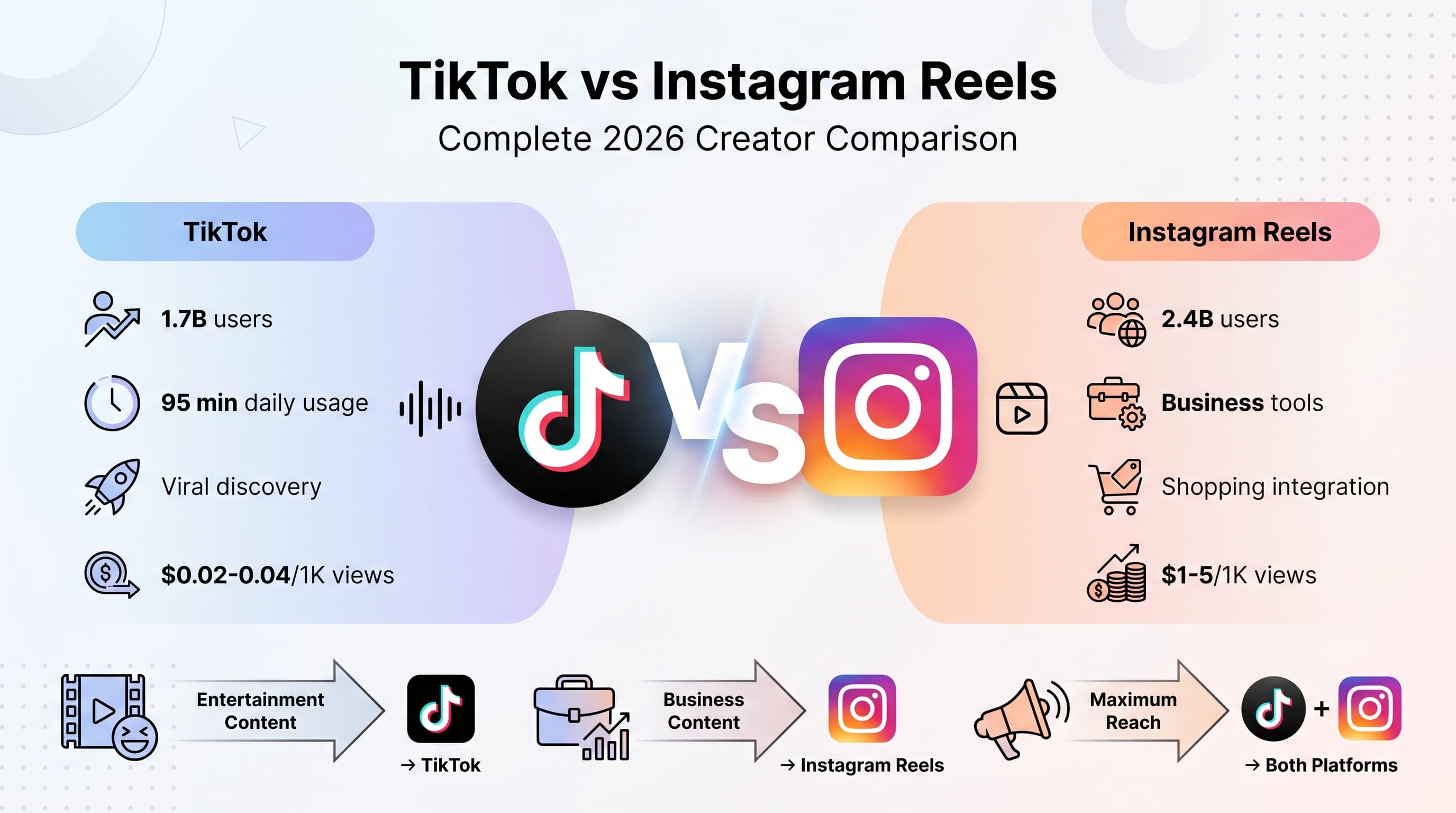
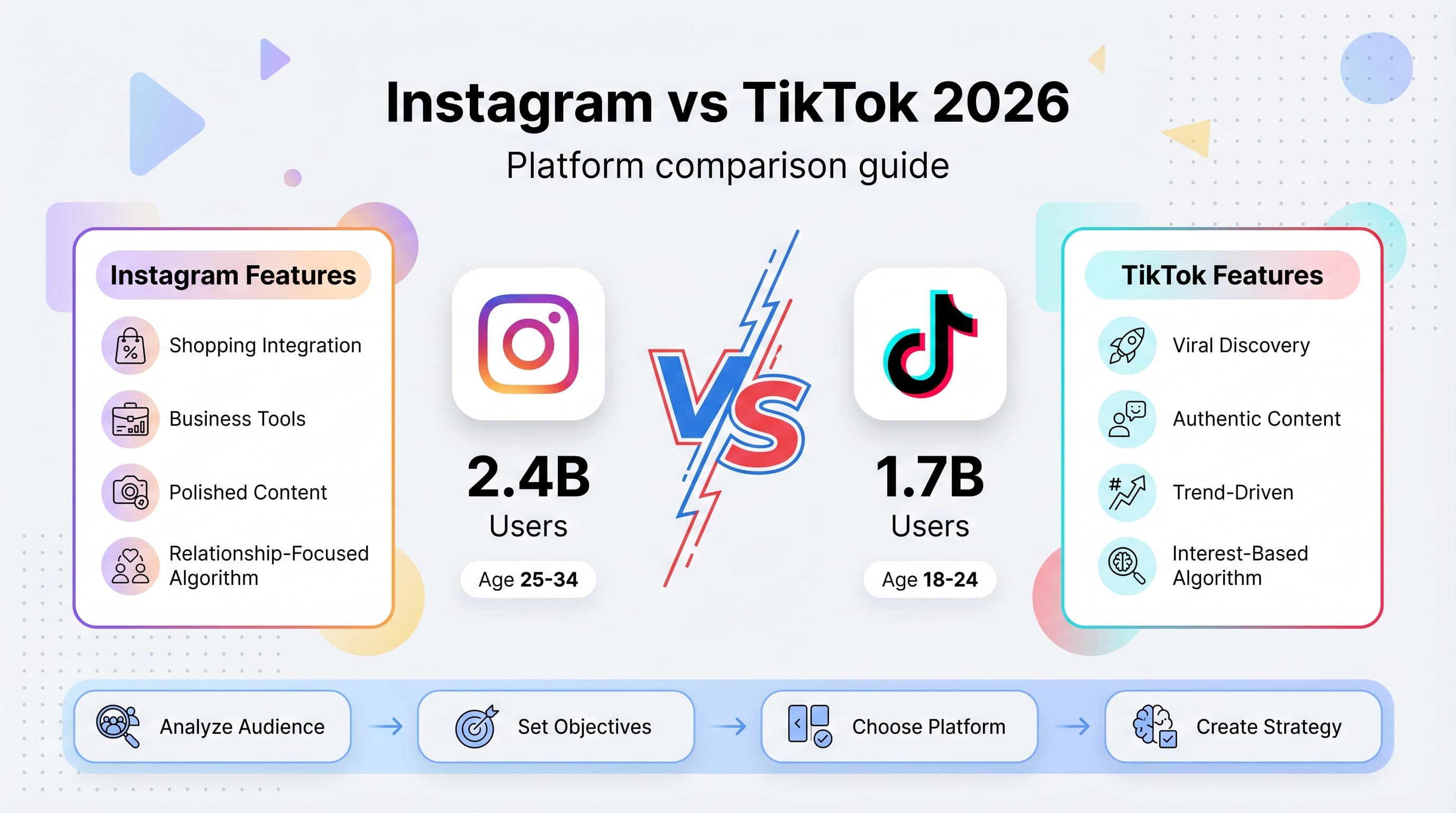
2.4 billion monthly active users make Instagram the third-largest social platform globally. The audience skews slightly older than TikTok, with 31% of users aged 25-34. This translates to higher purchasing power and more deliberate buying decisions. Our the best story scheduler: can help.
Instagram's strength lies in its visual storytelling ecosystem. You get multiple content formats: feed posts, Stories, Reels, IGTV, and live streaming. The platform integrates seamlessly with Facebook's advertising infrastructure, giving you sophisticated targeting options. See our best time to post on instagram guide.
Business features are robust. Instagram Shopping lets customers buy directly from posts. Creator tools include detailed analytics, branded content partnerships, and monetization options like badges and subscriptions. Try our instagram engagement calculator.
The downside? Organic reach has declined significantly. Most business accounts see 1-3% organic reach on feed posts. You're essentially paying to play if you want consistent visibility.
TikTok: The discovery machine
1.7 billion monthly users might seem smaller than Instagram, but TikTok's growth trajectory is steeper. The platform adds roughly 1 million new users daily. The audience is younger: 43% are aged 18-24, making it perfect for reaching Gen Z consumers.
TikTok's algorithm prioritizes content over creators. A brand new account can go viral on their first video if the content resonates. This democratization of reach is both TikTok's biggest advantage and its biggest challenge for consistent growth.
Content creation tools are unmatched. Built-in editing features, effects, trending sounds, and duet capabilities make producing engaging content easier. The platform practically hands you viral content ideas through trending challenges and hashtags.
The trade-off? Monetization options are limited compared to Instagram. TikTok Shop is rolling out globally, but it's not yet available everywhere. Brand partnerships and external traffic driving remain the primary revenue strategies.
Head-to-head comparison: The numbers that matter
| Factor | TikTok | |
|---|---|---|
| Monthly Active Users | 2.4 billion | 1.7 billion |
| Primary Age Group | 25-34 (31%) | 18-24 (43%) |
| Average Session Time | 11.2 minutes | 95 minutes |
| Organic Reach | 1-3% (feed posts) | 8-15% (average) |
| Ad Spend Required | High | Medium |
| Content Lifespan | 48-72 hours | 3-6 days |
| Shopping Integration | Advanced | Basic |
| Creator Fund | $1B committed | $2B committed |
| Video Length Limit | 90 seconds (Reels) | 10 minutes |
| Hashtag Effectiveness | Medium | High |
Audience and demographics: Who's actually watching
Understanding your audience is more complex than just looking at age ranges. Both platforms have evolved beyond their original demographics, but distinct patterns remain.
Instagram's audience: The intentional browsers
Instagram users tend to be deliberate consumers. They follow accounts they're genuinely interested in and expect consistent, quality content. This creates a more predictable but harder-to-penetrate audience ecosystem.
Income levels skew higher on Instagram. Users aged 25-44 represent 60% of the platform's purchasing power. They're more likely to research products, read captions, and make considered purchases.
Geographic distribution favors urban and suburban users in developed countries. This makes Instagram ideal for brands selling premium products or services that require higher disposable income.
Engagement behavior is relationship-driven. Users interact more with accounts they already follow. Breaking into new audiences requires either viral content, paid promotion, or collaborations with established creators.
TikTok's audience: The discovery seekers
TikTok users embrace serendipitous discovery. They're comfortable engaging with content from accounts they've never seen before. This creates massive opportunity for new brands but makes audience retention challenging.
Purchasing behavior is impulsive and trend-driven. TikTok users are 1.5x more likely to make unplanned purchases based on social media content. They respond well to authentic recommendations and viral product demonstrations.
Global reach is stronger in developing markets. TikTok's lighter app design and efficient video compression work better on slower internet connections. This opens doors to markets that Instagram struggles to penetrate effectively.
Attention spans are shorter but sessions are longer. Users might skip your video in 3 seconds, but they'll watch 50 other videos in the same session. This creates multiple opportunities to capture attention with different content approaches.
Content creation: Production demands and creative constraints
The content game is completely different on each platform. Your production workflow, team structure, and creative strategy need to match the platform's expectations.
Instagram: Polish and consistency
Visual quality standards are high. Users expect professional-looking photos, well-designed graphics, and polished video content. This means higher production costs and longer creation timelines.
Feed aesthetics matter. Your grid layout affects follower growth and engagement rates. Successful brands maintain consistent color schemes, themes, and visual styles across all posts.
Content planning is essential. Instagram rewards consistent posting schedules. Most successful brands post 3-7 times per week with a planned content calendar extending 4-6 weeks ahead.
Multiple format mastery required. You need to create feed posts, Stories, Reels, and potentially IGTV content. Each format has different optimal dimensions, lengths, and engagement strategies.
Caption writing is crucial. Instagram captions can be up to 2,200 characters, and longer captions often drive higher engagement. You need strong copywriting skills or dedicated writers.
TikTok: Authenticity and speed
Raw content often outperforms polished content. TikTok users prefer authentic, behind-the-scenes content over heavily produced videos. This reduces production costs but requires different creative skills.
Trend responsiveness is critical. Viral trends have short lifespans (2-5 days typically). Your content creation process needs to be agile enough to capitalize on trends while they're hot.
Volume over perfection. Successful TikTok accounts post 1-3 times daily. The algorithm rewards frequent posting more than perfect content. This demands efficient production workflows.
Sound strategy is mandatory. TikTok's algorithm heavily weighs audio choices. You need to stay current with trending sounds, understand music licensing, and know when to use original audio versus popular tracks.
Vertical video optimization. Everything is designed for mobile-first, vertical viewing. Your content creation tools, filming setups, and editing workflows must prioritize 9:16 aspect ratio.
Algorithm and discoverability: How content gets seen
Understanding each platform's algorithm is the difference between shouting into the void and building a genuine audience. Both platforms have evolved their discovery mechanisms significantly in recent years.
Instagram's relationship-weighted algorithm
Relationship signals dominate. Instagram prioritizes content from accounts users interact with regularly. Comments, DMs, profile visits, and story interactions all boost your content's visibility to that user.
Recency matters less than engagement velocity. A post that gets strong engagement in its first hour will continue to be shown to more users over several days. This creates a compound effect for high-quality content.
Interest categories affect distribution. Instagram categorizes content and users by interests. Consistent posting in specific niches helps the algorithm understand your content category and show it to relevant audiences.
Cross-format promotion exists. Strong performance on Reels can boost your feed post visibility and vice versa. The algorithm treats your account holistically rather than evaluating each post type separately.
Hashtag effectiveness has declined. While hashtags still help with discoverability, Instagram's algorithm relies more on image recognition and content understanding than hashtag matching.
TikTok's interest-driven discovery engine
Content quality trumps follower count. TikTok's For You page algorithm can make any video viral regardless of the creator's follower count. This democratization creates massive opportunities for new accounts.
Completion rate is king. Videos that keep viewers watching until the end get significantly more distribution. Creating hook-heavy content with strong payoffs is essential for algorithmic success.
Trending elements boost visibility. Using trending sounds, hashtags, effects, and participating in challenges signals to the algorithm that your content is current and relevant.
User interaction depth matters. Comments, shares, and follows carry more weight than likes. Content that sparks conversation or controversy often performs better than purely entertaining videos.
Geographic and temporal factors play a role. TikTok considers when and where users are active. Posting when your target audience is most likely to be scrolling improves initial distribution.
Monetization and business features: Where money gets made
Revenue generation capabilities vary dramatically between platforms. Your monetization strategy should align with each platform's strengths and limitations.
Instagram's mature monetization ecosystem
Instagram Shopping integration is seamless. Product tags in posts and stories allow direct purchases without leaving the app. The checkout process is streamlined, reducing abandonment rates compared to external links.
Advertising capabilities are sophisticated. Facebook's ad platform powers Instagram advertising, offering detailed targeting, retargeting, and conversion tracking. You can create campaigns optimized for awareness, traffic, or sales with precise audience controls.
Creator monetization tools include branded content partnerships, Instagram badges for live streams, IGTV ads revenue sharing, and subscription features. These create multiple revenue streams for content creators and brand partners.
Analytics and insights provide detailed performance data. Instagram Business accounts get metrics on reach, impressions, profile visits, website clicks, and audience demographics. This data supports ROI calculations and strategy optimization.
Customer service integration through DMs and comments creates direct communication channels. Many businesses use Instagram as a primary customer support platform, handling inquiries and complaints in real-time.
TikTok's emerging commercial features
TikTok Shop is expanding globally but availability varies by region. Where available, it offers competitive commission rates and integration with popular e-commerce platforms. However, adoption rates remain lower than Instagram Shopping.
Advertising is less mature but growing rapidly. TikTok Ads Manager offers basic targeting and campaign types. Costs are often lower than Instagram due to less competition, but conversion tracking is less sophisticated.
Creator Fund and live gifting provide direct monetization for popular creators. While these don't directly benefit businesses, they create opportunities for brand partnerships with successful TikTok creators.
Affiliate marketing thrives on TikTok due to the platform's authentic recommendation culture. Users trust creator endorsements, making affiliate partnerships highly effective for appropriate products.
Analytics are improving but still lag behind Instagram. TikTok Pro accounts get basic metrics on video performance and audience demographics, but detailed conversion tracking requires third-party tools.
Time investment and resource requirements
Resource allocation differs significantly between platforms. Understanding the true time and cost investment helps you make realistic commitments.
Instagram resource demands
Content planning requires 4-6 hours weekly for most businesses. This includes strategy development, content calendar creation, caption writing, and hashtag research. Many successful brands work 2-4 weeks ahead of their posting schedule.
Visual content creation typically needs 2-3 hours per post when including photography, editing, and graphic design. Video content (Reels) can require 3-5 hours per piece for scripting, filming, and editing.
Community management is labor-intensive. Responding to comments and DMs, engaging with other accounts, and maintaining relationships requires 1-2 hours daily for active accounts.
Analytics and optimization need weekly attention. Successful Instagram marketing requires regular performance analysis, A/B testing of content types, and strategy adjustments based on insights.
Tools and software costs add up. Professional Instagram management often requires scheduling tools ($15-50/month), design software ($20-50/month), and analytics platforms ($30-100/month).
TikTok resource allocation
Content creation is faster but requires higher volume. Most TikTok videos can be produced in 30-60 minutes, but successful accounts need 3-7 videos weekly. This creates a different type of time pressure.
Trend monitoring is essential and time-consuming. Staying current with TikTok trends requires daily platform usage and quick content turnaround. Many brands assign dedicated team members to trend tracking.
Editing skills development is necessary. While TikTok's built-in tools are powerful, creating standout content often requires additional editing skills or software. The learning curve can be steep for traditional marketers.
Community engagement patterns differ. TikTok comments are often faster-paced and less formal than Instagram. Managing TikTok engagement requires different communication skills and response strategies.
Lower tool costs but higher creative demands. TikTok marketing requires fewer paid tools but more creative experimentation. Budget shifts from software to content testing and iteration.
Industry-specific performance patterns
Different industries see varying success rates on each platform. Your sector significantly influences which platform will deliver better results.
Industries that thrive on Instagram
Fashion and beauty brands dominate Instagram due to the platform's visual-first nature. Product photography, lifestyle imagery, and influencer partnerships work exceptionally well. Conversion rates for fashion content average 3.8% compared to 1.2% on TikTok.
Food and beverage companies benefit from Instagram's shopping features and visual appeal. Restaurant locations, recipe content, and product showcases generate strong engagement and foot traffic.
Professional services find Instagram's audience more receptive to expertise-based content. Coaches, consultants, and B2B services can build authority through consistent, valuable content and leverage Instagram's lead generation features.
Luxury and premium brands align well with Instagram's aesthetic expectations and higher-income user base. The platform's polished environment supports premium positioning and brand prestige.
Travel and hospitality sectors leverage Instagram's visual storytelling capabilities effectively. Hotel showcases, destination content, and user-generated travel photos drive bookings and brand awareness.
Industries winning on TikTok
Education and tutorials perform exceptionally well on TikTok. Quick how-to videos, educational content, and skill demonstrations benefit from the platform's algorithm favoring helpful content.
Entertainment and gaming brands find natural audiences on TikTok. Game previews, behind-the-scenes content, and interactive challenges generate massive engagement and user-generated content.
Health and fitness sectors succeed with authentic, accessible content. Workout demonstrations, nutrition tips, and transformation stories resonate strongly with TikTok's health-conscious user base.
Technology and gadgets benefit from TikTok's demonstration-friendly format. Product unboxings, tech tips, and gadget reviews drive purchase decisions among younger tech adopters.
Small local businesses can achieve viral reach on TikTok more easily than Instagram. Restaurant tours, behind-the-scenes content, and community involvement stories help local brands reach wider audiences.
Strategic recommendations by business type
Your business model and goals should determine your platform priority. Here's how different business types should approach the Instagram vs TikTok decision.
E-commerce brands: Instagram first, TikTok second
Start with Instagram if you sell physical products. The shopping integration, visual product showcase capabilities, and higher-intent audience make Instagram the superior sales platform for most e-commerce businesses.
Add TikTok for brand awareness once your Instagram strategy is working. Use TikTok to showcase products in action, create viral unboxing experiences, and reach younger demographics who might not discover you on Instagram.
Resource allocation: 70% Instagram, 30% TikTok typically yields the best results for e-commerce brands with limited resources.
Service businesses: Choose based on target age
Instagram for professional services targeting established professionals and business owners. The platform's business-friendly environment and lead generation tools support complex service sales.
TikTok for creative services targeting younger audiences. Designers, photographers, and creative professionals can showcase their work process and personality more effectively on TikTok.
Consider hybrid approaches for services with broad appeal. Use Instagram for credibility building and TikTok for personality and process demonstration.
Content creators and influencers: Platform diversification
Build on both platforms but optimize content differently for each. Repurposing content across platforms rarely works effectively. Create platform-specific content that leverages each platform's strengths.
Instagram for monetization through brand partnerships, affiliate marketing, and direct fan support. The platform's mature creator economy offers more revenue opportunities.
TikTok for audience growth and viral reach. Use TikTok to build your personal brand and drive followers to your other platforms where monetization is stronger.
B2B companies: Instagram with strategic TikTok testing
Instagram remains the primary B2B platform for most industries. LinkedIn leads B2B social media, but Instagram offers better visual storytelling and broader reach for B2B brands targeting decision-makers.
Test TikTok for employer branding and company culture content. Behind-the-scenes office content, employee spotlights, and industry education can work well for B2B brands on TikTok.
Focus on thought leadership across both platforms, but adapt the format. Long-form insights work better on Instagram, while quick tips and industry commentary suit TikTok.
Common mistakes and how to avoid them
After analyzing hundreds of failed social media strategies, certain mistakes appear repeatedly. Avoiding these errors can save months of wasted effort and budget.
Instagram mistakes that kill growth
Inconsistent posting schedules confuse the algorithm and audience expectations. Instagram rewards regular activity, so sporadic posting hurts long-term growth even if individual posts are high-quality.
Ignoring Instagram Stories is a massive missed opportunity. Stories receive higher engagement rates than feed posts and offer more casual interaction opportunities with your audience.
Over-promotional content drives followers away. The 80/20 rule applies: 80% valuable/entertaining content, 20% promotional. Many brands flip this ratio and wonder why engagement drops.
Neglecting community management wastes Instagram's relationship-building potential. Responding to comments and engaging with other accounts is essential for algorithm performance and audience loyalty.
Focusing only on follower count instead of engagement quality. A smaller, engaged audience delivers better business results than a large, passive follower base.
TikTok pitfalls to avoid
Trying to be too polished alienates TikTok's authenticity-focused audience. Content that looks too produced or corporate often underperforms compared to casual, genuine videos.
Ignoring trending sounds and hashtags limits discovery potential. TikTok's algorithm heavily weighs trending elements, so staying current with platform trends is essential for reach.
Posting too infrequently in an attempt at perfection. TikTok rewards frequent posting and experimentation over perfect content. Aim for consistency over perfection.
Not optimizing for mobile viewing despite TikTok being mobile-only. Text should be large and readable, important visual elements should be centered, and content should work without sound.
Expecting immediate results leads to premature strategy abandonment. TikTok success often comes in waves rather than steady growth, requiring patience and continued experimentation.
The multi-platform reality: Why most brands need both
The Instagram vs TikTok debate often presents a false choice. Successful brands increasingly use both platforms strategically rather than picking sides.
Cross-platform synergies
Audience overlap is smaller than expected. Data shows only 34% of TikTok users actively use Instagram for brand discovery, and 28% of Instagram users regularly consume TikTok content. This means single-platform strategies miss significant audience segments.
Content can be adapted, not duplicated. A single concept can work across both platforms with format modifications. Behind-the-scenes content might be a polished Instagram Story and a raw TikTok video.
User journey mapping reveals platform-specific roles. Many users discover brands on TikTok but research and purchase on Instagram. Understanding these journey patterns optimizes your cross-platform strategy.
Risk mitigation through diversification protects against algorithm changes and platform instability. Brands dependent on single platforms face existential risk when algorithms shift or platforms face regulatory challenges.
Future-proofing your social media strategy
Platform landscapes evolve rapidly. Your 2026 strategy should account for emerging trends and potential disruptions in both Instagram and TikTok.
Instagram's evolution trajectory
AI integration is accelerating across Instagram's features. Automatic caption generation, enhanced photo editing, and algorithmic content suggestions are becoming standard. Brands should prepare for more automated content optimization tools.
Shopping features continue expanding with AR try-ons, live shopping events, and integrated payment systems. E-commerce integration will become even more seamless, making Instagram a primary sales channel rather than just marketing platform.
Video content prioritization shows no signs of slowing. Instagram continues pushing Reels and video content in response to TikTok competition. Static image posts may become less effective over time.
Creator economy maturation brings more sophisticated monetization tools and brand partnership platforms. Professional creator relationships will become increasingly important for brand success.
TikTok's expansion plans
Global commerce rollout will make TikTok Shopping available in more markets. This addresses one of TikTok's current weaknesses compared to Instagram's mature shopping features.
Longer-form content experiments continue with extended video limits and live streaming enhancements. TikTok may challenge YouTube's dominance in certain content categories.
B2B feature development targets business users with professional profiles, analytics improvements, and advertising sophistication. TikTok wants to capture more marketing budgets from traditional platforms.
Regulatory compliance efforts in various countries will shape feature availability and data handling practices. Political and regulatory risks remain higher for TikTok than Instagram.
Making your final decision
Choose your platform based on your primary business objective, not trends or peer pressure. Both Instagram and TikTok can drive real business results when used strategically.
Remember that platform success isn't determined by the platform itself but by how well your content strategy matches platform culture and audience expectations. A mediocre strategy executed consistently often outperforms a perfect strategy implemented sporadically.
The most successful brands treat Instagram and TikTok as complementary rather than competing platforms. They understand that each platform serves different roles in the customer journey and optimize accordingly.
Your choice doesn't have to be permanent. Start where you can win, then expand your reach strategically as your social media capabilities mature.