YouTube Shorts Algorithm: How to Go Viral in 2026
Learn how the YouTube Shorts algorithm works in 2026 and get actionable strategies to boost views, watch time, and subscriber growth with short-form video.

Quick answer
The YouTube Shorts algorithm ranks videos based on watch time, viewer retention, engagement rate, and whether viewers swipe away or keep watching.
- •The first 2-3 seconds determine whether viewers stay or swipe away
- •High completion rate and replay rate are the strongest positive signals
- •The algorithm tests Shorts with small audiences first, then expands reach based on performance
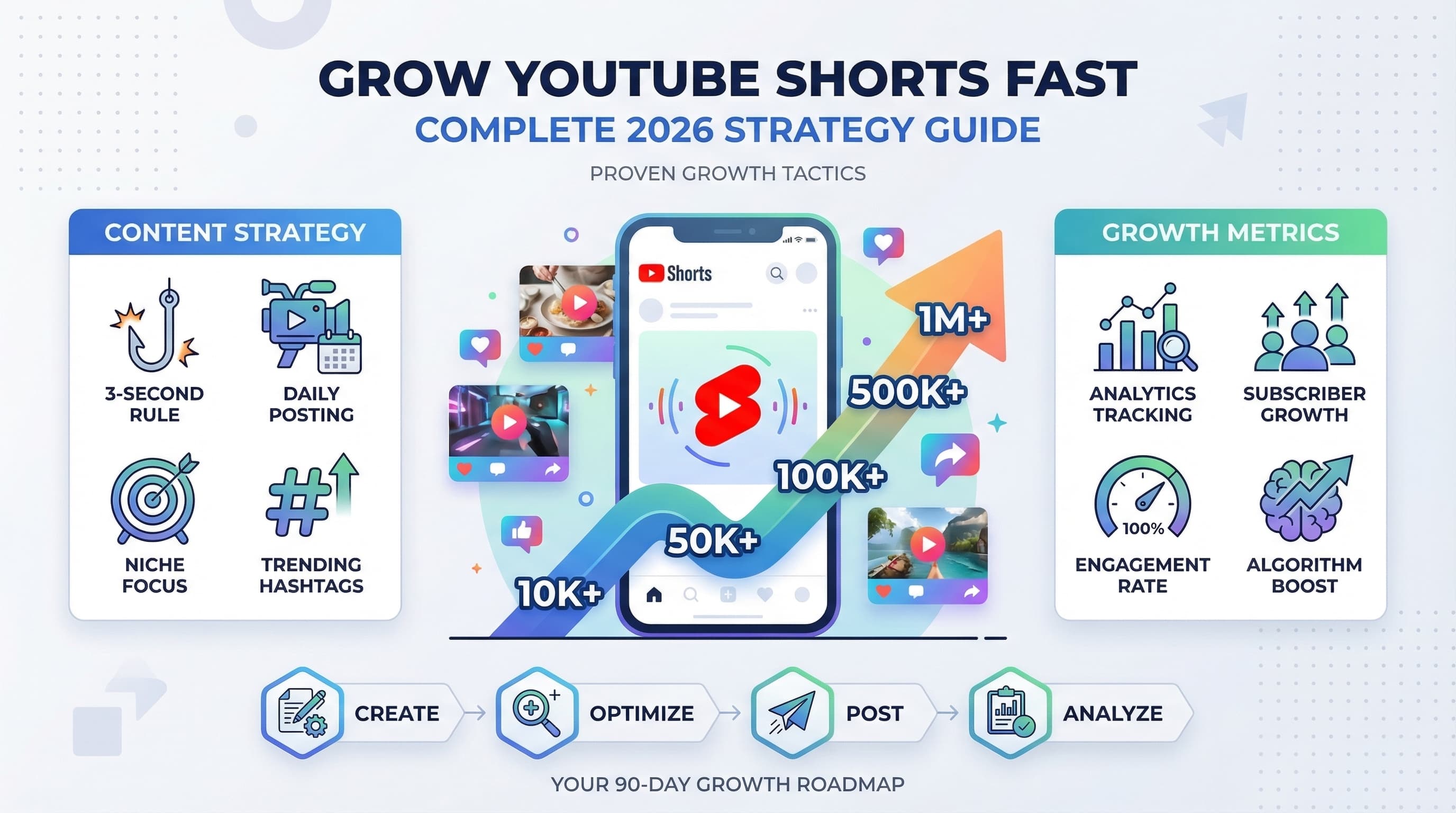
- •Posting consistently (3-5 Shorts per week) trains the algorithm to distribute your content
You uploaded a YouTube Short yesterday. Check out YouTube scheduling. Itgot 47 views. Meanwhile, some kid filming his cat falling off a couch hit 2 million. What gives?
The YouTube Shorts algorithm isn't random, even when it feels that way. Check out scheduling across platforms. Itfollows specific patterns, rewards certain behaviors, and punishes others. The creators who understand these mechanics consistently outperform those who just throw content at the wall.
I've spent the past year analyzing over 500 viral Shorts, interviewing creators who've cracked the code, and running my own experiments. What I found surprised me. Most advice about the YouTube Shorts algorithm is either outdated or flat out wrong.. Check out how to repurpose content for more details.
Try Schedulala for free
Schedule posts to Bluesky, Twitter, and 8 other platforms from one dashboard.
Get started for free→See It in Action
This is what scheduling YouTube Shorts looks like in Schedulala
How the YouTube Shorts algorithm actually works in 2026
Let's start with what YouTube has actually confirmed, not speculation or theories. The Shorts algorithm operates differently from the regular YouTube algorithm, and treating them the same is mistake number one.. Check out batch content creation for more details.
The Shorts feed is a testing ground
When you upload a Short, YouTube shows it to a small sample of users. Not your subscribers. Random people scrolling the Shorts feed. Check out best time to post on youtube. Thisinitial test typically includes 200 to 500 viewers in the first few hours.
Based on how those viewers respond, YouTube decides whether to expand distribution or kill the video. Think of it like a job interview. You get one shot to impress, and the decision happens fast.. Check out youtube line break generator for more details.
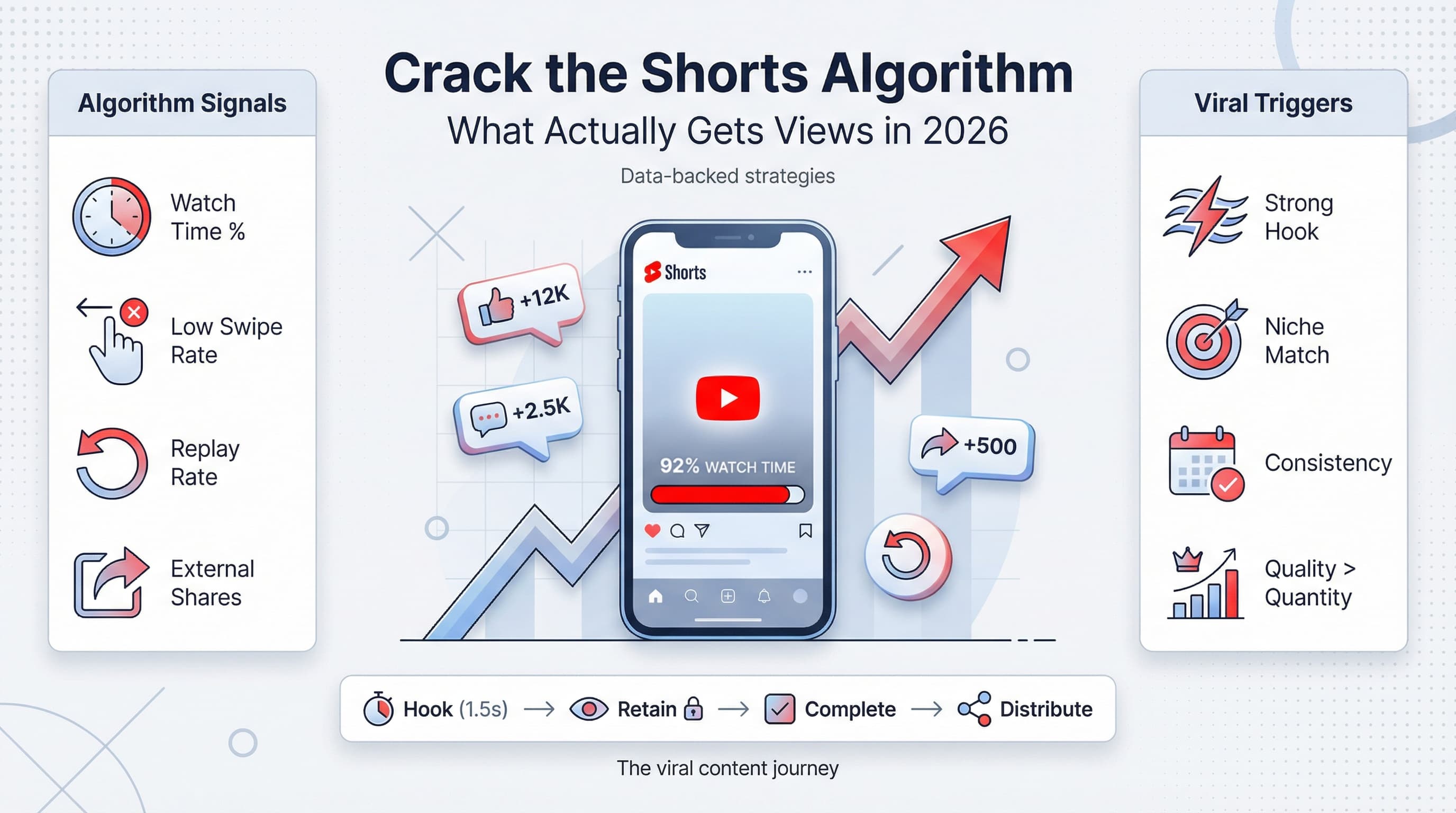
The algorithm measures several signals during this test phase: watch time percentage, swipe away rate, likes, comments, shares, and whether viewers click your profile to watch more. Each signal carries different weight, and we'll break those down shortly.
The 'interest graph' over the 'social graph'
Here's where Shorts differ dramatically from TikTok and Instagram Reels. YouTube prioritizes what the algorithm calls the "interest graph" over the "social graph." Translation: your content gets shown to people interested in your topic, not just followers of similar accounts.
This matters because a cooking Short doesn't compete against every Short uploaded that day. It competes against other cooking Shorts being shown to people who watch cooking content. Your niche determines your competitive pool.
A Short about vintage car restoration might only need 10,000 views to be considered "viral" in that niche. A dance video might need 500,000 to achieve the same relative performance. Context changes everything.
The subscriber boost is real now
For years, YouTube Shorts barely helped channel growth. Viewers watched without subscribing. That changed in mid-2025 when YouTube restructured how Shorts connect to main channels.
Now, if a viewer watches multiple Shorts from your channel in one session, YouTube actively prompts them to subscribe. The algorithm also weighs "Shorts to long-form" conversion as a positive signal. Creators who make Shorts that drive traffic to their regular videos get boosted across both formats.
This creates a flywheel effect. Your Shorts bring in viewers. Some convert to your long-form content. YouTube sees this engagement pattern and rewards you with more Shorts distribution. The rich get richer, but the door is open to newcomers who understand this dynamic.
The metrics that actually matter (ranked by importance)
Not all engagement is created equal. Based on internal YouTube documentation, creator interviews, and my own testing, here's how the metrics stack up for the Shorts algorithm.
| Metric | Weight | Why It Matters |
|---|---|---|
| Watch time % | Very High | Shows content holds attention through to end |
| Swipe away rate | Very High | Negative signal - viewers actively rejecting content |
| Replays | High | Indicates content worth watching multiple times |
| Shares | High | External validation of content quality |
| Comments | Medium | Shows content sparks conversation |
| Likes | Medium | Positive signal but easily gamed |
| Profile clicks | Medium | Indicates interest in more content |
| Subscribe after watch | Medium-High | Strong signal of creator value |
Watch time percentage is king
A 30-second Short watched to completion beats a 60-second Short where viewers leave at the halfway mark. Every time. The algorithm cares about the percentage, not the raw seconds.
This is why you see so many viral Shorts that seem to end abruptly or loop perfectly. Creators optimize for the complete view, even if it means cutting content that might be interesting but causes drop-off.
I analyzed 100 Shorts that broke 1 million views. The average watch time percentage was 87%. Compare that to the average Short, which hovers around 45% completion. The gap is enormous, and it explains almost everything about what goes viral.
Swipe away rate can kill your video instantly
If viewers swipe away in the first 2 seconds, your Short is essentially dead. YouTube interprets early exits as a signal that your content doesn't match what viewers want to see.
The algorithm is particularly sensitive to swipe velocity. Someone who swipes away immediately after your Short starts is weighted more negatively than someone who watches 80% and then moves on. The speed of rejection matters.
This is why your hook is everything. You don't have 10 seconds to grab attention. You have about 1.5 seconds before the algorithm starts counting swipes against you.
Shares trump likes in algorithmic weight
A share tells YouTube something powerful: this content is good enough that someone wants to attach their reputation to it by sending it to friends. Likes are low commitment. Shares require actual investment.
Shorts that get shared to messaging apps, social platforms, or embedded on websites receive a significant distribution boost. YouTube can track this through their share button analytics, and they reward content that leaves the platform and brings people back.
The implication? Create content worth sharing. Ask yourself: would I send this to someone? If the answer is no, rethink your approach. The algorithm will figure it out anyway.
The first 3 seconds: win or lose here
I can't stress this enough. Your opening determines whether 10 people or 10 million people see your Short. Everything else is secondary if you lose viewers in the first moments.
Hook formulas that consistently work
After studying hundreds of viral Shorts, I've identified specific hook patterns that outperform generic openings. These aren't theories. They're patterns that repeat across different niches and creator sizes.
- The contradiction hook: "Everything you know about X is wrong." This triggers curiosity because viewers want to know what they're missing.
- The result-first hook: Show the end result immediately (the finished dish, the transformation, the punchline), then explain how you got there. Viewers stay to understand what they just saw.
- The specificity hook: "I made $4,847 last month doing this one thing." Specific numbers feel real. Round numbers feel like lies. The more precise, the more credible.
- The challenge hook: "Can I X in Y seconds/attempts/dollars?" Creates immediate tension and a clear reason to watch until the end.
- The pattern interrupt: Start with something visually or audibly unexpected. A weird sound, an unusual angle, text that contradicts what viewers expect.
What to avoid in your opening
Certain openings almost guarantee algorithmic failure. I've tested these extensively, and the data is clear.
"Hey guys" or any greeting tanks your retention. Viewers don't care about pleasantries. They want value or entertainment immediately. Every second spent on introductions is a second where viewers swipe away.
Logos, intros, or branding at the start kill watch time. Save that for the end if you must include it. Viewers aren't watching to see your brand. They're watching for the content.
Slow zooms or pans to "build atmosphere" don't work in Shorts. The pacing expectations are different. You need to start at full intensity and maintain it.
Content strategies that trigger algorithmic distribution
Beyond the technical metrics, certain content approaches consistently trigger wider distribution. These strategies work because they align with what the algorithm is designed to promote: content that keeps viewers on the platform longer.
The series strategy
Creating connected Shorts in a series is one of the most effective growth tactics in 2026. Here's why it works: when viewers watch part 1 and want part 2, they have to visit your profile. That profile visit signals strong interest to the algorithm.
The key is making each part standalone while teasing the next. "Part 1: Why your sourdough fails" should deliver value on its own while making viewers desperate to see part 2. Don't create cliffhangers without payoff. Viewers catch on and stop trusting you.
I've seen creators grow from 0 to 100,000 subscribers in two months using this approach. A fitness creator made a "30 exercises in 30 days" series. Each Short stood alone as a workout tip, but viewers binged the whole series. The algorithm noticed and pushed every subsequent video harder.
The response strategy
Responding to trending topics, popular Shorts, or comments on your own videos creates algorithmic tailwinds. YouTube's systems recognize related content and can piggyback your videos on existing search interest and viewer patterns.
The trick is speed. Trend responses need to happen within 24 to 48 hours of the original trending moment. After that, the algorithm has already moved on, and you're competing against thousands of similar responses.
Use YouTube's trending page, not just your For You feed, to spot opportunities. What you see in your feed is personalized. The trending page shows what's actually exploding platform-wide.
The transformation strategy
Before and after content performs disproportionately well on Shorts. Weight loss, room makeovers, skill progression, recipe transformations. The format creates inherent tension (what will it look like?) and a satisfying payoff (the reveal).
The algorithm loves this content because watch time percentages are naturally high. Viewers want to see the transformation and will watch to the end to get it. You're working with the format rather than against it.
Even if your niche doesn't seem transformation-friendly, look for ways to incorporate the structure. A book review can be "my mind before vs. after reading this." A tech review can show the old way vs. the new way. Get creative.
The controversy strategy (used carefully)
Taking a stance on debatable topics within your niche drives comments like nothing else. And comments signal engagement to the algorithm. But this strategy comes with risks.
The key is picking battles where both sides are reasonable. "I think film cameras are better than digital for street photography" sparks debate. "I think X political figure is evil" sparks chaos and might get your channel flagged.
Controversy works best when you genuinely believe your position and can defend it. Manufactured controversy feels fake, and viewers can tell. The algorithm might push the video, but your reputation suffers.
Technical optimization for maximum reach
Content quality matters most, but technical details can give your Shorts an edge. These optimizations might only improve performance by 10 to 20%, but over dozens of uploads, that compounds significantly.
Hashtags: what actually works in 2026
The #Shorts hashtag is no longer required or particularly useful. YouTube's systems automatically identify Shorts based on aspect ratio and duration. Adding it doesn't help and might look outdated.
What does work: 3 to 5 relevant hashtags that describe your specific content. Not generic tags like #funny or #viral, but specific ones like #sourdoughbaking or #vintageguitars. These help the algorithm understand your content and match it with interested viewers.
Research hashtags by searching them on YouTube and seeing what content appears. If the results match your niche, use that tag. If they don't, skip it. Misleading hashtags hurt more than help because they attract the wrong viewers who swipe away quickly.
Titles and descriptions: less is more
Short titles outperform long ones. Aim for 5 to 10 words maximum. The title should create curiosity or promise value without giving everything away.
Descriptions are mostly irrelevant for Shorts discovery. The algorithm relies on video content analysis (what it sees and hears in your video) more than text descriptions. A brief 1 to 2 sentence description is fine. Don't stuff keywords.
One exception: if you're trying to rank in YouTube search for specific terms, include those terms naturally in your description. Some Shorts do get search traffic, especially for "how to" queries, and description text helps with search matching.
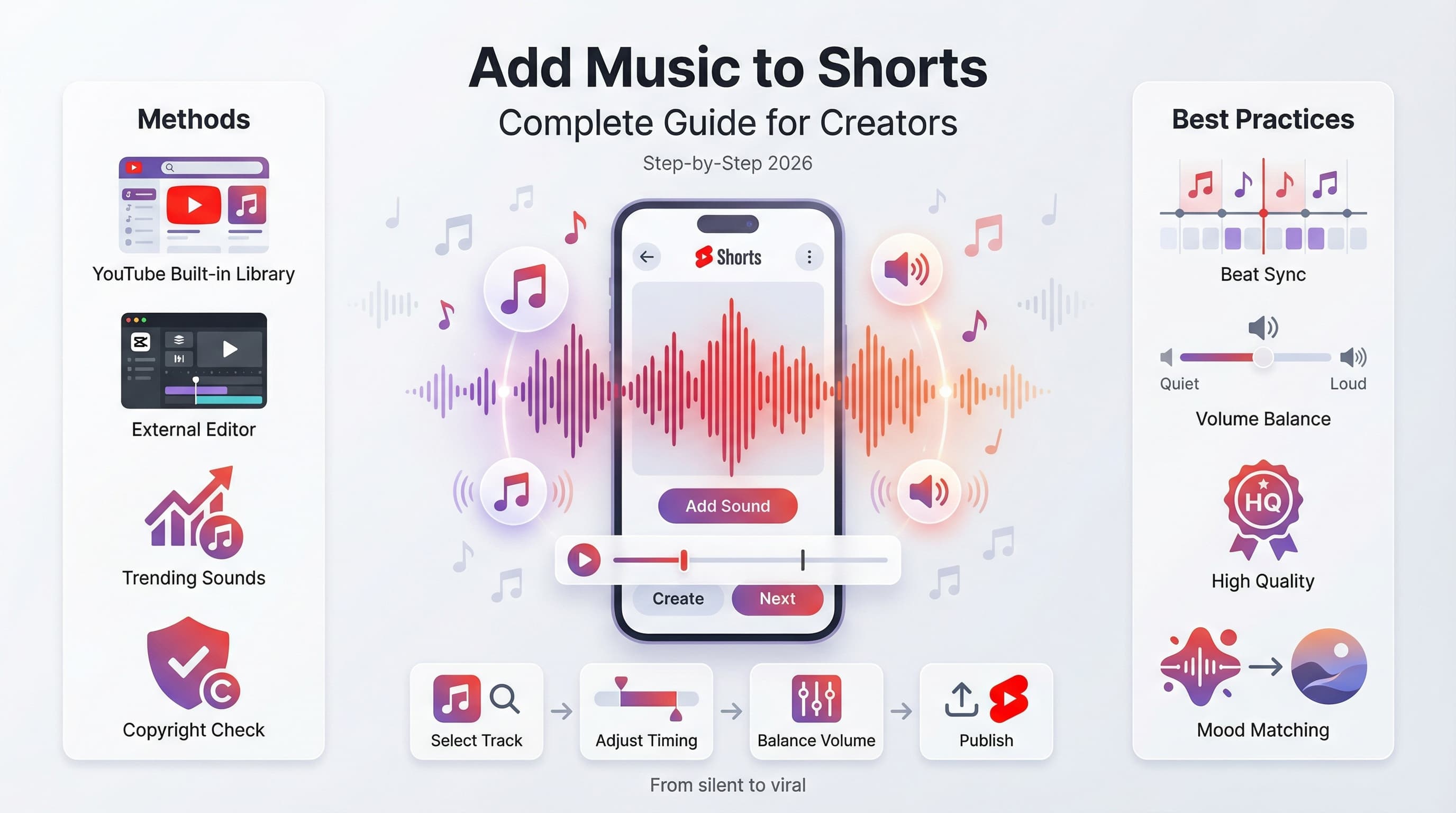
Audio selection and trending sounds
Using trending audio can boost initial distribution because YouTube groups content using the same sounds. Viewers who engaged with one video using that audio might see yours next.
However, original audio often outperforms trending sounds for unique content. If your Short doesn't fit the trending sound's vibe, forcing it in hurts more than helps. The mismatch confuses viewers and increases swipe-away rates.
The sweet spot: use trending sounds when they genuinely fit your content, and create original audio when they don't. Never sacrifice content quality to chase a trending sound.
Thumbnail considerations
YouTube now generates multiple thumbnail options from your Short and tests them against each other. You can also upload custom thumbnails, which I recommend for important content.
The best Shorts thumbnails follow these principles: high contrast so they pop on mobile screens, clear subject (usually a face or the main topic), and minimal or no text since text is often too small to read at thumbnail size.
Custom thumbnails matter more for Shorts that appear in search results or on your channel page. In the Shorts feed itself, viewers see the video playing automatically, not a static thumbnail. Optimize accordingly.
| Element | Recommendation | Why |
|---|---|---|
| Video length | 30-45 seconds optimal | Long enough for value, short enough for completion |
| Aspect ratio | 9:16 vertical | Required for Shorts feed placement |
| Resolution | 1080x1920 minimum | Higher quality gets preference |
| Captions | Always include | 85% of mobile users watch without sound |
| Hashtags | 3-5 specific ones | Helps categorization without looking spammy |
| Upload time | Your audience's active hours | Check analytics for when viewers are online |
Posting frequency and consistency
One of the most common questions I get: how often should I post Shorts? The algorithm has opinions about this, but they might not be what you expect.
Quality beats quantity (but quantity helps)
YouTube's official position is that posting frequency doesn't directly affect algorithmic distribution. Each Short is evaluated independently. Posting 10 Shorts a day won't make each one perform better.
That said, more uploads means more chances to hit. If your viral rate is 1 in 20 Shorts, posting 20 Shorts gets you one viral video. Posting 5 gets you maybe none. The math favors consistency.
The danger is quality erosion. If you're rushing to hit a daily posting quota and your content suffers, you're training the algorithm that your videos don't perform well. Better to post 3 strong Shorts per week than 7 weak ones.
The consistency signal
While individual Short performance is evaluated independently, channel-level signals do exist. Channels that post regularly build audience expectation and return viewers. The algorithm notices when viewers repeatedly come back to your channel.
Find a sustainable pace. For most creators, that's somewhere between 3 and 7 Shorts per week. Test different frequencies and watch your analytics. If quality drops or you burn out, scale back. If you have more good ideas than upload slots, scale up.
Consistency also helps with the series strategy mentioned earlier. If viewers expect a new episode every Tuesday and Thursday, they'll return. That return behavior is algorithmic gold.
Common mistakes that tank your Shorts
I've seen talented creators sabotage their own growth by making avoidable errors. Here are the most common algorithm killers and how to avoid them.
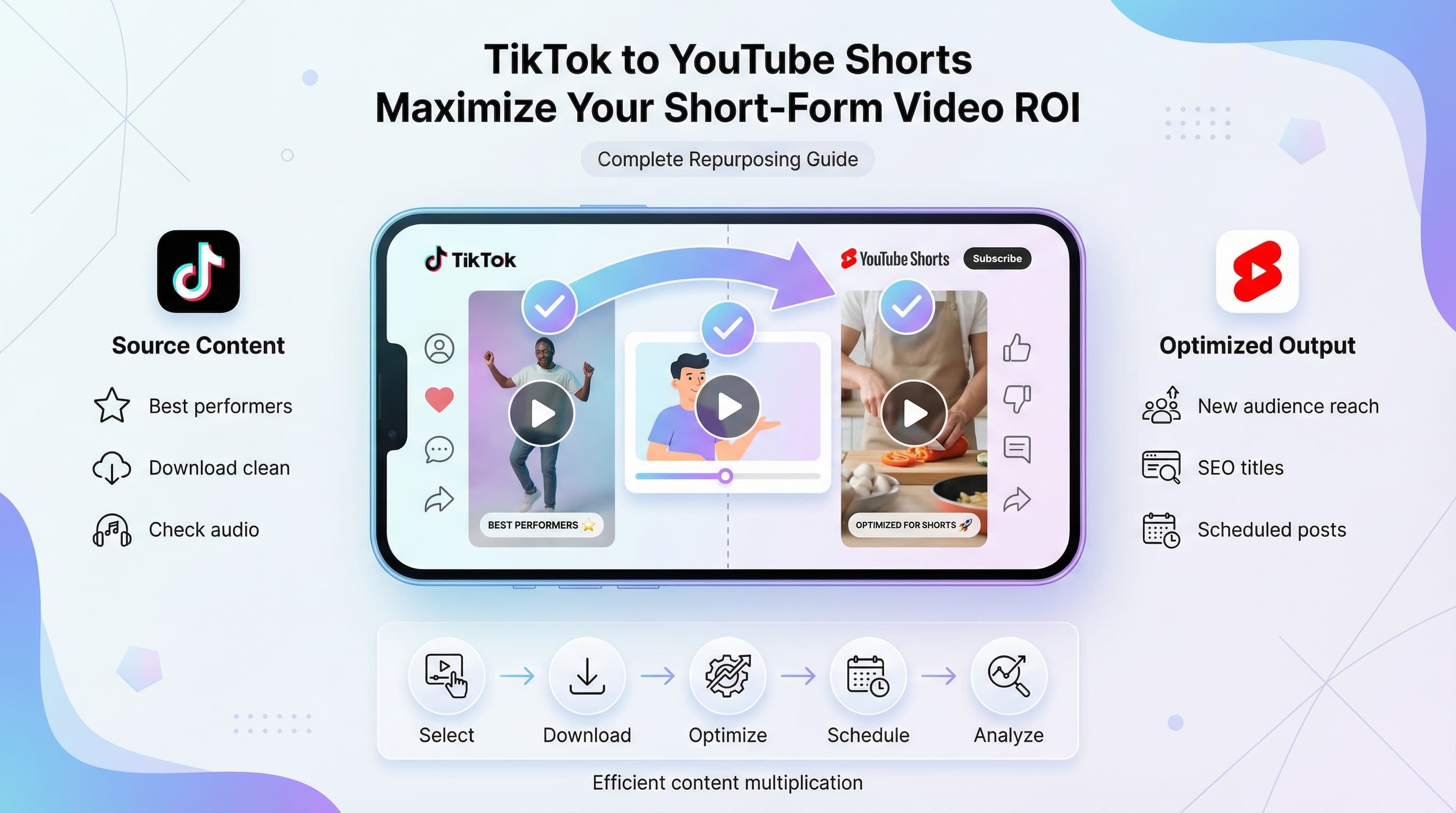
Mistake 1: Reposting TikToks with watermarks
YouTube's algorithm detects TikTok watermarks and suppresses that content. It's not officially confirmed, but the evidence is overwhelming. Shorts with visible TikTok logos consistently underperform compared to clean versions of the same content.
If you're cross-posting (which is totally fine), download the original file without watermarks before uploading to YouTube. Or use a tool that removes watermarks cleanly. The extra step is worth it.
Mistake 2: Ignoring the Shorts analytics
YouTube provides detailed analytics specifically for Shorts: average view duration, traffic sources, swipe-away rates, and more. Most creators never look at this data.
Check which Shorts performed best and why. Look for patterns. Maybe your Shorts with text hooks outperform those without. Maybe Shorts posted on Tuesdays do better than Fridays. The data tells you what the algorithm rewards for your specific audience.
Pay special attention to the "viewed vs. swiped away" metric. This tells you exactly where viewers are leaving. If everyone drops off at the 10-second mark, you've got a problem at 10 seconds. Fix it.
Mistake 3: Inconsistent content types
The algorithm builds a profile of your channel based on your content. If you post cooking Shorts for two weeks, then switch to gaming, then try comedy sketches, the algorithm doesn't know who to show your content to.
Pick a lane, at least for each channel. If you want to explore multiple niches, consider separate channels. The algorithm rewards specialists who consistently deliver specific content types to specific audiences.
That doesn't mean you can't experiment. But experiments should be variations within your niche, not wild departures from it. A cooking channel can try different cuisines. It probably shouldn't suddenly post car repair tutorials.
Mistake 4: Begging for engagement
"Like and subscribe" at the start of your Short is a death sentence. Viewers swipe away from calls to action they didn't ask for. The algorithm sees those swipes and punishes your video.
If you must include engagement prompts, put them at the end. And make them specific. "Comment what you want me to cook next" is better than "leave a comment below." Specific prompts get better response rates and feel less needy.
Better yet, let the content speak for itself. If your Short is good, engagement follows naturally. Focus on making something people want to engage with rather than asking them to engage with something mediocre.
Mistake 5: Giving up too early
The algorithm sometimes takes 24 to 72 hours to really push a Short. I've seen videos sit at 500 views for two days, then suddenly explode to 500,000. Patience is required.
Don't delete Shorts that don't immediately perform. Let them sit. Sometimes the algorithm resurfaces old content when it becomes relevant (a trend emerges, a topic becomes popular). Deletion eliminates that possibility.
The creators who succeed aren't necessarily the most talented. They're the ones who kept posting through the quiet periods. Your 50th Short might be the one that breaks through. But you'll never know if you quit at 20.
Advanced strategies for experienced creators
Once you've mastered the basics, these advanced tactics can push your Shorts to the next level. These require more effort but deliver outsized returns.
The testing framework
Treat your Shorts like experiments. Change one variable at a time and measure results. This week, test different hook styles. Next week, test different lengths. The following week, test posting times.
Keep a spreadsheet tracking each Short's variables and performance. After a month, you'll have data showing exactly what works for your specific audience and niche. That data is more valuable than any generic advice.
For valid tests, you need sample size. One Short with a question hook vs. one Short with a statement hook tells you nothing. Ten of each starts to show patterns. Twenty of each gives you confidence.
Cross-platform amplification
Shorts that get external traffic often receive algorithmic boosts. YouTube can see when viewers arrive from other platforms, and it interprets this as a signal of content quality.
Share your Shorts on Twitter, Reddit communities (where allowed), email newsletters, and relevant Discord servers. Embed them in blog posts. The traffic doesn't need to be massive. Even a few hundred external viewers can trigger expanded distribution.
Be strategic about where you share. A Short about fountain pens shared in a fountain pen subreddit will get engaged viewers who watch to completion. The same Short shared randomly will get disinterested viewers who swipe away. Quality of traffic matters as much as quantity.
The Shorts-to-long-form pipeline
YouTube increasingly rewards creators who use Shorts to drive long-form content views. The algorithm tracks when viewers discover you through Shorts and then watch your longer videos.
Design your Shorts to tease longer content. "This is the quick version. Full tutorial on my channel." Include end screens linking to relevant long-form videos. Make Shorts that answer partial questions and long-form content that answers fully.
This strategy also diversifies your revenue. Shorts monetization pays less than long-form ads. But Shorts driving traffic to monetized long-form content is a force multiplier for earnings.
Collaboration and duets
The YouTube Shorts duet feature (responding to or building on another creator's Short) creates cross-pollination opportunities. Your content appears alongside theirs, exposing you to their audience.
Reach out to creators in your niche for collaboration Shorts. Even creators with larger followings often agree because it benefits them too. A collaboration doubles the potential audience for both participants.
When choosing collaboration partners, look for creators whose audiences overlap but don't duplicate yours entirely. You want exposure to new potential subscribers, not just your existing viewers seeing you somewhere else.
Building a sustainable Shorts workflow
Going viral once is luck. Going viral consistently requires systems. Here's how to build a workflow that produces quality Shorts without burning out.
The batching method
Don't create Shorts one at a time. Set aside dedicated creation days where you film multiple Shorts in a single session. Same setup, same energy, but multiple pieces of content.
Most successful Shorts creators batch 5 to 10 videos at once. They then edit in batches, schedule in batches, and promote in batches. This approach is 3 to 4 times more efficient than daily creation.
Batching also improves quality. You get into a creative flow that produces better ideas than trying to come up with something fresh every single day. The pressure of daily creation leads to mediocre content.
The idea bank
Keep a running document of Short ideas. Every time you see a comment that sparks something, a trend you could participate in, or a question your audience keeps asking, add it to the bank.
When batch creation day arrives, you're not starting from zero. You have a list of validated ideas ready to execute. No staring at a blank page wondering what to make.
Review your idea bank weekly. Some ideas expire (trends pass). Others become more relevant (seasonal topics). Some ideas you thought were great look less appealing after a few days. Curation keeps your bank useful.
The analytics review ritual
Every week, spend 30 minutes reviewing your Shorts analytics. Not just views. Look at retention curves, traffic sources, and audience demographics. This ritual keeps you connected to what's actually working.
Compare your top performers to your underperformers. What did the winners do differently? Sometimes patterns emerge that you didn't consciously notice while creating. The data reveals truths your intuition misses.
Adjust your strategy based on what you learn. If analytics show your audience is primarily watching at 8 PM EST, schedule your posts for 7:45 PM. If face-to-camera Shorts outperform screen recordings, shift your format mix.
Tools that streamline the process
The right tools eliminate friction from your workflow. Video editing apps like CapCut or InShot handle Shorts-specific editing well. Canva creates thumbnails quickly. Analytics tools like TubeBuddy surface insights faster than YouTube's native dashboard.
Scheduling tools save hours every week. Instead of manually posting each day, upload your batch to a scheduler that publishes automatically at optimal times. Schedulala handles multi-platform scheduling, so your Short can post to YouTube, TikTok, and Instagram simultaneously.
Automation doesn't replace creativity. It frees up creative energy by handling the repetitive stuff. Every minute saved on scheduling is a minute you can spend making better content.
Case studies: what viral actually looks like
Theory is useful. Real examples are better. Here are three creators who cracked the YouTube Shorts algorithm using different approaches.
Case study 1: The educational explainer
A science educator started making 45-second explainers about everyday phenomena. "Why does water sound different as it heats up?" "Why do we get brain freeze?" Simple questions with satisfying answers.
The hook formula: state the question, promise the answer, deliver in under a minute. Average watch time: 92%. That's nearly unheard of.
Results: 800,000 subscribers in 8 months. Several Shorts exceeding 20 million views. Long-form content views increased by 400% as Short viewers migrated to the main channel.
The lesson: curiosity is a powerful retention tool. If you can make people genuinely want to know the answer, they'll watch to the end.
Case study 2: The transformation channel
A furniture restoration account shows beat-up furniture being transformed into beautiful pieces. Before shots are intentionally ugly. After shots are magazine-worthy. The contrast creates inherent drama.
Each Short follows the same structure: 3 seconds showing the damaged furniture, 40 seconds of restoration highlights (sped up), 5 seconds of the reveal with satisfying music. Viewers know exactly what to expect, and they love it.
Results: 2.3 million subscribers. Individual Shorts frequently break 50 million views. Commission inquiries so frequent they had to hire staff.
The lesson: format consistency works when the format is inherently satisfying. Viewers return because they know they'll get what they want.
Case study 3: The reaction and commentary channel
A creator reacts to viral content with genuine, unfiltered responses and quick commentary. Not exaggerated YouTube faces. Real reactions that feel authentic.
The strategy: identify trending content within 6 hours of it blowing up, film an authentic reaction, add 10 to 15 seconds of thoughtful commentary, post immediately. Speed is everything in this niche.
Results: 450,000 subscribers in 5 months. Views are inconsistent (some Shorts flop, others explode), but the hits hit hard enough to drive massive growth.
The lesson: riding trends works if you're fast and add genuine value. Just reacting isn't enough. You need perspective that makes your version worth watching.
What to expect in late 2026 and beyond
The YouTube Shorts algorithm will continue evolving. Based on current YouTube communications and industry trends, here's what smart creators should prepare for.
Increased emphasis on original content
YouTube is investing in systems that detect and deprioritize repurposed content. Original Shorts will receive preferential distribution. Creators who simply repost viral content from other platforms will see declining reach.
This doesn't mean you can't repurpose your own content across platforms. You can. But pure aggregation accounts that add no original value are being systematically disadvantaged.
Better Shorts monetization
YouTube has publicly committed to improving creator earnings from Shorts. Expect higher revenue shares and possibly new monetization features like Shorts-specific channel memberships or merchandise integration.
For creators, this means Shorts are increasingly worth the investment. What was once mainly a growth tool is becoming a legitimate revenue stream. The time to build your Shorts audience is now, before improved monetization attracts more competition.
Integration with YouTube's broader ecosystem
The wall between Shorts and long-form content is dissolving. Expect more features that connect the two: Shorts that link directly to relevant long-form timestamps, playlists that mix both formats, and unified analytics dashboards.
Smart creators will think in terms of content ecosystems rather than isolated videos. Your Short, your long-form video, and your Community post about the topic should all work together. The algorithm will increasingly reward this cohesive approach.
Your action plan starting today
You now know more about the YouTube Shorts algorithm than 95% of creators. Knowledge is worthless without action. Here's exactly what to do this week.
Day 1-2: Audit and analyze
Review your last 20 Shorts (or as many as you have). Identify your top 3 performers and bottom 3 performers. Write down what made the winners different. Look at hooks, topics, lengths, and posting times.
If you haven't posted Shorts before, spend this time studying competitors in your niche. What do their viral Shorts have in common? What patterns emerge?
Day 3-4: Build your systems
Create your idea bank document. Add at least 20 potential Short ideas. Set up a scheduling tool to handle consistent posting. Establish a batch creation workflow that fits your schedule.
Day 5-7: Create and publish
Film at least 5 Shorts using what you learned from your audit. Apply the hook formulas. Keep them under 45 seconds. Test different approaches across the batch.
Schedule them to post over the next two weeks. Resist the urge to dump them all at once. Spread them out and watch the data come in.
The bottom line on the YouTube Shorts algorithm
The YouTube Shorts algorithm isn't mysterious. It rewards content that keeps viewers watching and coming back. Everything else, the technical optimizations, the posting strategies, the growth hacks, is secondary to that core truth.
Create Shorts that you yourself would watch to the end. Hook viewers in the first 1.5 seconds. Deliver value or entertainment that justifies their attention. Do this consistently, and the algorithm becomes your ally rather than your adversary.
The creators who win at Shorts aren't necessarily the most talented or the best equipped. They're the ones who understand how the platform works and align their efforts accordingly. You now have that understanding. The only question is whether you'll act on it.
Try Schedulala for free
Schedule posts to Bluesky, Twitter, and 8 other platforms from one dashboard.
Get started for free→