Holiday Social Media Calendar 2026: Every Key Date, Mapped Out and Ready to Schedule
Plan every post in advance with this 2026 holiday social media calendar covering 40+ key dates, content ideas, and a step-by-step scheduling framework.

Every November, the same thing happens to marketing teams: it's suddenly the week before Black Friday and nobody has a plan for Giving Tuesday, Hanukkah, or the dozen other moments stacked between now and New Year's Eve. Someone throws together a last-minute graphic at 10pm and calls it a strategy. Learn more about Instagram scheduling.
See It in Action
This is what scheduling an Instagram post looks like in Schedulala
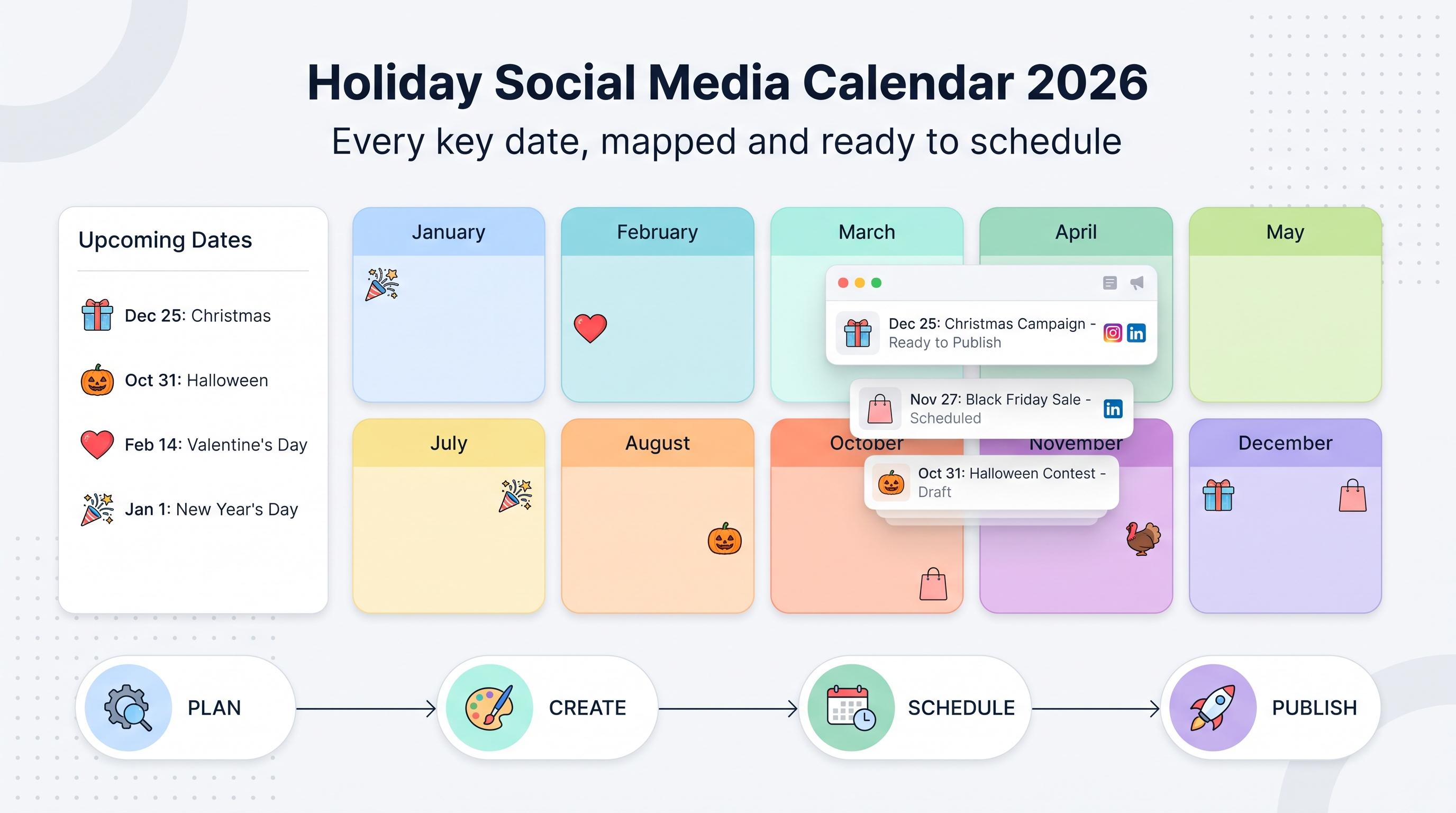
A holiday social media calendar fixes that cycle for good. Instead of reacting to dates as they sneak up on you, you know exactly what's coming, what to say about it, and when to hit publish, weeks or months in advance. This guide lays out every major 2026 holiday and cultural moment worth planning content around, plus a repeatable system for turning that list into scheduled posts instead of a stressed-out Slack thread. See our 25 free instagram post guide.
Whether you're running one brand account or juggling a dozen client calendars, the dates here apply. What changes is how much content you build around each one, and that's something we'll cover too. Our content calendar can help.
Try Schedulala for free
Schedule posts to Bluesky, Twitter, and 8 other platforms from one dashboard.
Get started for free→Why holiday planning actually moves the needle
It's tempting to treat holiday posts as filler, something to toss into the queue because everyone else is doing it. That's a mistake. Holidays and cultural moments give you something most daily content doesn't: a built-in reason for people to care right now. Your audience is already thinking about Mother's Day, Halloween costumes, or back-to-school shopping. You're not creating demand for attention, you're meeting demand that already exists. Try our scheduling across platforms.
There's also a practical scheduling reason to plan ahead. Platforms get noisy around major holidays. If you're posting your Christmas content on December 24th alongside every other brand in your niche, you're competing for attention in the worst possible window. Brands that plan their holiday calendar months out can post earlier, test variations, and avoid the mad scramble that produces generic, forgettable content. See our best time to post on instagram guide.
And for ecommerce and service businesses especially, holidays are revenue events, not just content opportunities. Black Friday, Valentine's Day, and the winter gift-giving stretch between Thanksgiving and Christmas drive real purchase intent. A calendar that maps content to those windows, with enough lead time to build assets and schedule promotions, is a direct line to sales, not just likes. Learn more about instagram engagement calculator.
The complete 2026 holiday social media calendar
Below is a quarter-by-quarter breakdown of the holidays, observances, and cultural moments worth adding to your 2026 calendar. Note that a few dates (religious observances tied to lunar calendars like Diwali and Hanukkah) shift slightly year to year, so double-check the exact date closer to the time even though we've listed the general window here. Everything else is confirmed for 2026.
Q1 2026: January through March
The first quarter is quieter than Q4, but it's where a lot of brands build momentum with fresh-start content, love-themed campaigns, and early spring energy. Don't skip it just because it's not Black Friday season.
| Date | Holiday / observance | Content angle |
|---|---|---|
| Jan 1 | New Year's Day | Fresh start messaging, goal-setting, year-in-review recaps |
| Jan 19 | Martin Luther King Jr. Day | Values-driven content, community spotlights |
| Feb 14 | Valentine's Day | Gift guides, love-your-customers campaigns, behind-the-scenes affection |
| Feb 16 | Presidents Day | Sales and promotions, especially for retail |
| Feb 17 | Mardi Gras | Playful, visual content, regional relevance |
| Mar 8 | International Women's Day | Team spotlights, founder stories, cause partnerships |
| Mar 17 | St. Patrick's Day | Lighthearted themed content, green-color visuals |
| Mar 20 | Spring Equinox | Renewal and refresh messaging |
Q2 2026: April through June
Spring and early summer bring a mix of family holidays, cause awareness months, and the unofficial start of outdoor-everything content. This is also a strong window for sustainability and community messaging if that fits your brand.
| Date | Holiday / observance | Content angle |
|---|---|---|
| Apr 5 | Easter | Family gatherings, pastel visuals, gift or food content |
| Apr 22 | Earth Day | Sustainability practices, behind-the-scenes sourcing |
| May 5 | Cinco de Mayo | Cultural celebration, food and drink content |
| May 10 | Mother's Day | Gift guides, customer appreciation, tribute posts |
| May 25 | Memorial Day | Sales, long-weekend content, reflective posts |
| Jun | Pride Month | Ongoing representation, not a single post, throughout the month |
| Jun 19 | Juneteenth | History, community spotlights, meaningful not performative content |
| Jun 21 | Father's Day | Gift guides, dad-centric humor, customer stories |
Q3 2026: July through September
Summer slows down for a lot of industries, which makes it a good time to build batch content and prep for the Q4 crush. But a few key dates still deserve real attention, especially for retail and education-adjacent brands gearing up for back-to-school.
| Date | Holiday / observance | Content angle |
|---|---|---|
| Jul 4 | Independence Day | Patriotic visuals, long-weekend sales, cookout content |
| Aug | Back to school season | Supply guides, routine tips, parent-focused content |
| Sep 7 | Labor Day | End-of-summer sales, long-weekend content |
| Sep 15 to Oct 15 | Hispanic Heritage Month | Cultural spotlights, supplier and creator partnerships |
| Sep 29 | National Coffee Day | Low-lift engagement content, user-generated posts |
Q4 2026: October through December
This is the quarter that makes or breaks a lot of annual content plans. Between Halloween, the Thanksgiving-to-Cyber-Monday stretch, and the entire gift-giving season through Christmas and New Year's Eve, you're looking at the highest volume of relevant dates packed into the shortest window all year. Start building these assets in September, not November.
| Date | Holiday / observance | Content angle |
|---|---|---|
| Oct 12 | Indigenous Peoples' Day | Education, community partnerships |
| Oct 31 | Halloween | Costume content, spooky visuals, candy and treat promos |
| Nov 8 | Diwali (approx, confirm exact date) | Cultural celebration, light and color themes |
| Nov 11 | Veterans Day | Tribute content, veteran-owned business spotlights |
| Nov 26 | Thanksgiving | Gratitude posts, closed-for-the-holiday notices |
| Nov 27 | Black Friday | Biggest sales push of the year, early teaser content in the weeks prior |
| Nov 28 | Small Business Saturday | Local and small-business spotlights, community support |
| Nov 30 | Cyber Monday | Online-exclusive deals, urgency-driven copy |
| Dec 1 | Giving Tuesday | Donation drives, cause partnerships |
| Dec 4 | Hanukkah begins (approx, confirm exact date) | Gift guides, themed visuals through the eight nights |
| Dec 25 | Christmas Day | Closed notices, gratitude, gift reveals |
| Dec 26 to Jan 1 | Kwanzaa | Cultural education, community-focused content |
| Dec 31 | New Year's Eve | Year-in-review recaps, countdown content |
How to build your 2026 holiday calendar in 6 steps
1. Pick your dates before you pick your content
Start with the list above and cut it down to what actually fits your brand. A B2B software company has no reason to post about Mardi Gras, but a restaurant absolutely should. Mark each date as high priority, nice-to-have, or skip. You don't need content for every single holiday, you need content for the ones your audience actually cares about.
2. Work backward from your highest-stakes dates
Identify the three or four moments that matter most for your business (for most brands that's some combination of Black Friday, Cyber Monday, and one or two seasonal holidays) and build your timeline backward from those. If Black Friday needs a product photo shoot, a landing page, and a four-post teaser sequence, that work needs to start six to eight weeks out, not six days.
3. Batch your lower-priority content in one sitting
For the holidays that just need a simple acknowledgment (a Presidents Day graphic, a National Coffee Day post), batch all of those in a single planning session. Write the captions, pick the visuals, and get them into your scheduling tool in one pass instead of touching each one individually as it comes up.
4. Build in buffer time for approvals
If you work with a team or client, factor in review time. Nothing kills a holiday campaign faster than a graphic stuck in approval limbo the morning it's supposed to go live. Schedule internal deadlines at least a week before the actual posting date for anything that needs sign-off.
5. Schedule everything in advance, don't rely on memory
This is the step people skip and then regret. Once your content is approved, load it into a scheduler and set it to publish automatically. Relying on someone to remember to post on the actual day is how brands end up posting their Mother's Day content on Mother's Day evening instead of that morning when people are actually online shopping or sharing.
6. Review performance and adjust next quarter's plan
After each major holiday push, spend 20 minutes looking at what performed. Which posts got saved, shared, or converted? Which fell flat? Holiday content repeats every year, so this is one of the few places where you get a genuine do-over. Feed what you learn into next year's calendar instead of starting from scratch.
Platform-specific holiday strategy
A holiday calendar isn't one-size-fits-all across platforms. The same Thanksgiving post that works on Instagram might flop on LinkedIn, and vice versa. Here's how to think about adapting your holiday content by channel.
On Instagram and TikTok, lean into visual storytelling and trends. These are the platforms where a well-shot product photo or a quick behind-the-scenes clip of your team prepping for the holiday rush genuinely outperforms a static sales graphic. Use Reels and short video for anything tied to Halloween, back-to-school, or the Black Friday buildup.
Pinterest is arguably the most underrated holiday platform. People start searching for Christmas gift ideas and Thanksgiving recipes months before the actual date, often in August and September for winter content. If you're not pinning seasonal content two to three months ahead, you're missing the window entirely.
LinkedIn calls for a different tone. Skip the discount codes and lean into the human side of holidays: gratitude posts around Thanksgiving, team culture content around the end of the year, or thoughtful commentary on observances like Juneteenth or International Women's Day. Overly promotional holiday content tends to underperform here.
Facebook and Google Business Profile remain strong for practical holiday information: adjusted hours, local event promotion, and community-focused posts. These are often the first places people check before visiting a business during a holiday weekend, so accurate, timely updates matter more than clever copy.
Twitter/X and Threads reward real-time commentary and quick reactions more than polished campaigns. If something holiday-related is trending, a fast, in-the-moment post often does better than something scheduled days in advance. Keep a little flexibility in your calendar for these platforms specifically.
Common holiday calendar mistakes to avoid
- Posting on the day with nothing prepared in advance. If your Black Friday content gets written on Black Friday morning, you've already lost the lead time your competitors used weeks earlier.
- Treating every holiday the same. A brand doesn't need a four-post campaign for National Coffee Day and a single tweet for Christmas. Match your effort to what actually matters for your audience.
- Forgetting about time zones. If your audience spans multiple regions, a post scheduled for 9am your time might land at 2am for a chunk of your followers. Plan posting windows around where your audience actually lives.
- Reusing last year's content word for word. Dates and trends shift. A caption written for 2025 might reference outdated pricing, a discontinued product, or last year's hashtag that nobody's using anymore.
- Ignoring cultural and religious holidays outside your own experience. If you're posting about Diwali, Hanukkah, Kwanzaa, or Ramadan, do a little research first. Generic or inaccurate posts about observances you don't understand tend to do more harm than staying quiet.
- Overloading your feed with holiday content and nothing else. If every single post for two weeks is holiday-themed, your account starts to feel like one long ad. Mix in your normal content between the big moments.
Turning the calendar into scheduled posts
A calendar full of dates and content ideas is only useful if it actually gets published, and that's where most teams fall apart. You can have the best-planned holiday strategy on paper and still miss the window because nobody remembered to hit publish at the right time on the right account.
This is where a scheduling tool earns its keep. Schedulala lets you load your entire 2026 holiday calendar in one sitting, across all 12 supported platforms (Instagram, TikTok, Twitter/X, LinkedIn, YouTube, Facebook, Threads, Bluesky, Pinterest, Telegram, Mastodon, and Google Business Profile), and let it publish on autopilot while you focus on the next thing.
Every plan includes unlimited scheduled posts, so you're never rationing how many holiday posts you queue up because you hit some arbitrary cap. The Personal plan runs $29/month for 10 social accounts, Team is $49/month for 25 accounts, and Agency is $99/month for 100 accounts. Those accounts are a flat count you can split however you want: 10 Instagram accounts for 10 different clients, or one account on each of 10 different platforms, there's no per-platform sub-limit forcing you into a specific mix. Pay annually and you get two months free on any plan.
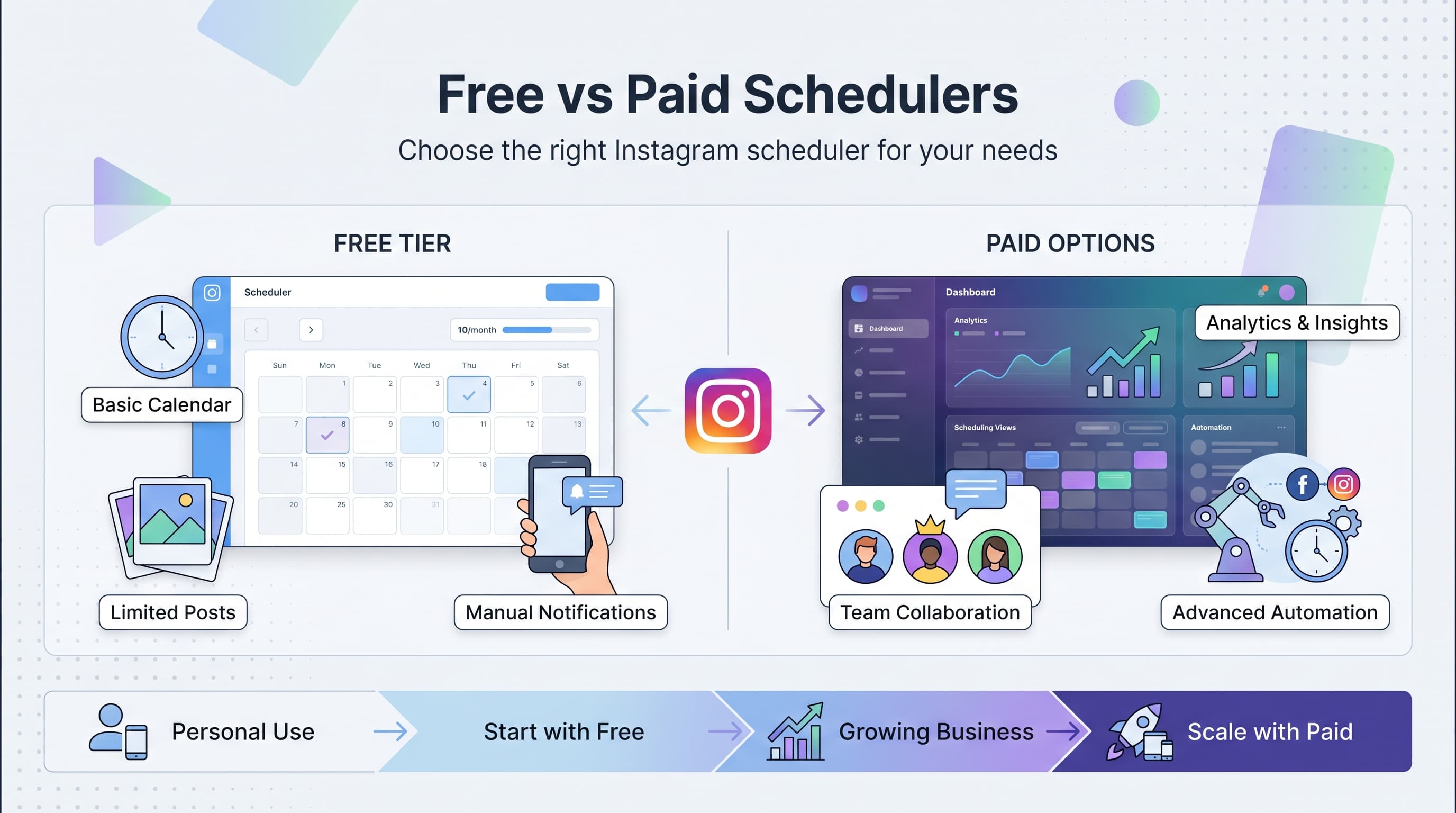
There's no free tier anymore (it was phased out mid-2026), but you can try the full platform with a 7-day free trial before committing. For a quarter as content-heavy as Q4, that trial window alone is enough time to build and schedule your entire Black Friday through New Year's calendar.
A simple framework for any holiday you add later
New observances get added to the cultural calendar every year, and you'll inevitably spot a date mid-year that isn't on any list you've seen. When that happens, run it through a quick four-question filter before committing content to it.
- Does this date have genuine relevance to your audience, or are you posting about it because everyone else is?
- Can you say something specific and useful, not just a generic graphic with the holiday's name on it?
- Do you have enough lead time to produce something decent, or would you be rushing it out the morning of?
- Does it fit the tone of the platform you're posting it to?
If a date fails more than one of those questions, it's fine to skip it. Not every holiday needs your brand's commentary, and a quiet feed on a low-relevance date beats a forced, generic post that does nothing for engagement or brand perception.
Your next move
Don't try to plan all 40-plus dates on this list in one sitting. Pick your highest-priority quarter first, which for most businesses is Q4, and build that out completely before moving to the next. A fully scheduled November and December beats a half-finished plan for the entire year.
Try Schedulala for free
Schedule posts to Bluesky, Twitter, and 8 other platforms from one dashboard.
Get started for free→