The Complete Social Media Guide for Fitness Coaches: Build Your Online Presence and Attract Clients
Master social media for fitness coaches. Learn platform strategies, content creation, client attraction, and scaling your online fitness business effectively.

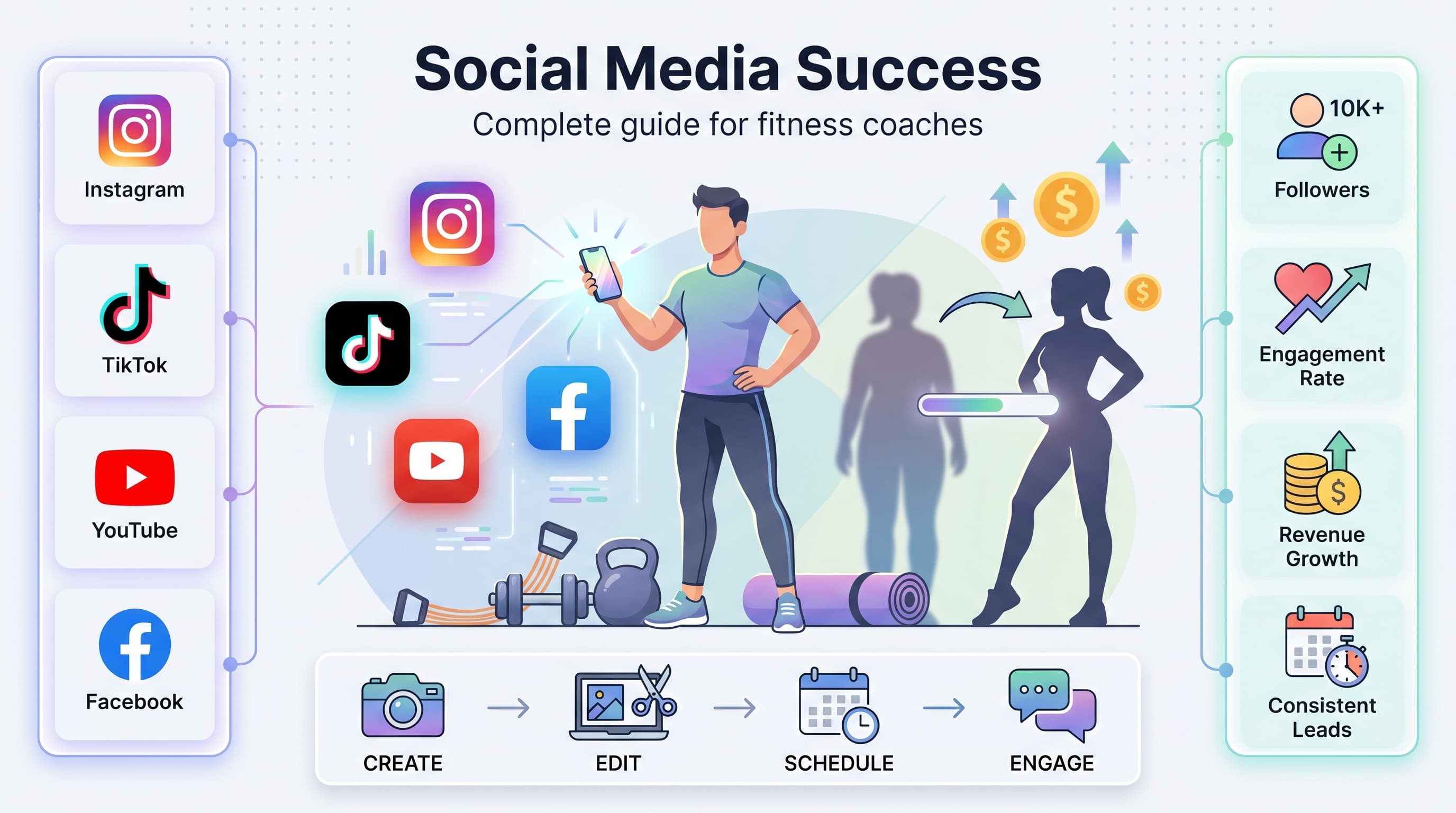
Your fitness expertise means nothing if nobody sees it. You can transform lives, but if your social media presence is weak, potential clients scroll right past you. Learn more about Instagram scheduling.
See It in Action
This is what scheduling an Instagram post looks like in Schedulala
Here's the reality: successful fitness coaches aren't just great trainers. They're smart marketers who know how to showcase their knowledge, build trust, and convert followers into paying clients. This guide shows you exactly how to do that. Our scheduling across platforms can help.
Try Schedulala for free
Schedule posts to Bluesky, Twitter, and 8 other platforms from one dashboard.
Get started for free→Why social media matters for fitness coaches
The fitness industry has shifted dramatically. Personal training referrals and gym floor connections still matter, but they're not enough. Your potential clients spend 2.5 hours daily on social media platforms. That's where they discover new fitness routines, follow transformation journeys, and decide which coaches to trust. Our batch content creation can help.
Consider this: fitness influencer accounts with 10,000 engaged followers often generate more revenue than trainers with 20+ years of experience but weak online presence. The difference isn't expertise. It's visibility and connection. Try our the best social media.
The numbers don't lie
73% of fitness consumers research trainers and programs online before making decisions. 86% of fitness professionals who actively use social media report increased client acquisition. 92% of fitness businesses say social media directly impacts their revenue. Try our best time to post on instagram.
These aren't vanity metrics. They represent real business impact. Fitness coaches who master social media consistently book more sessions, charge higher rates, and build sustainable businesses that aren't dependent on single gym locations or referral sources. Try our instagram engagement calculator.
Choosing the right platforms for fitness coaching
Not all social platforms work equally well for fitness coaches. Each has different audiences, content formats, and engagement patterns. Smart coaches focus on 2-3 platforms where their ideal clients spend time, rather than spreading thin across everything.
Instagram: The visual fitness hub
Instagram dominates fitness social media. 67% of fitness content consumption happens here. The platform's visual nature perfectly showcases workout demonstrations, transformation photos, and behind-the-scenes content that builds personal connections.
Instagram works especially well for personal trainers, nutrition coaches, and fitness influencers targeting millennials and Gen Z. The platform's shopping features also enable direct product sales and program promotion.
- Stories for daily engagement and quick tips
- Reels for workout demonstrations and trending content
- IGTV for longer educational content
- Posts for transformation photos and client spotlights
TikTok: The growth accelerator
TikTok's algorithm gives new creators unprecedented reach opportunities. Fitness coaches regularly gain thousands of followers from single viral videos. The platform favors authentic, educational content over polished production.
Quick workout routines, form corrections, and fitness myths debunked perform exceptionally well. TikTok users actively search for fitness content, making it ideal for coaches who can explain complex concepts simply.
YouTube: The education platform
YouTube remains the top platform for fitness education. People search "how to" workout videos more than any other topic except cooking. Long-form content allows deeper education and stronger authority building.
Successful fitness YouTube channels often become primary revenue sources through ad revenue, sponsorships, and program sales. The platform also provides excellent SEO benefits, helping coaches rank in Google searches.
Facebook: The community builder
Facebook Groups create powerful community experiences around fitness goals. Coaches can build private groups for clients, offer free communities for lead generation, and participate in existing fitness groups to establish expertise.
Facebook's older demographic also means higher spending power. Coaches targeting professionals, parents, or older adults often find Facebook more effective than younger-skewing platforms.
| Platform | Best For | Content Type | Audience Age |
|---|---|---|---|
| Visual fitness content | Photos, Stories, Reels | 18-34 | |
| TikTok | Quick viral growth | Short videos | 16-29 |
| YouTube | Educational content | Long videos | 25-44 |
| Community building | Groups, Lives | 35-54 |
Creating content that converts followers to clients
Great fitness content doesn't just get likes. It builds trust, demonstrates expertise, and motivates people to take action. The most successful fitness coaches create content that serves their audience while naturally showcasing their coaching abilities.
The 70-20-10 content formula
70% educational content: Workout tips, nutrition guidance, form corrections, and fitness education. This builds your authority and provides genuine value to followers.
20% inspirational content: Client transformations, motivational quotes, personal fitness journey stories. This emotional content drives engagement and sharing.
10% promotional content: Program announcements, service offerings, and direct calls-to-action. This converts engaged followers into paying clients.
This ratio ensures you provide value consistently while still promoting your services. Many coaches make the mistake of being too promotional too often, which reduces engagement and follower growth.
Educational content that works
- Exercise form breakdowns: Show common mistakes and corrections
- Quick workout routines: 10-15 minute routines people can do anywhere
- Nutrition tips: Simple, actionable dietary guidance
- Fitness myth-busting: Address common misconceptions
- Equipment-free alternatives: Bodyweight versions of popular exercises
Educational content positions you as the expert while helping potential clients solve immediate problems. When they're ready to invest in professional coaching, you're the obvious choice.
Behind-the-scenes content
People connect with people, not brands. Share your own workout struggles, meal prep sessions, and daily routines. This authenticity builds stronger relationships than perfect, polished content.
Show your home gym setup, favorite healthy meals, workout playlist creation, and even rest days. Followers want to see that their potential coach practices what they preach and faces similar challenges.
Client success stories
Transformation posts generate massive engagement and serve as powerful social proof. However, respect client privacy and always get permission before sharing their results.
Focus on the journey, not just before-and-after photos. Share the challenges overcome, habits developed, and mindset shifts achieved. This comprehensive storytelling resonates more than simple weight loss photos.
Building your fitness coaching brand online
Your social media brand isn't just logos and colors. It's the personality, values, and unique perspective that differentiates you from thousands of other fitness coaches. Strong brands attract ideal clients and command higher prices.
Define your coaching niche
General fitness coaches get lost in the crowd. Specialized coaches become the obvious choice for their specific audience. Your niche should combine your expertise, passion, and market demand.
- Demographics: Busy professionals, new moms, seniors, athletes
- Goals: Weight loss, strength building, injury recovery, sports performance
- Methods: Bodyweight training, powerlifting, yoga fusion, HIIT
- Problems: Limited time, past injuries, motivation struggles, plateau breaking
Example: Instead of 'fitness coach', become 'strength training for busy working mothers' or 'injury-safe workouts for former athletes over 40'. Specific niches make content creation easier and attract higher-quality leads.
Visual brand consistency
Consistent visuals build recognition and professionalism. Choose 3-4 brand colors and use them consistently across posts. Develop a photo editing style that makes your content instantly recognizable.
Create templates for different content types: quote graphics, workout breakdowns, client spotlights, and tip cards. Templates speed up content creation while maintaining visual consistency.
Your profile photo should be a clear, professional headshot. Your bio should immediately communicate your niche and value proposition. Include contact information and links to services.
Authentic personality development
People hire coaches they like and trust. Your personality differentiates you more than your certifications. Are you the motivational drill sergeant, the supportive cheerleader, or the science-based educator?
Share personal stories about your fitness journey. Discuss failures, plateaus, and breakthroughs. Authentic vulnerability creates deeper connections than perfect success stories.
Use consistent language and tone across platforms. If you're naturally funny, let humor show in your content. If you're more serious and educational, lean into that strength.
Try Schedulala for free
Schedule posts to Bluesky, Twitter, and 8 other platforms from one dashboard.
Get started for free→Engagement strategies that build communities
Posting content isn't enough. Social media success requires active community building through consistent engagement, relationship development, and value-first interactions. Engaged communities convert to clients at much higher rates than passive followers.
Responding to comments strategically
Respond to every comment within the first hour when possible. Early engagement signals platform algorithms to show your content to more people. Your responses should add value, not just acknowledge the comment.
Turn simple comments into conversations. If someone says 'Great workout!', respond with 'Thanks! Which exercise challenged you most?' This encourages additional engagement and deeper connection.
Address questions thoroughly in comments, then save detailed answers for future content ideas. Common questions indicate content gaps in your strategy.
Using stories for daily connection
Instagram and Facebook Stories provide intimate, behind-the-scenes access that builds stronger relationships than polished feed posts. Use Stories to show your personality and daily routine.
- Morning routine sharing: Show your own workout or meal prep
- Quick form tips: Address common mistakes you see
- Q&A sessions: Answer follower questions directly
- Client workout videos: Share success moments (with permission)
- Motivational check-ins: Provide daily encouragement
Stories disappear after 24 hours, making them perfect for more casual, frequent content that doesn't need to be perfect.
Creating interactive content
Interactive content generates higher engagement and provides valuable audience insights. Polls, questions, and challenges encourage active participation rather than passive consumption.
Polls: 'Cardio or strength training?', 'Morning or evening workouts?' Use results to guide future content creation.
Questions: 'What's your biggest fitness obstacle?', 'Which muscle group do you want to target this week?' Responses become content ideas and potential client pain points to address.
Challenges: 30-day challenges, weekly workout goals, or transformation contests create ongoing engagement and community participation.
Building fitness communities
Create Facebook groups or use platform-specific community features to build deeper relationships with engaged followers. Communities allow more personal interaction and peer-to-peer motivation.
Free community groups serve as excellent lead magnets. Provide valuable content, answer questions, and occasionally promote paid services to warmed-up audiences.
Paid communities can become revenue streams themselves while providing intimate coaching environments. Members get direct access to you and each other for support and accountability.
Converting social media followers into paying clients
Followers don't pay bills. Clients do. The most successful fitness coaches develop systematic approaches to nurture social media followers into program participants and personal training clients. This conversion process requires strategy, patience, and value-first thinking.
The trust-building funnel
Step 1: Awareness - Followers discover you through valuable content, hashtags, or recommendations.
Step 2: Interest - They engage with your content, follow your account, and consume your educational materials.
Step 3: Consideration - They join your email list, download free resources, or participate in challenges.
Step 4: Trial - They try low-cost offerings like workout guides or nutrition plans.
Step 5: Purchase - They invest in high-value services like personal training or comprehensive programs.
Most coaches try to skip steps 3-4 and jump directly from interest to high-ticket purchases. This approach fails because trust hasn't been established.
Lead magnets that convert
Free workout guides tailored to your niche attract qualified leads. A '7-Day Ab Challenge' or 'Beginner's Strength Training Guide' provides immediate value while showcasing your coaching style.
Nutrition resources like meal planning templates, healthy recipe collections, or macro calculation guides appeal to fitness followers who struggle with diet consistency.
Assessment tools such as fitness level evaluations, goal-setting worksheets, or habit trackers help potential clients understand their current situation and need for professional guidance.
Email nurture sequences
Social media platforms control your access to followers. Email lists give you direct communication channels that you own completely. Every serious fitness coach should build an email list from day one.
Create welcome sequences that introduce new subscribers to your coaching philosophy, share success stories, and provide additional free value. This builds relationship depth impossible through social media alone.
Weekly newsletters keep you top-of-mind with workout tips, nutrition advice, and soft promotional content about your services. Consistent email communication significantly increases conversion rates.
Strategic service pricing
Low-ticket offerings ($10-50) like workout guides or meal plans provide easy entry points for price-sensitive followers. These small purchases establish buying relationships and trust.
Mid-ticket programs ($100-500) such as 30-day challenges, group coaching programs, or comprehensive fitness courses serve clients who want more guidance but aren't ready for premium services.
High-ticket services ($500+) including personal training, custom program design, and one-on-one coaching serve clients who've progressed through your value ladder and trust your expertise completely.
| Service Level | Price Range | Delivery Method | Time Investment |
|---|---|---|---|
| Digital Products | $10-50 | PDF/Video | Create once, sell repeatedly |
| Group Programs | $100-500 | Online community | Weekly group calls |
| Personal Training | $500-2000+ | 1-on-1 sessions | Individual attention |
| Done-for-You | $1000+ | Custom programs | High-touch service |
Scaling your fitness coaching business through social media
Individual personal training hits natural scaling limits. You can only train so many people personally. Smart fitness coaches use social media to create scalable business models that serve more clients while building recurring revenue streams.
Digital product creation
Workout programs can be sold repeatedly without additional time investment. Create comprehensive programs for your niche: 'Strength Training for New Moms', 'Home Workouts for Busy Professionals', or 'Senior Fitness Safety Guide'.
Nutrition guides complement workout programs and address another major client pain point. Meal planning templates, recipe collections, and macro-friendly food lists provide ongoing value.
Educational courses position you as the expert while serving clients who prefer self-directed learning. Video courses on proper form, workout programming, or habit formation can generate significant passive income.
Group coaching programs
Online group coaching allows you to serve multiple clients simultaneously while providing personal attention. Monthly group calls, private Facebook communities, and shared accountability create valuable experiences.
Challenges and bootcamps generate excitement and community while showcasing your coaching abilities to potential long-term clients. 30-day challenges often convert to ongoing coaching relationships.
Membership communities provide recurring revenue through ongoing access to you, exclusive content, and peer support. Members pay monthly for continued motivation and guidance.
Content monetization strategies
YouTube ad revenue can provide passive income from educational content. Fitness channels with consistent uploads and engaged audiences often generate substantial monthly revenue.
Affiliate partnerships with fitness equipment, supplement, or apparel companies provide commission income when followers purchase recommended products. Only promote products you genuinely use and believe in.
Sponsored content opportunities arise as your following grows. Fitness brands pay influencers to promote products, but sponsored posts should align with your brand and provide value to followers.
Automation and systems
Content scheduling tools like Schedulala allow you to batch create and automatically post content across platforms. This consistency maintains your presence without daily time investment.
Email automation nurtures leads while you focus on coaching. Welcome sequences, challenge follow-ups, and promotional campaigns can run automatically based on subscriber behavior.
Client onboarding systems streamline the process of converting leads to paying clients. Automated scheduling, intake forms, and program delivery create professional experiences without manual work.
Common social media mistakes fitness coaches make
Learning from others' mistakes accelerates your success. These common pitfalls derail many fitness coaches' social media efforts. Avoiding them gives you significant competitive advantages.
Being too promotional
Constant selling drives followers away. Social media users want value, entertainment, and connection. They don't want aggressive sales pitches disguised as content.
Follow the 80/20 rule: 80% valuable content, 20% promotional content. Even your promotional posts should provide value by explaining benefits rather than just announcing services.
Inconsistent posting
Algorithm favor consistency. Sporadic posting signals platforms that you're not actively engaging, reducing your content's reach. Regular posting keeps you visible and top-of-mind.
Content calendars and scheduling tools solve consistency problems. Plan content weekly or monthly, then schedule posts to maintain regular presence even during busy periods.
Ignoring engagement
Post-and-ghost strategies waste social media's relationship-building potential. Responding to comments, engaging with followers' content, and participating in conversations builds community.
Social media is social. One-way broadcasting doesn't create the connections that convert followers into clients. Treat platforms as conversation spaces, not billboard advertisements.
Copying other coaches exactly
Imitation without innovation makes you forgettable. While learning from successful coaches is smart, direct copying eliminates your unique value proposition.
Adapt inspiration to your niche, personality, and audience. Take successful content concepts and make them uniquely yours through your expertise and perspective.
Focusing only on follower count
Vanity metrics don't equal business results. 1,000 engaged followers who trust your expertise convert better than 10,000 passive followers who never interact with your content.
Track meaningful metrics: email sign-ups, consultation requests, program sales, and client conversions. These numbers directly correlate with business success.
Try Schedulala for free
Schedule posts to Bluesky, Twitter, and 8 other platforms from one dashboard.
Get started for free→Your social media action plan
Knowledge without action creates zero results. This step-by-step action plan transforms everything you've learned into a systematic approach for building your fitness coaching business through social media.
Week 1: Foundation setup
- Define your niche and ideal client avatar
- Audit and optimize all social media profiles
- Create brand visual guidelines (colors, fonts, style)
- Set up content creation workspace and tools
- Research and compile relevant hashtags for each platform
Don't skip the foundation work. Clear positioning and professional profiles create credibility that converts followers into clients.
Week 2: Content planning
- Create content calendar template
- Brainstorm 30 educational content topics
- Design 5 post templates for consistent branding
- Plan your lead magnet and email sequence
- Set up content scheduling tool
Preparation prevents poor performance. Having content planned and templates ready eliminates the daily stress of figuring out what to post.
Week 3-4: Content creation and launch
- Batch create your first month of content
- Schedule posts using your chosen tool
- Create and launch your lead magnet
- Begin daily engagement activities
- Start tracking key metrics and engagement
Consistency beats perfection. Launch with good content and improve as you learn what resonates with your audience.
Month 2: Optimization and growth
- Analyze first month's performance and adjust strategy
- Create your first low-ticket digital product
- Expand to secondary social media platform
- Build email nurture sequence
- Begin networking with other fitness professionals
Use data to guide decisions. Double down on content types and platforms that generate the best engagement and leads.
Month 3: Scaling and systematizing
- Launch group coaching program or challenge
- Create standard operating procedures for content creation
- Develop client onboarding system
- Plan higher-ticket service offerings
- Set revenue and growth goals for next quarter
Systems create scalability. Document your successful processes so you can maintain quality as you grow.
![Social Media Proposal Template [Free Download] - Win More Clients](/_next/image?url=%2Fblog%2Fsocial-media-proposal-template%2Fheader.jpeg&w=3840&q=75&dpl=dpl_6RiKV7dz1EjMEbYgqheh1pc2YPwv)