Social Media for Small Business: Complete Guide to Growing Your Brand in 2026
Master social media for small business with our complete 2026 guide. Strategy, platforms, content tips, and tools to grow your brand effectively.

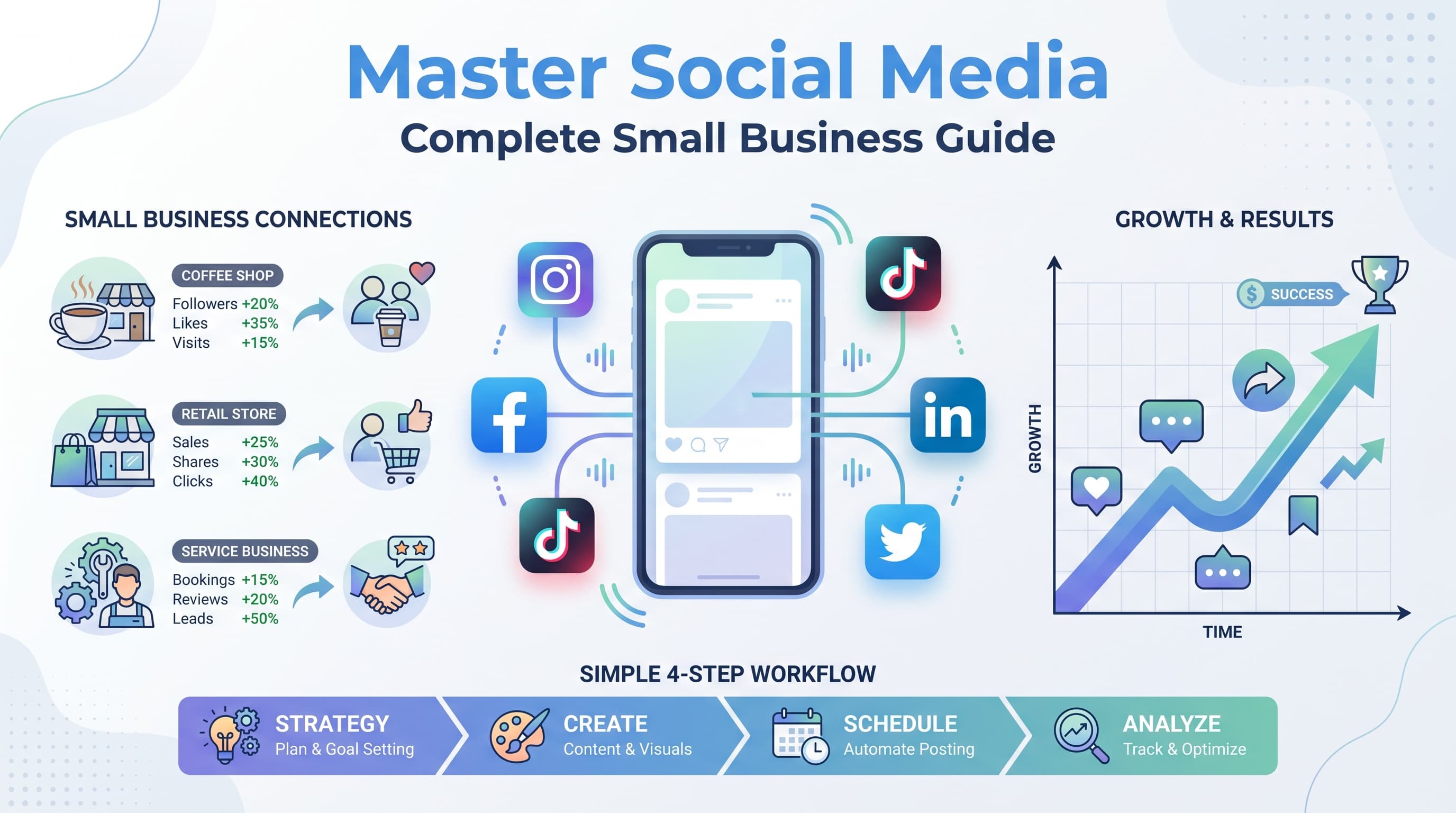
Running a small business without social media is like opening a store in a hidden alley. Your amazing products or services might exist, but nobody knows where to find you. See our Instagram scheduling guide.
See It in Action
This is what scheduling an Instagram post looks like in Schedulala
Social media gives small businesses something that was impossible just twenty years ago: direct access to millions of potential customers without needing a massive marketing budget. But here's the catch. Most small business owners jump into social media without a plan, post randomly, and wonder why they're not seeing results. Try our cross-platform analytics track 9.
This guide breaks down everything you need to know about social media for small business. You'll learn which platforms actually matter for your business, how to create content that converts followers into customers, and how to manage it all without spending your entire day scrolling through feeds. See our ai social media post guide.
We'll cover real strategies that work for businesses with limited time and budgets, not the fantasy advice written for companies with dedicated social media teams. By the end, you'll have a clear roadmap for building a social media presence that actually grows your business. Try our telegram engagement tips get.
Try Schedulala for free
Schedule posts to Bluesky, Twitter, and 8 other platforms from one dashboard.
Get started for free→Why social media matters for small businesses
The numbers tell a clear story. Small businesses that actively use social media see 78% more customer engagement than those that don't. But engagement numbers don't pay the bills. What matters is how social media translates into real business growth. Try our best time to post on instagram.
1. Direct customer access
Social media eliminates the middleman between you and your customers. A local bakery can share behind-the-scenes videos of bread making, instantly connecting with food lovers in their area. A freelance graphic designer can showcase portfolio pieces to potential clients worldwide. Learn more about instagram engagement calculator.
This direct line creates relationships that traditional advertising can't match. When customers feel connected to your story, they become advocates, not just buyers.
2. Cost-effective marketing
Traditional advertising costs are brutal for small businesses. A single full-page newspaper ad can cost thousands of dollars with no guarantee anyone will see it. Social media flips this equation.
Organic social media costs nothing but time. Paid social media advertising starts at just a few dollars per day and lets you target exactly the people most likely to buy from you. A local fitness studio can target ads to people within five miles who are interested in yoga, rather than hoping the right people drive past their billboard.
3. Real-time customer service
Customers expect quick responses to questions and complaints. Social media provides a platform for instant customer service that also demonstrates your responsiveness to everyone else watching.
A restaurant that quickly responds to a complaint about cold food on Facebook shows potential customers they care about quality. This public problem-solving builds trust better than private emails ever could.
4. Market research on autopilot
Social media comments, shares, and reactions provide constant feedback about what customers want. You'll learn which products generate excitement, what problems need solving, and what trends matter to your audience.
A clothing boutique might notice customers constantly asking about sustainable fabrics in their comments. This insight could guide their next inventory order, leading to higher sales from products customers actually want.
Choosing the right platforms for your business
The biggest mistake small businesses make is trying to be everywhere at once. Spreading thin across eight platforms means mediocre results everywhere. Smart businesses pick two to three platforms where their ideal customers actually spend time and dominate those spaces.
Platform choice depends on three factors: where your customers are, what type of content showcases your business best, and how much time you can realistically invest in each platform.
Facebook: The reliable workhorse
Facebook remains the most popular social platform, with 2.9 billion users spanning all age groups. It's particularly strong for local businesses because of its robust location-based features and community groups.
Best for: Local businesses, service providers, B2B companies targeting decision-makers over 35, businesses that benefit from community building.
Content that works: Behind-the-scenes posts, customer testimonials, educational content, live videos, community discussions, event promotion.
Time investment: 30-45 minutes per day for posting, responding to comments, and engaging with local community groups.
Instagram: Visual storytelling central
Instagram thrives on high-quality visual content and is dominated by users under 35. It's perfect for businesses with photogenic products or services, especially those targeting lifestyle-conscious consumers.
Best for: Fashion, food, beauty, fitness, travel, creative services, retail products, anything visually appealing.
Content that works: Product photography, process videos, user-generated content, Stories showing daily operations, Reels demonstrating products or services.
Time investment: 45-60 minutes per day for content creation, story updates, and community engagement.
LinkedIn: B2B relationship building
LinkedIn is where business decisions happen. It's essential for B2B companies, professional services, and any business selling to other businesses or professionals.
Best for: Consultants, agencies, professional services, B2B software, industrial businesses, career-related services.
Content that works: Industry insights, thought leadership articles, company news, employee spotlights, educational content about your expertise.
Time investment: 20-30 minutes per day for posting, commenting on industry content, and direct messaging potential clients.
TikTok: The attention grabber
TikTok's algorithm can make small businesses famous overnight, but success requires understanding its unique culture and content style. It's dominated by Gen Z and younger millennials.
Best for: Businesses targeting under-30 demographics, entertainment-related services, food and beverage, fashion, beauty, creative industries.
Content that works: Educational content that feels casual, behind-the-scenes videos, trending audio with your twist, quick tips, day-in-the-life content.
Time investment: 45-90 minutes per day for content creation, trend research, and community interaction.
Twitter: Real-time conversations
Twitter excels at real-time engagement and industry conversations. It's valuable for businesses that can provide timely insights or customer service.
Best for: News-related businesses, tech companies, thought leaders, customer service-heavy industries, businesses in fast-moving sectors.
Content that works: Industry news commentary, quick tips, customer service responses, live-tweeting events, engaging in trending topics relevant to your industry.
Time investment: 15-30 minutes multiple times per day for optimal real-time engagement.
| Platform | Best Age Group | Content Type | Daily Time Needed |
|---|---|---|---|
| 25-65 | Mixed content | 30-45 min | |
| 18-35 | Visual content | 45-60 min | |
| 25-55 | Professional content | 20-30 min | |
| TikTok | 16-30 | Video content | 45-90 min |
| 25-45 | Text-based | 15-30 min (frequent) |
Creating your social media strategy
Strategy separates successful small businesses from those posting random content and hoping for the best. A clear strategy gives you direction, helps measure success, and ensures every post serves a purpose.
Most small business social media strategies fail because they're either too complicated to execute consistently or too vague to produce measurable results. The best strategies are simple, specific, and sustainable.
1. Define your social media goals
Vague goals produce vague results. 'Get more followers' isn't a strategy. 'Increase qualified leads by 25% through Instagram Stories featuring customer testimonials' is.
Common small business social media goals include: driving website traffic, generating leads, increasing local brand awareness, providing customer service, building community, showcasing expertise.
Pick one primary goal and one secondary goal. More than that dilutes your efforts. A local restaurant might focus primarily on increasing reservations (primary) while building community among food lovers (secondary).
Make goals specific and measurable. Instead of 'increase brand awareness,' try 'increase monthly website visits from social media by 30%' or 'generate 15 qualified leads per month through LinkedIn.'
2. Identify your ideal customer
Social media success comes from speaking directly to the right people, not broadcasting to everyone. Create a detailed picture of your ideal customer: their age, interests, challenges, where they spend time online, and what type of content they engage with.
A fitness studio's ideal customer might be: working professionals aged 28-45 who struggle to find time for exercise, follow wellness influencers on Instagram, engage with quick workout videos, and value convenience over cost.
This specificity guides content decisions. Should you post 30-minute workout videos or 5-minute office stretches? The answer becomes obvious when you know your audience values convenience.
Use your existing customers as research. Survey them about their social media habits, look at what they share and comment on, and identify patterns in their online behavior.
3. Develop your brand voice
Your brand voice is how you communicate across all social media content. It should reflect your business personality and resonate with your ideal customers. Are you professional and authoritative? Friendly and approachable? Witty and irreverent?
Consistency matters more than perfection. A local coffee shop that decides on a 'friendly neighbor' voice should maintain that tone whether posting about new blends or responding to complaints.
Define your voice with three specific adjectives and one thing you'll never be. For example: 'knowledgeable, approachable, and honest, but never condescending.' Use these guidelines for every piece of content.
Your voice should differentiate you from competitors. If every business in your industry sounds corporate and formal, being conversational and human might be your advantage.
4. Plan your content mix
Successful social media content balances different types of posts to serve multiple purposes. The 80/20 rule works well: 80% valuable, non-promotional content that educates, entertains, or inspires, and 20% promotional content about your products or services.
A typical content mix might include: educational posts (30%), behind-the-scenes content (25%), customer features (20%), industry news or trends (15%), and direct promotions (10%).
Educational content establishes expertise and provides value. A landscaping company might share seasonal plant care tips. Behind-the-scenes content humanizes your business and builds connection. Customer features provide social proof while making customers feel valued.
Plan content themes for each day of the week. 'Monday Motivation' posts, 'Wednesday Wisdom' tips, 'Friday Features' of customers. This structure makes content creation easier and helps followers know what to expect.
5. Set posting frequency and timing
Consistency beats frequency. It's better to post three times per week reliably than daily for two weeks then disappear for a month. Choose a posting schedule you can maintain long-term.
Platform-specific frequency recommendations: Facebook (3-5 posts per week), Instagram (4-7 posts per week plus daily Stories), LinkedIn (2-3 posts per week), TikTok (3-5 videos per week), Twitter (3-5 tweets per day).
Timing matters, but audience matters more. General best practices suggest posting when your audience is most active: weekdays 9-10 AM and 3-4 PM for Facebook, weekdays 11 AM-1 PM and 7-9 PM for Instagram.
Use platform analytics to find your specific audience's active times. A B2B company might see better LinkedIn engagement during work hours, while a restaurant might get more Instagram activity during lunch and dinner times.
Content creation that converts
Great social media content doesn't just get likes and shares. It moves people to take action: visit your website, sign up for your newsletter, make a purchase, or recommend you to friends. Converting content combines value with subtle persuasion.
The best small business content feels authentic rather than overly polished. People connect with real stories, genuine expertise, and behind-the-scenes glimpses more than stock photos and corporate speak.
Educational content that builds trust
Educational content positions you as an expert while providing genuine value to potential customers. A plumbing company sharing 'how to prevent frozen pipes' builds trust and keeps their brand top-of-mind when followers need professional help.
The key is sharing knowledge that helps your audience while subtly demonstrating your expertise. Don't give away everything, but provide enough value that people want to learn more from you.
Educational content ideas: how-to tutorials related to your industry, common mistake prevention, industry trend explanations, tool or product comparisons, FAQ answers, myth-busting posts.
Make educational content actionable. Instead of 'exercise is important for health,' try '5 desk stretches you can do in 2 minutes to reduce back pain.' Specific, actionable advice gets shared more and builds stronger authority.
Behind-the-scenes content that humanizes your brand
People buy from people, not faceless businesses. Behind-the-scenes content shows the humans behind your brand and makes your business feel approachable and authentic.
Effective behind-the-scenes content includes: team member introductions, workspace tours, product creation processes, day-in-the-life videos, problem-solving moments, business milestone celebrations.
A bakery might show the 4 AM bread-making process, introducing the head baker and explaining why they start so early. This content builds appreciation for the craft and justifies higher prices than grocery store alternatives.
Don't make everything perfect. Show the real challenges and solutions. A consultant sharing how they handle difficult client situations demonstrates problem-solving skills while building trust through transparency.
Customer stories and social proof
Customer success stories provide powerful social proof while making existing customers feel valued. They show potential customers exactly what results they can expect from working with you.
Go beyond simple testimonials. Share transformation stories with specific details: the challenge, your solution, and measurable results. A fitness trainer might showcase a client's journey with before/after photos, workout progression, and confidence improvements.
User-generated content amplifies customer stories. Encourage customers to share their experiences and repost their content (with permission). A restaurant reposting customer food photos shows real meals, not just styled marketing shots.
Make customer features about the customer, not your business. Focus on their success, their journey, and their results. This approach makes the content more engaging and the social proof more credible.
Promotional content that doesn't feel salesy
Promotional content works best when it focuses on customer benefits rather than business features. Instead of 'We offer 24/7 customer support,' try 'Get help whenever you need it, even at midnight.'
Soft promotion weaves your products or services into valuable content. A graphic designer might share design principles while showcasing their work as examples. This approach educates while demonstrating capability.
Time-sensitive offers create urgency without being pushy. 'Limited spots available for our spring workshop' works better than 'Buy now before it's too late.' The first focuses on value scarcity, the second on pressure tactics.
Social proof amplifies promotional content. Instead of just announcing a new service, share why you created it based on customer requests. This approach shows you listen to customers and solve real problems.
Content formats that engage audiences
Different content formats serve different purposes and appeal to different audience preferences. Video content gets the highest engagement, but photos, carousels, and text posts each have their place.
Video content works best for tutorials, behind-the-scenes glimpses, and product demonstrations. Keep videos under 60 seconds for most platforms, with quick hooks in the first 3 seconds to stop scrolling.
Photo carousels let you tell stories in multiple images. Use them for step-by-step processes, before/after comparisons, or detailed product showcases. Each slide should work independently while contributing to the overall story.
Live videos create immediate engagement and feel more authentic than polished content. Use them for Q&As, product launches, behind-the-scenes tours, or educational workshops. The real-time interaction builds stronger connections.
Text-based posts still work, especially on LinkedIn and Twitter. Use them for thought leadership, quick tips, industry insights, or starting conversations. Include relevant images to increase visual appeal.
Try Schedulala for free
Schedule posts to Bluesky, Twitter, and 8 other platforms from one dashboard.
Get started for free→Building and engaging your community
Followers mean nothing if they don't engage with your content or take action. Building a genuine community requires consistent interaction, valuable content, and authentic relationships with your audience.
Community building is a long-term investment that pays dividends in customer loyalty, word-of-mouth marketing, and business growth. Engaged communities become extensions of your marketing team, sharing your content and recommending your business.
Growing your follower base organically
Organic growth takes longer than buying followers, but it creates a more valuable audience. Real followers engage with your content, share it with their networks, and convert into customers at much higher rates than purchased followers.
Consistency drives organic growth. Regular posting keeps your business visible in feeds and shows potential followers you're active and reliable. Sporadic posting makes people forget about your business between posts.
Engage with your industry community. Comment thoughtfully on other businesses' posts, share relevant content from others, and participate in industry conversations. This visibility introduces you to potential followers who are already interested in your field.
Use relevant hashtags strategically. Research hashtags your target audience follows, mix popular and niche tags, and create a branded hashtag for your business. Hashtags help new people discover your content organically.
Collaborate with complementary businesses. A wedding photographer might partner with florists, venues, and planners for cross-promotion. These partnerships expose you to relevant audiences more likely to need your services.
Encouraging meaningful engagement
Engagement quality matters more than quantity. One thoughtful comment from a potential customer beats ten generic 'great post' responses. Focus on creating content that sparks genuine conversations.
Ask specific questions in your posts. Instead of 'What do you think?', try 'Which of these three design options would work best in a small apartment?' Specific questions get specific answers and start real discussions.
Share controversial (but professional) opinions related to your industry. A nutritionist might post about why extreme diets don't work long-term. Well-reasoned controversial posts generate discussion and showcase expertise.
Respond to comments quickly and thoughtfully. Acknowledge each person who takes time to engage with your content. Ask follow-up questions to extend conversations and show genuine interest in their thoughts.
Create content that encourages sharing. Tips, insights, and inspiring stories get shared more than promotional posts. When followers share your content, it exposes your business to their networks organically.
Managing customer service on social media
Social media customer service happens in public, making every interaction a marketing opportunity. Handle complaints professionally and quickly to show other customers how you treat people who have problems.
Respond to all comments, positive and negative. Thank people for compliments, answer questions helpfully, and address concerns immediately. Ignoring negative comments makes them seem more significant.
Move complex issues to private messages or phone calls, but acknowledge the public comment first. 'Thanks for reaching out! I'll send you a private message to resolve this quickly' shows you're responsive while protecting privacy.
Turn complaints into opportunities. A restaurant that quickly fixes a wrong order and shares the resolution publicly demonstrates their commitment to customer satisfaction. This transparency builds trust with potential customers.
Create FAQ content based on common social media questions. If people frequently ask about your hours, pricing, or policies, create posts addressing these topics. This proactive approach reduces repetitive questions.
Building long-term relationships
Long-term relationships turn followers into customers and customers into advocates. Focus on providing ongoing value rather than constantly pushing for sales.
Remember and acknowledge loyal followers. Notice people who regularly engage with your content and mention them by name occasionally. This personal recognition makes them feel valued and encourages continued engagement.
Share customer success stories and tag the customers (with permission). This recognition strengthens relationships while providing social proof to other followers.
Offer exclusive value to your social media community. Share early access to new products, special discounts, or bonus content only available to your followers. This exclusivity rewards engagement and encourages following.
Host virtual events like live Q&As, workshops, or product demonstrations. These real-time interactions create stronger connections than regular posts and position you as an accessible expert.
Social media advertising for small budgets
Organic reach on social media has declined significantly over the past few years. Most platforms now require paid promotion to reach substantial audiences, even among your existing followers. The good news is that social media advertising can be extremely cost-effective when done strategically.
Small business advertising success comes from precise targeting rather than large budgets. A local business spending $50 per month on perfectly targeted ads often sees better results than a company spending $500 on broad, unfocused campaigns.
Setting realistic advertising budgets
Start small and scale based on results. Most platforms require minimum daily spends of $5-10, making $150-300 monthly budgets realistic starting points for small businesses. This budget allows for testing different ad types and audiences.
Allocate your budget based on platform performance. If Facebook ads generate leads at $15 each while Instagram ads cost $30 per lead, shift more budget to Facebook until Instagram performance improves.
Factor in content creation costs. Effective ads need compelling visuals and copy. Budget time for creating ad content or funds for hiring help with graphic design and copywriting.
Test with 70% of your budget and scale with 30%. Use most of your budget for testing different audiences, ad formats, and messaging. Reserve the remaining budget for scaling successful campaigns.
Targeting your ideal customers
Precise targeting is small business advertising's secret weapon. Instead of showing ads to everyone, target the specific people most likely to buy from you. This precision reduces costs and increases conversion rates.
Start with location-based targeting for local businesses. A restaurant should target people within 10 miles, not the entire state. Add demographic filters like age ranges that match your typical customers.
Use interest-based targeting to reach people likely to want your products or services. A yoga studio might target people interested in meditation, wellness, and healthy living. These interests indicate potential customers.
Create custom audiences from your existing customers. Upload email lists to create lookalike audiences of people similar to your best customers. These audiences often convert better than interest-based targeting.
Retarget website visitors who didn't convert. These people already showed interest in your business but need additional encouragement to take action. Retargeting ads typically cost less and convert better than cold audience ads.
Creating effective ad content
Social media users scroll quickly, so your ad has seconds to capture attention. Strong visuals stop scrolling, while compelling copy motivates action. Both elements must work together to drive results.
Use high-quality, authentic images rather than obvious stock photos. Real photos of your products, customers, or team perform better than generic stock imagery. Authenticity builds trust more effectively than polish.
Write headlines that focus on customer benefits, not business features. 'Get your website built in 7 days' works better than 'Professional web design services available.' Focus on what customers gain.
Include clear calls-to-action that tell people exactly what to do. 'Book your free consultation today' is more effective than 'Learn more.' Specific actions generate better response rates.
Test different ad formats to find what works best for your business. Video ads, carousel ads, and single image ads each perform differently depending on your audience and objectives.
Measuring and optimizing ad performance
Track metrics that matter to your business goals. Clicks and impressions feel good, but leads, sales, and return on ad spend determine whether advertising actually helps your business grow.
Set up conversion tracking to measure actual business results. Track form submissions, phone calls, purchases, or appointment bookings that result from your ads. This data shows which campaigns generate real business value.
Test one element at a time to identify what improves performance. Change the headline, image, or targeting, but not all three simultaneously. This approach helps you understand which changes drive better results.
Pause underperforming ads quickly to preserve budget for successful campaigns. If an ad hasn't generated results after spending 2-3 times your target cost per conversion, turn it off and try something different.
Scale successful campaigns gradually. If an ad performs well at $10 per day, increase to $15 rather than jumping to $50. Sudden budget increases can disrupt performance as platforms re-optimize delivery.
| Platform | Minimum Daily Budget | Best Ad Types | Typical Cost Per Click |
|---|---|---|---|
| $5 | Video, Image, Carousel | $0.50 - $2.00 | |
| $5 | Image, Video, Stories | $0.75 - $2.50 | |
| $10 | Sponsored Content, Message | $2.00 - $6.00 | |
| TikTok | $20 | Video Ads | $0.30 - $1.50 |
| $5 | Promoted Tweets, Video | $0.40 - $2.00 |
Tools and automation for efficiency
Managing multiple social media platforms manually consumes enormous amounts of time. Smart small business owners use tools and automation to maintain consistent presence without spending entire days on social media.
The key is automating routine tasks while maintaining authenticity in interactions. Schedule posts in advance, but respond to comments in real-time. Use templates for efficiency, but personalize each message.
Social media management platforms
Social media management platforms let you schedule posts across multiple platforms, monitor engagement, and analyze performance from a single dashboard. This centralization saves hours each week and ensures consistent posting.
Schedulala offers comprehensive social media management specifically designed for small businesses. You can schedule posts across all major platforms, track performance metrics, and manage multiple accounts from one interface.
Free tools like Buffer and Hootsuite work for basic scheduling needs, but paid tools offer advanced features like optimal posting time recommendations, detailed analytics, and team collaboration features.
Choose tools based on your specific needs rather than feature lists. A local restaurant might prioritize easy Instagram scheduling, while a B2B consultant needs robust LinkedIn analytics.
Content planning and creation tools
Content planning tools help organize ideas, maintain consistent posting schedules, and ensure balanced content mixes. A content calendar prevents last-minute scrambling for post ideas.
Canva provides templates for social media graphics that look professional without requiring design skills. Their templates ensure consistent visual branding across all platforms and save time on content creation.
Google Sheets or Airtable work well for content planning, letting you organize post ideas by theme, platform, and publish date. Include columns for captions, hashtags, and performance notes.
Video creation tools like Loom or Animoto help create professional-looking videos without expensive equipment. These tools often include templates and stock footage that speed up video production.
Analytics and monitoring tools
Analytics tools show which content resonates with your audience, when your followers are most active, and which platforms drive the most business value. This data guides content strategy and platform prioritization.
Google Analytics tracks how much traffic social media drives to your website and what visitors do once they arrive. Set up UTM parameters in your social media links to track platform-specific performance.
Native platform analytics provide detailed insights about your audience demographics, engagement patterns, and optimal posting times. Review these monthly to optimize your content strategy.
Social listening tools monitor mentions of your business name, industry keywords, and competitors. This monitoring helps identify opportunities for engagement and potential reputation management needs.
Automation best practices
Automate content scheduling but never automate responses to customer questions or complaints. Personal interactions require human attention and judgment that automation can't replicate effectively.
Schedule posts for optimal times when your audience is most active, but don't post everything at the same time each day. Vary posting times to reach different segments of your audience.
Create content batches during dedicated creation time, then schedule throughout the week. This approach maintains consistency while freeing up daily time for engagement and business activities.
Set up alerts for mentions, comments, and direct messages to ensure timely responses even when you're not actively monitoring social media. Quick response times improve customer satisfaction and engagement.
Review and adjust automated posts based on current events and seasonal changes. A pre-scheduled promotion might be inappropriate during a local crisis or major news event.
Measuring success and ROI
Social media success isn't measured by vanity metrics like follower counts and likes. Real success means achieving your business goals: generating leads, driving sales, building brand awareness, or improving customer service.
Track metrics that connect directly to business outcomes. A consulting business should track leads generated through LinkedIn more than LinkedIn follower growth. A local restaurant should monitor reservation increases more than Instagram engagement rates.
Key performance indicators that matter
Website traffic from social media shows whether your content drives people to learn more about your business. Use Google Analytics to track visits, time on site, and conversion rates from each platform.
Lead generation metrics matter most for service-based businesses. Track form submissions, email signups, consultation requests, and other actions that indicate purchase intent. Quality leads matter more than quantity.
Customer acquisition cost from social media helps determine ROI. Calculate total social media costs (time, tools, advertising) divided by new customers acquired through social media. Compare this to other marketing channels.
Engagement rate measures how actively your audience interacts with content. Calculate total engagement (likes, comments, shares) divided by total followers. Higher engagement indicates stronger audience connection.
Customer service resolution time on social media affects satisfaction and public perception. Track how quickly you respond to questions and complaints, aiming for responses within 4 hours during business hours.
Setting up tracking systems
Create UTM parameters for all social media links to track traffic sources accurately. Use consistent naming conventions like 'utm_source=facebook&utm_medium=social&utm_campaign=spring_promotion' to organize data effectively.
Set up conversion goals in Google Analytics that match your business objectives. Track contact form submissions, newsletter signups, purchase completions, or appointment bookings as conversions.
Use unique phone numbers or landing pages for social media campaigns to track offline conversions. A local service business might use a dedicated phone number in their Facebook ads to track calls generated.
Document baseline metrics before implementing new strategies. Record current follower counts, engagement rates, website traffic, and lead generation numbers to measure improvement accurately.
Create monthly reporting templates that focus on business-relevant metrics. Include traffic, leads, conversions, and revenue attributed to social media alongside engagement statistics.
Calculating return on investment
Calculate time investment by tracking hours spent on content creation, posting, engagement, and strategy development. Multiply by your hourly rate to determine the cost of your time investment.
Add tool costs, advertising spend, and any outsourced work to your time costs for total social media investment. This complete picture helps evaluate whether social media provides positive ROI.
Track revenue directly attributable to social media through conversion tracking, unique discount codes, or customer surveys asking how they found your business.
Consider lifetime customer value, not just initial purchase value. A customer acquired through social media might make repeat purchases, refer friends, or provide testimonials that generate additional business.
Compare social media ROI to other marketing channels. If social media generates leads at $50 each while Google Ads costs $75 per lead, social media provides better value even if absolute numbers are lower.
Adjusting strategy based on data
Review performance monthly to identify trends and opportunities. Look for patterns in high-performing content, optimal posting times, and audience engagement preferences.
Double down on what works rather than trying to fix everything at once. If video content consistently outperforms photos, allocate more resources to video creation.
Test one change at a time to isolate what drives improvement. Change posting frequency, content types, or targeting individually to understand which adjustments produce better results.
Reallocate budget and time based on platform performance. If LinkedIn generates more qualified leads than Instagram for your B2B business, shift resources accordingly.
Set quarterly goals and review progress monthly. Adjust tactics based on what you learn, but give strategies enough time to show results before making major changes.
| Business Type | Primary KPI | Secondary KPI | Tracking Method |
|---|---|---|---|
| Local Service | Phone calls/Contact forms | Website traffic | Call tracking, Google Analytics |
| E-commerce | Sales revenue | Cart additions | E-commerce tracking, UTM codes |
| B2B Consulting | Qualified leads | Content downloads | CRM integration, lead forms |
| Restaurant | Reservations | Menu views | Reservation system, website analytics |
| Retail Store | Store visits | Online orders | Location data, e-commerce tracking |
Common mistakes and how to avoid them
Most small businesses make predictable social media mistakes that limit their success. Learning from these common pitfalls saves time, money, and frustration while accelerating your path to social media success.
These mistakes often stem from treating social media like traditional advertising rather than understanding its unique dynamics. Social media rewards authentic engagement and consistent value delivery, not just promotional messaging.
Trying to be everywhere at once
The biggest mistake small businesses make is attempting to maintain presence on every social media platform. This approach spreads efforts too thin, resulting in mediocre performance everywhere instead of strong results anywhere.
Focus beats breadth for small businesses with limited resources. A bakery that posts daily high-quality content on Instagram and Facebook will outperform a competitor posting sporadically across six platforms.
Start with one platform and master it before expanding. Build a strong following and engagement on your primary platform, then gradually add secondary platforms using proven content strategies.
Choose platforms based on where your customers actually spend time, not where you think they should be. Research your target audience's platform preferences rather than assuming they use every platform equally.
Over-promoting and under-delivering value
Constantly promoting your products or services without providing value turns followers away. People follow accounts that entertain, educate, or inspire them, not those that constantly sell to them.
Follow the 80/20 rule: 80% valuable, non-promotional content and 20% promotional content. This balance builds trust and authority while keeping sales messages effective when they do appear.
Define 'value' from your audience's perspective, not your business perspective. A fitness trainer might think workout videos are valuable, but their audience might prefer quick healthy recipes or stress management tips.
Make promotional content valuable too. Instead of 'Buy our new service,' try 'Here's how our new service solves the three biggest problems our customers face.' This approach educates while promoting.
Inconsistent posting and engagement
Sporadic posting confuses algorithms and audiences. Social media rewards consistency more than perfection. Regular, good-enough content outperforms sporadic, perfect content.
Create a sustainable posting schedule and stick to it. It's better to post three times per week consistently than daily for two weeks then disappearing for a month.
Batch content creation during dedicated time blocks rather than creating content daily. Spend one day per week creating a week's worth of content, then schedule it throughout the week.
Engage with your audience regularly, not just when posting. Respond to comments, share relevant content from others, and participate in industry conversations even on days when you don't post original content.
Ignoring platform-specific best practices
Each platform has unique characteristics, audiences, and content preferences. Posting identical content across all platforms wastes opportunities to optimize for each platform's strengths.
LinkedIn favors professional, thought-leadership content while TikTok rewards entertaining, casual videos. A business coach should share industry insights on LinkedIn and quick tips videos on TikTok.
Optimize content formats for each platform. Instagram prefers square images, Twitter works well with shorter text posts, and Facebook accommodates longer-form content. Format content appropriately for maximum impact.
Learn each platform's algorithm preferences. Instagram rewards Recent engagement, Facebook prioritizes meaningful interactions, and LinkedIn values professional relevance. Tailor your strategy accordingly.
Focusing on vanity metrics instead of business results
Follower counts and likes feel important but don't necessarily translate to business success. A thousand engaged followers who regularly visit your website matter more than ten thousand followers who ignore your content.
Track metrics that connect to business goals. A consulting business should measure leads generated, not just post likes. A restaurant should track reservation increases, not just Instagram followers.
Quality beats quantity in social media audiences. A small, engaged audience of ideal customers provides more business value than a large, disinterested audience.
Set business-relevant goals for social media. Instead of 'gain 1000 followers,' try 'generate 10 qualified leads per month through social media.' This approach focuses efforts on activities that drive business growth.
Not having a clear strategy
Random posting without strategic direction wastes time and produces poor results. Successful social media requires clear goals, target audience understanding, and consistent messaging.
Document your social media strategy including goals, target audience, brand voice, content themes, and posting schedules. Reference this document weekly to ensure content stays on track.
Plan content in advance using editorial calendars that align with business goals and seasonal relevance. Planning prevents last-minute scrambling and ensures balanced content mix.
Review and adjust strategy quarterly based on performance data and business changes. Social media strategies should evolve as you learn what works for your specific audience.
Future trends and staying ahead
Social media evolves rapidly, with new platforms, features, and user behaviors emerging constantly. Small businesses that stay ahead of trends gain competitive advantages, while those that lag behind struggle to maintain relevance.
The key is balancing trend awareness with strategic focus. Not every trend deserves attention, but understanding major shifts helps inform long-term social media strategy decisions.
Video content dominance
Video content continues gaining importance across all platforms. Short-form videos, live streams, and interactive video content receive significantly more engagement than static posts.
Start incorporating video into your content mix if you haven't already. Simple smartphone videos often perform better than heavily produced content. Authenticity trumps production value on social media.
Live video creates immediate engagement and feels more authentic than pre-recorded content. Use live video for Q&As, product demonstrations, behind-the-scenes tours, or educational workshops.
Video SEO becomes increasingly important as search engines prioritize video content. Include relevant keywords in video titles, descriptions, and captions to improve discoverability.
Privacy changes affecting advertising
iOS privacy updates and cookie restrictions reduce social media advertising targeting precision. Businesses need first-party data strategies to maintain advertising effectiveness.
Build email lists and customer databases to create custom audiences for advertising. First-party data becomes more valuable as third-party tracking becomes less reliable.
Focus on broad targeting and compelling creative rather than relying solely on precise audience targeting. Great ad content can overcome targeting limitations.
Invest in conversion tracking setup to measure advertising effectiveness accurately. Proper tracking helps optimize campaigns despite reduced audience targeting options.
Social commerce growth
Social platforms increasingly integrate shopping features, allowing purchases without leaving the app. Instagram Shopping, Facebook Shops, and TikTok Shopping streamline the path from discovery to purchase.
Set up social commerce features if you sell physical products. These tools reduce friction in the buying process and can significantly increase conversion rates from social media traffic.
Optimize product photos and descriptions for social commerce. High-quality images and clear descriptions become even more important when customers can purchase directly from social posts.
Consider social commerce in your inventory and fulfillment planning. Social media sales can create sudden demand spikes that require operational preparation.
Artificial intelligence integration
AI tools increasingly help with content creation, scheduling optimization, and performance analysis. These tools can improve efficiency while maintaining content quality.
Explore AI writing assistants for content ideation and initial drafts, but maintain human oversight for brand voice and accuracy. AI should augment human creativity, not replace it.
Use AI-powered analytics tools to identify optimal posting times, content themes, and audience preferences. These insights can improve performance without requiring manual analysis.
Stay updated on platform algorithm changes that incorporate AI. Understanding how algorithms work helps optimize content for maximum reach and engagement.
Staying adaptable
Build adaptable social media strategies that can evolve with platform changes and industry trends. Focus on principles like providing value and building relationships rather than tactics that might become obsolete.
Follow industry publications, attend virtual conferences, and connect with other small business owners to stay informed about social media developments.
Test new features early when platforms introduce them. Early adopters often receive algorithm boosts and can establish presence before features become saturated.
Maintain presence on established platforms while experimenting with emerging ones. Don't abandon proven strategies for unproven trends, but stay open to new opportunities.
Getting started: Your 30-day action plan
Reading about social media strategy means nothing without implementation. This 30-day action plan breaks down everything you've learned into manageable daily tasks that build momentum toward social media success.
Focus on completing each week's objectives before moving to the next. Building solid foundations in weeks one and two makes weeks three and four more effective and sustainable.
Week 1: Foundation building
Day 1-2: Define your social media goals and ideal customer profile. Write these down and reference them throughout your social media journey.
Day 3-4: Research and choose your primary and secondary social media platforms based on where your customers spend time and your content creation abilities.
Day 5-6: Audit your existing social media profiles. Update bios, profile photos, and contact information to ensure consistency across platforms.
Day 7: Plan your brand voice and content themes. Decide how you'll communicate and what topics you'll cover regularly.
Week 2: Content planning and creation
Day 8-9: Create a content calendar template and plan your first month of posts. Include educational, behind-the-scenes, customer feature, and promotional content.
Day 10-11: Take photos and create graphics for your first week of posts. Batch content creation saves time and ensures consistent quality.
Day 12-13: Write captions for your planned posts. Include relevant hashtags and calls-to-action that align with your goals.
Day 14: Set up a social media management tool to schedule your posts and track performance.
Week 3: Launch and engagement
Day 15-16: Begin posting according to your content calendar. Focus on consistency rather than perfection.
Day 17-18: Actively engage with your audience and industry community. Respond to comments, share relevant content, and participate in conversations.
Day 19-20: Research and connect with complementary businesses and potential partners for cross-promotion opportunities.
Day 21: Review your first week of performance and adjust your strategy based on what you learned.
Week 4: Optimization and planning ahead
Day 22-23: Set up analytics tracking and conversion measurement to monitor business results from social media efforts.
Day 24-25: Create your first social media advertisement with a small budget to test targeting and messaging.
Day 26-27: Plan your second month of content based on what performed well in your first month.
Day 28-30: Document your processes, evaluate your progress against initial goals, and plan improvements for month two.
Try Schedulala for free
Schedule posts to Bluesky, Twitter, and 8 other platforms from one dashboard.
Get started for free→Take action and start growing
Social media success for small businesses isn't about having the biggest budget or the most followers. It's about consistently providing value to the right people on the right platforms with authentic, helpful content.
The businesses that win on social media are those that start with strategy, focus on their ideal customers, and maintain consistent effort over time. They understand that social media is a relationship-building tool, not just a broadcasting channel.
Start with the 30-day action plan outlined in this guide. Choose your platforms, create your strategy, and begin posting consistently. Don't wait for perfect content or complete understanding. Start now and improve as you learn.
Remember that social media is a marathon, not a sprint. The businesses seeing the best results six months from now will be those that start implementing these strategies today, not those who spend six more months planning.