Social Media Marketing for Solopreneurs: The Complete Guide to Growing Your Business Without a Team
Master social media marketing as a solopreneur. Learn time-saving strategies, content creation tips, and automation tools to grow your business solo.

You started your business to be your own boss, not to become a slave to social media algorithms. But here you are, scrolling through endless feeds, wondering how other solopreneurs make it look so effortless. Our Instagram scheduling can help.
See It in Action
This is what scheduling an Instagram post looks like in Schedulala
The truth is, successful solopreneurs don't work harder on social media. They work smarter. They've cracked the code on creating consistent, engaging content without burning out or hiring expensive agencies. Learn more about scheduling across platforms.
This guide will show you exactly how to build a social media presence that works for your one-person business. You'll learn the systems, shortcuts, and strategies that turn social media from a time-sucking monster into your most reliable customer acquisition channel. See our ai social media post guide.
Try Schedulala for free
Schedule posts to Bluesky, Twitter, and 8 other platforms from one dashboard.
Get started for free→Why social media is different for solopreneurs
Big companies have entire teams dedicated to social media. They have content creators, designers, community managers, and paid advertising specialists. You have... you. And maybe your cat as a content advisor. Try our batch content creation.
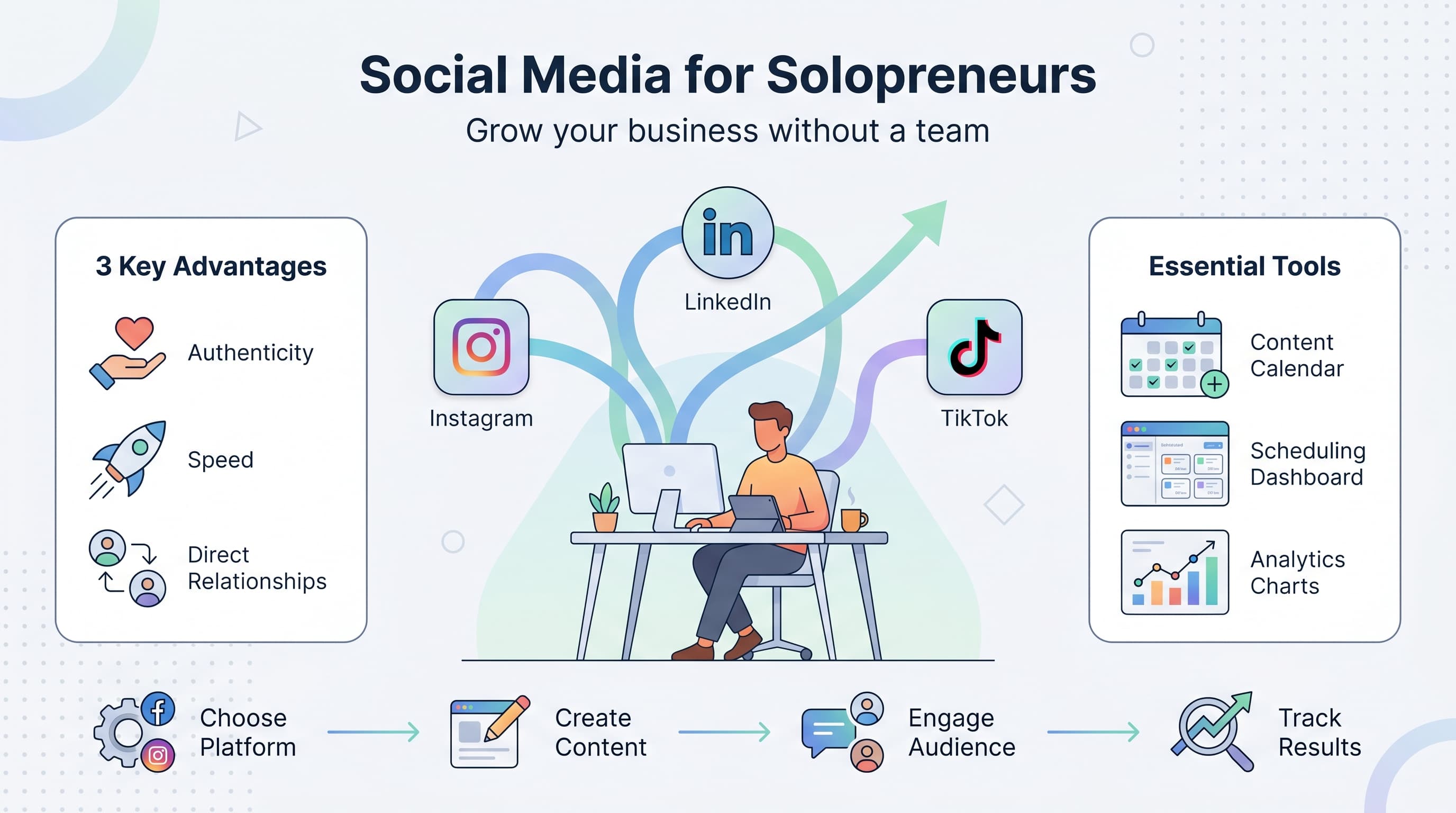
This isn't necessarily a disadvantage. Small businesses actually have some major advantages on social media that Fortune 500 companies would kill for. You can be authentic, respond personally to every comment, and pivot your strategy in real-time based on what's working. Our best time to post on instagram can help.
1. The authenticity advantage
Your followers aren't just buying your product or service. They're buying into you. Your story, your expertise, your personality. This creates a level of trust and loyalty that corporate accounts struggle to match. Try our instagram engagement calculator.
When you share behind-the-scenes moments, talk about your failures and wins, or give your honest opinion on industry trends, you're building something more valuable than a customer base. You're building a community.
2. Speed and agility
See a trending topic that relates to your business? You can create content about it and post it within hours. Large companies need approval chains, legal reviews, and committee decisions. By the time they post, the moment has passed.
This agility extends to customer service too. When someone mentions your business or asks a question, you can respond personally and immediately. That level of responsiveness builds incredible goodwill.
3. Direct relationship building
Every interaction on social media is an opportunity to build a direct relationship with a potential customer. You're not hiding behind a brand voice or corporate messaging. People get to know the real person behind the business.
These relationships often translate into more than just sales. Your social media followers become your biggest advocates, referring friends and family to your business.
Choosing the right platforms for your business
The biggest mistake new solopreneurs make is trying to be everywhere at once. You see successful businesses on Instagram, LinkedIn, TikTok, Twitter, and Facebook, and you think you need to be active on all of them.
That's a recipe for burnout and mediocre results. Better to dominate one platform than to be forgettable on five. Here's how to choose your primary platform based on your business type and target audience.
| Platform | Best For | Content Type | Time Investment |
|---|---|---|---|
| Visual brands, B2C | Photos, Stories, Reels | High | |
| B2B services, professionals | Articles, professional updates | Medium | |
| TikTok | Creative services, Gen Z audience | Short videos, trends | High |
| Thought leadership, tech | Quick updates, threads | Medium | |
| Local businesses, older demographics | Community posts, events | Low | |
| YouTube | Educational content, tutorials | Long-form videos | Very High |
| Product-based businesses | Visual inspiration | Low |
Platform selection framework
Don't choose a platform based on where you personally spend time. Choose based on where your customers spend time and what format best showcases your expertise.
- Where is your audience? Use platform demographics to match your ideal customer
- What's your content strength? Are you better at writing, speaking, or visual content?
- How much time can you realistically invest? Be honest about your bandwidth
- What's your business goal? Brand awareness, lead generation, or direct sales?
Content strategy that works for solo businesses
Content creation is where most solopreneurs get overwhelmed. You know you need to post regularly, but between running your business and living your life, where do you find the time to create fresh content every day?
The secret isn't creating more content. It's creating smarter content. Content that can be repurposed, batched, and scheduled. Content that serves multiple purposes and speaks directly to your business goals.
1. The 80/20 content rule
Not all content is created equal. 80% of your content should be valuable, educational, or entertaining content that builds trust and showcases your expertise. Only 20% should be directly promotional.
This ratio helps you avoid the biggest social media mistake: being too salesy. People follow accounts that add value to their lives, not accounts that constantly try to sell them something.
- Educational content: Tips, tutorials, industry insights
- Behind-the-scenes: Your process, workspace, daily routine
- Personal stories: Challenges you've overcome, lessons learned
- Community content: Sharing others' work, answering questions
- Promotional content: Your services, products, special offers
2. Content pillars for consistency
Content pillars are the 3-5 core topics you'll consistently create content about. They should align with your expertise and your audience's interests. Having clear pillars makes content creation faster because you're not starting from scratch every time.
For example, if you're a freelance graphic designer, your pillars might be design tips, client success stories, industry trends, and personal entrepreneurship journey.
3. Batch content creation
Instead of creating content daily, block out 2-4 hours once or twice a week for content creation. During these sessions, create a week's worth of content at once. This approach is more efficient and less stressful than daily content scrambling.
- Monday: Brainstorm content ideas for the week
- Tuesday: Write captions and create graphics
- Wednesday: Film any video content needed
- Thursday: Edit and finalize all content
- Friday: Schedule everything for the following week
The key is treating content creation like any other business task. Schedule it, protect that time, and approach it systematically rather than reactively.
Time-saving automation and tools
Automation isn't about being lazy or impersonal. It's about freeing up your time for the high-value activities that actually require your personal touch, like engaging with comments and creating original content.
The goal is to automate the repetitive tasks so you can focus on the creative and strategic work that moves your business forward.
1. Content scheduling tools
Social media scheduling tools are non-negotiable for solopreneurs. They allow you to create content when you're in the zone and publish it at optimal times, even when you're sleeping or working with clients.
Look for tools that support multiple platforms, offer analytics, and have a user-friendly interface. The best scheduling tool is the one you'll actually use consistently.
- Multi-platform posting: Schedule to multiple platforms simultaneously
- Best time optimization: Post when your audience is most active
- Content calendar view: See your entire content strategy at a glance
- Basic analytics: Track which posts perform best
- Team features: Useful if you plan to hire help later
2. Content creation shortcuts
Smart solopreneurs don't reinvent the wheel with every post. They create templates, repurpose content, and use tools that speed up the creation process.
- Canva templates: Create branded templates for quotes, tips, and announcements
- Content repurposing: Turn one blog post into five social media posts
- Stock photo subscriptions: Build a library of on-brand images
- Caption templates: Create frameworks for different post types
- Hashtag sets: Save groups of relevant hashtags for quick use
The goal isn't to make everything look the same, but to eliminate the decision fatigue that comes with starting from blank slate every time you create content.
3. Engagement automation (use carefully)
While you should never fully automate engagement, there are some tools that can help you stay on top of mentions, comments, and direct messages without constantly monitoring every platform.
Set up notifications for mentions of your business name, track competitor activity, and use saved replies for common questions. But always add a personal touch to your responses.
Try Schedulala for free
Schedule posts to Bluesky, Twitter, and 8 other platforms from one dashboard.
Get started for free→Building genuine engagement as a solopreneur
Engagement is where solopreneurs can really shine. While big brands struggle to feel human, you are human. Every comment reply, every story response, every direct message comes directly from the business owner.
This personal touch is incredibly powerful, but it needs to be managed strategically. You can't respond to every single interaction immediately, but you can create systems that make your audience feel heard and valued.
1. The 24-hour response rule
Aim to respond to all comments and direct messages within 24 hours. This doesn't mean you need to be glued to your phone, but it does mean checking in regularly and prioritizing response time.
Quick responses show that there's a real person behind the business who cares about their audience. It also helps with platform algorithms, which favor accounts with high engagement rates.
- Morning check: Respond to overnight comments and messages
- Midday check: Address lunch-hour activity
- Evening wrap-up: Handle end-of-day interactions
- Weekend policy: Set clear expectations about weekend response times
2. Creating conversation starters
Don't just post content and hope people engage. Actively invite conversation by asking questions, sharing polls, and creating content that naturally leads to discussion.
The best engagement comes from posts that make people think, relate, or want to share their own experiences. End posts with specific questions rather than generic 'What do you think?' prompts.
- This or that questions: Give people easy choices to respond to
- Opinion requests: Ask for advice or feedback on business decisions
- Story prompts: Share a mistake you made and ask if others have been there
- Fill-in-the-blank: Create templates for people to complete
- Behind-the-scenes polls: Let followers vote on business decisions
3. Community building tactics
Think beyond individual posts and focus on building a community around your brand. This means connecting your followers with each other, not just with you.
Feature customer work, share user-generated content, and create opportunities for your audience to network with each other. When people feel part of a community, they become advocates for your business.
Converting followers into customers
Having thousands of followers feels great, but followers don't pay the bills. Customers do. The goal of your social media strategy should always be moving people from casual followers to paying customers.
This conversion doesn't happen overnight, and it shouldn't feel pushy or desperate. The best conversions come from building trust over time and then making relevant offers to people who are already engaged with your content.
1. The value-first approach
Before you ask someone to buy from you, you need to give them a reason to trust you. This means consistently providing value through your content, demonstrating your expertise, and showing genuine care for your audience's success.
Think of social media as a very long sales conversation. You wouldn't walk up to a stranger and immediately pitch your services. Social media works the same way. Build the relationship first, then introduce your offer.
- Free resources: Offer templates, guides, or mini-courses
- Problem-solving content: Address common pain points in your industry
- Case studies: Show real results you've achieved for others
- Process transparency: Show how you work and what clients can expect
- Social proof: Share testimonials and client success stories
2. Strategic calls-to-action
Every piece of content should have a purpose, and that purpose should be clear to your audience. Sometimes you're building awareness, sometimes you're nurturing relationships, and sometimes you're making a direct ask.
Your calls-to-action should match the content and the stage of the customer journey. Someone who just discovered you needs a different CTA than someone who's been following you for months.
- Awareness stage: Follow for more tips, save this post, share with a friend
- Interest stage: Download a free resource, join your email list, attend a webinar
- Consideration stage: Book a consultation, read case studies, view your portfolio
- Decision stage: Get a quote, start a project, purchase a product
3. Email list integration
Social media platforms come and go, but email lists are forever. Your social media strategy should always include driving people to join your email list, where you have more control over the communication.
Offer something valuable in exchange for email addresses. This could be a free guide, exclusive content, or early access to new services. Make the trade feel worthwhile.
Common mistakes that kill solopreneur social media success
Even with the best intentions, solopreneurs often make predictable mistakes that sabotage their social media efforts. Learning to recognize and avoid these pitfalls can save you months of frustration and wasted effort.
1. Inconsistent posting
The biggest killer of social media success isn't bad content. It's inconsistent content. Posting five times one week and then disappearing for two weeks confuses the algorithm and frustrates your audience.
Your audience needs to know what to expect from you. If you can only post three times per week, that's fine. But post three times every week, not nine times one week and zero the next.
2. Copying instead of adapting
You see another solopreneur crushing it with daily motivational quotes, so you start posting daily motivational quotes. But you're a web designer, not a life coach. The content doesn't match your audience or your expertise.
It's smart to study what works for others, but you need to adapt those strategies to your business, not copy them exactly. Your content should feel authentically you, not like a poorly fitting costume.
3. Focusing on vanity metrics
Follower count, likes, and shares feel important, but they don't directly impact your bottom line. It's better to have 500 engaged followers who are genuinely interested in your services than 5,000 followers who never interact with your content.
Focus on metrics that matter to your business: email signups, consultation requests, direct messages about your services, and actual sales generated from social media.
4. Neglecting platform-specific best practices
Each platform has its own culture, optimal posting times, and content formats. What works on LinkedIn won't necessarily work on TikTok. Posting the exact same content to every platform makes you look out of touch.
Take time to understand each platform you use. Learn the native features, study top performers in your niche, and adapt your content accordingly.
5. Being too professional
Social media is called 'social' for a reason. People want to connect with humans, not corporate robots. If your social media presence feels like a brochure, you're missing the point.
Share your personality, admit your mistakes, show your workspace, talk about your hobbies. People do business with people they like and trust.
Measuring success and adjusting your strategy
Social media success isn't just about posting content and hoping for the best. You need to track what's working, what isn't, and continuously adjust your strategy based on real data.
But as a solopreneur, you don't need to become a data scientist. Focus on a few key metrics that directly relate to your business goals, and check them regularly enough to spot trends and make informed decisions.
1. Key performance indicators for solopreneurs
Different businesses will have different priorities, but most solopreneurs should track these core metrics to understand their social media performance:
- Engagement rate: Likes, comments, and shares divided by follower count
- Profile visits: How many people click through to learn more about you
- Website clicks: Traffic driven from social media to your website
- Email signups: New subscribers from social media campaigns
- Consultation requests: Direct inquiries about your services
- Revenue attribution: Sales that can be traced back to social media
Track these metrics monthly, not daily. Social media success is about trends over time, not day-to-day fluctuations.
2. Content performance analysis
Pay attention to which types of content perform best with your audience. This information should directly influence your content strategy going forward.
Look for patterns in your top-performing posts. Are they educational? Personal stories? Behind-the-scenes content? What time of day do you get the most engagement? Which hashtags seem to help?
3. Monthly strategy reviews
Set aside time each month to review your social media performance and plan adjustments for the following month. This doesn't need to be a complex analysis, but it should be systematic.
- Review metrics: Compare this month to last month and identify trends
- Analyze top content: What worked well and why?
- Identify gaps: What didn't work or what could be improved?
- Plan adjustments: What will you do differently next month?
- Update content calendar: Apply lessons learned to future content
This monthly review ensures you're continuously improving rather than just posting content on autopilot.
Scaling your social media as your business grows
As your solopreneur business grows, your social media strategy needs to evolve too. What works when you're just starting out might not be sustainable when you're fully booked with clients or launching new products.
The key is planning for growth from the beginning, so you can scale your social media efforts without starting from scratch or losing the personal touch that made you successful in the first place.
1. Building systems for delegation
Even if you're not ready to hire help yet, start documenting your social media processes now. This makes it easier to bring on a virtual assistant or social media manager later without losing your brand voice.
- Brand voice guidelines: How do you write captions? What tone do you use?
- Content templates: Frameworks for different types of posts
- Approval processes: What needs your review vs. what can be published directly?
- Response templates: Common replies for frequently asked questions
- Content calendar systems: How you plan and organize content creation
Having these systems documented makes the transition smoother when you're ready to get help with social media tasks.
2. Expanding to new platforms strategically
Once you've mastered one platform, you might want to expand to others. But this expansion should be strategic, not reactive. Each new platform requires time and energy to do well.
Before adding a new platform, ask yourself: Is your current platform maxed out? Do you have proven systems that you can replicate? Is there a clear business case for the additional platform?
3. Maintaining authenticity at scale
The biggest challenge of scaling social media is maintaining the personal connection that made you successful as a solopreneur. Your audience followed you for your unique perspective and personal touch.
Even as you delegate content creation and posting, make sure you're still personally involved in engagement and strategic decisions. Your voice and personality should remain central to your brand.
Try Schedulala for free
Schedule posts to Bluesky, Twitter, and 8 other platforms from one dashboard.
Get started for free→Your 30-day social media quick start plan
Ready to put everything together? Here's a practical 30-day plan to launch or revamp your social media presence as a solopreneur. This plan assumes you're starting from scratch or making major improvements to an existing presence.
Week 1: Foundation and setup
- Day 1-2: Choose your primary platform based on your audience and content strengths
- Day 3-4: Optimize your profile with professional photos, clear bio, and contact information
- Day 5-6: Define your 3-5 content pillars and create your first week of content
- Day 7: Set up your content scheduling system and plan your posting schedule
Don't rush this foundation week. The decisions you make here will influence everything that follows.
Week 2: Content creation and systems
- Day 8-10: Create templates for your most common post types
- Day 11-12: Build a library of branded graphics and stock photos
- Day 13-14: Write two weeks' worth of captions and schedule your content
This week is about building the systems that will make daily posting manageable long-term.
Week 3: Engagement and community building
- Day 15-17: Start engaging with others in your industry and potential customers
- Day 18-20: Create your first conversation-starting posts (polls, questions, behind-the-scenes)
- Day 21: Analyze which posts are getting the most engagement and why
Focus on building genuine connections, not just broadcasting your content.
Week 4: Optimization and planning
- Day 22-24: Review your first three weeks of data and identify what's working
- Day 25-27: Create your first lead magnet to start building an email list
- Day 28-30: Plan your content strategy for month two based on what you've learned
Use this final week to analyze your progress and set yourself up for continued growth.
The long-term mindset for social media success
Social media marketing for solopreneurs isn't about quick wins or viral moments. It's about building sustainable systems that consistently connect you with potential customers and showcase your expertise.
The solopreneurs who succeed on social media are those who treat it as a long-term investment in their business relationships, not a short-term marketing tactic. They understand that trust is built post by post, interaction by interaction, over months and years.
Start with one platform, master the basics, and be patient with the process. Your future self will thank you for the consistent effort you put in today, even if the results aren't immediately obvious.