Telegram vs WhatsApp for Business: Full Comparison 2026
Complete telegram vs whatsapp business comparison. Features, pricing, security, and which platform works best for your business communication needs.

Quick answer
Telegram offers unlimited group sizes, bots, channels, and file sharing up to 2 GB, while WhatsApp Business focuses on 1-to-1 customer communication.
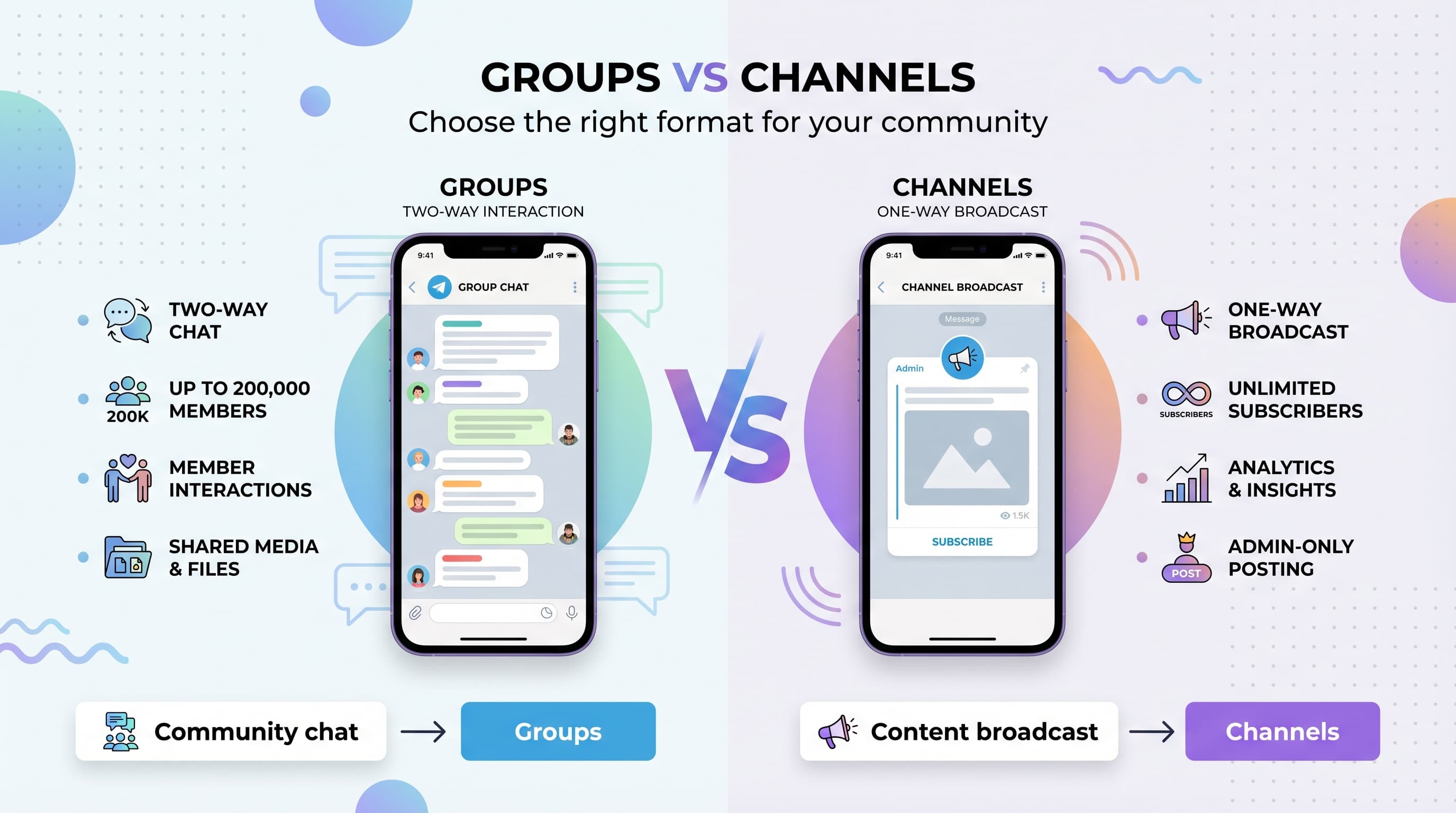
- •Telegram groups hold up to 200,000 members; WhatsApp groups cap at 1,024
- •Telegram channels broadcast to unlimited subscribers; WhatsApp has no equivalent
- •WhatsApp has 2 billion users overall but Telegram's channel features are stronger for marketing
- •Telegram file sharing supports up to 2 GB per file; WhatsApp caps at 2 GB for documents
Your customers are messaging you on multiple platforms, and you're struggling to keep up. Our Telegram scheduling can help.
See It in Action
This is what scheduling a Telegram post looks like in Schedulala
Both Telegram and WhatsApp offer business features, but they take completely different approaches to business communication. Our social media scheduling tools can help.
Which platform deserves your time and marketing budget? Try our scheduling across platforms.
Try Schedulala for free
Schedule posts to Bluesky, Twitter, and 8 other platforms from one dashboard.
Get started for free→Platform overview
WhatsApp Business
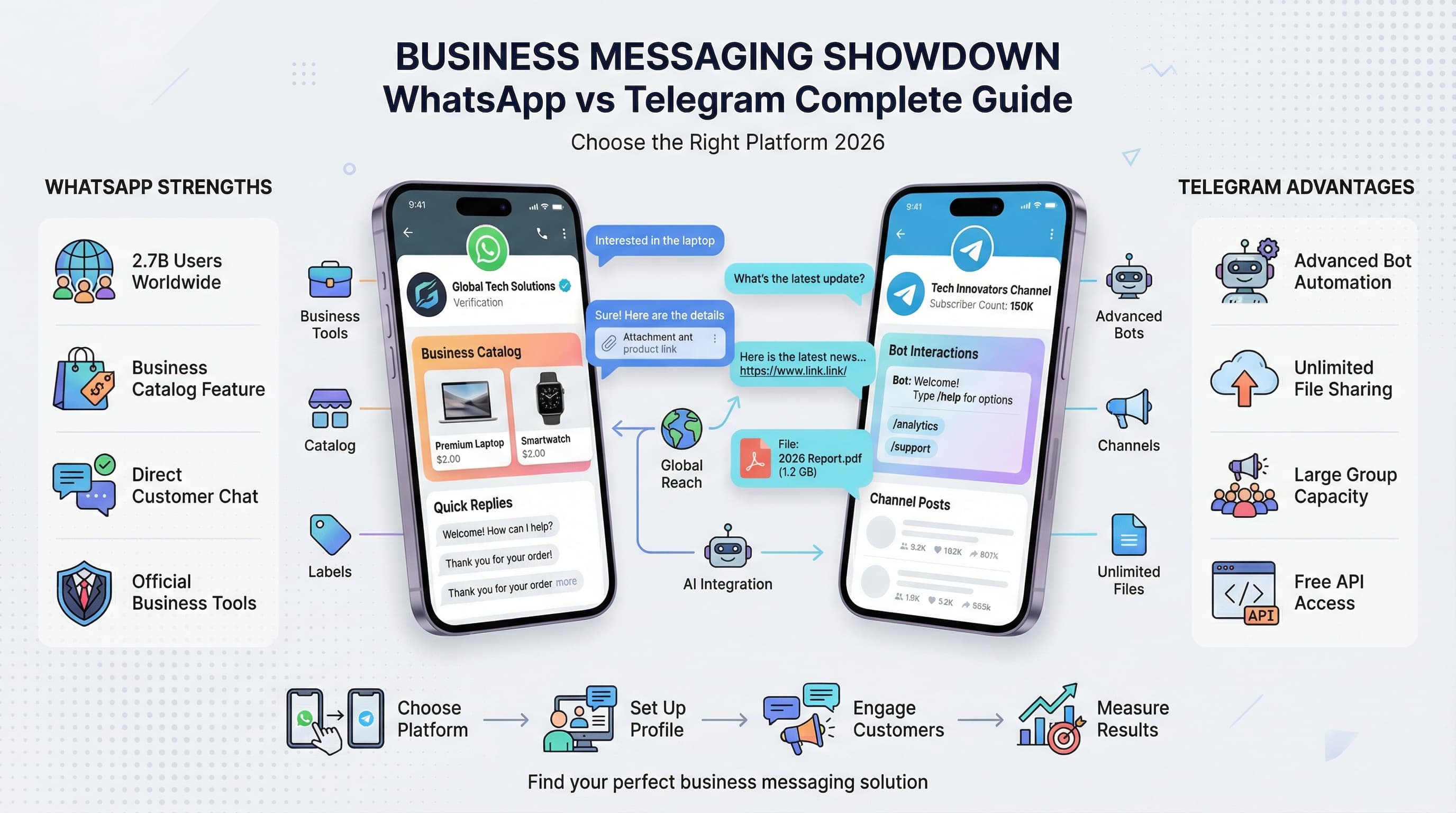
WhatsApp Business serves over 200 million businesses worldwide with its dedicated business app and API. The platform focuses on direct customer communication with features like business profiles, catalog displays, and automated messaging. Our scheduling across platforms can help.
You get two options: the free WhatsApp Business app for small businesses, or the WhatsApp Business API for larger companies that need advanced integration and automation. See our telegram line break generator guide.
The biggest advantage is reach. With 2.7 billion users globally, your customers are already on WhatsApp and expect businesses to be there too. See our telegram font generator guide.
Telegram Business
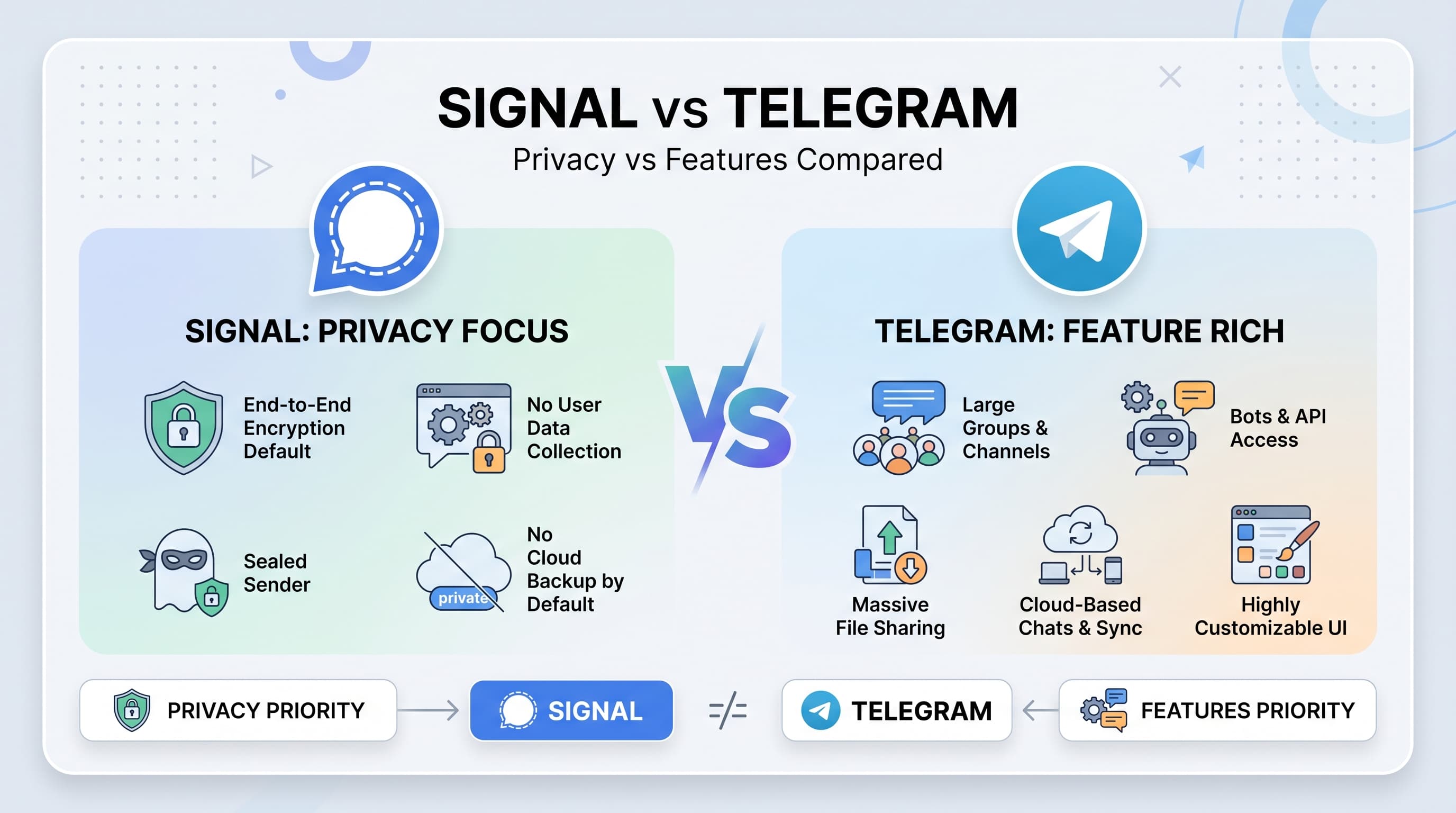
Telegram takes a different approach with channels, groups, and bots that can handle thousands of members. While it doesn't have a specific "business" app, its features work exceptionally well for business communication.
The platform shines with its unlimited file sharing, advanced bot capabilities, and broadcast channels that can reach unlimited subscribers. You can create sophisticated automated workflows without paying for API access.
However, Telegram's 900 million users pale in comparison to WhatsApp's reach, and adoption varies significantly by region.
Feature comparison breakdown
| Feature | WhatsApp Business | Telegram |
|---|---|---|
| User base | 2.7 billion users | 900 million users |
| Group size limit | 1,024 members | 200,000 members |
| File size limit | 100MB | 2GB |
| Channel broadcasts | 256 contacts | Unlimited subscribers |
| API access | Paid (varies by provider) | Free |
| Business profiles | Built-in templates | Custom with bots |
| Automation | Basic (API required for advanced) | Advanced bots included |
| Multi-device sync | Limited | Full cloud sync |
| Message scheduling | No (third-party required) | Yes, built-in |
| Analytics | Basic insights | Detailed bot analytics |
User base and reach
The numbers tell a clear story about platform reach and adoption patterns.
WhatsApp dominates in most markets with 2.7 billion monthly active users. In countries like Brazil, India, Mexico, and across most of Europe, WhatsApp is the primary messaging platform. Your customers expect businesses to have a WhatsApp presence.
The platform sees highest engagement rates among users aged 25-54, which aligns perfectly with key consumer demographics. Business adoption is massive, with over 200 million businesses actively using WhatsApp Business features.
Telegram's 900 million users represent a smaller but highly engaged audience. The platform is particularly strong in Eastern Europe, Central Asia, and among tech-savvy communities globally. Users tend to be younger and more privacy-conscious.
However, Telegram users often maintain accounts on multiple platforms, using Telegram for specific purposes while keeping WhatsApp for general communication. This creates an interesting opportunity for businesses to reach audiences on both platforms with different content strategies.
The demographic differences matter for business strategy. WhatsApp users expect quick, personal customer service similar to SMS. Telegram users are more comfortable with community-style interactions and automated bot responses.
For businesses targeting mainstream consumers, WhatsApp's ubiquity makes it almost mandatory. For businesses in tech, finance, or serving privacy-conscious audiences, Telegram offers unique advantages despite its smaller reach.
Business features and capabilities
Both platforms offer business functionality, but their approaches differ significantly in philosophy and execution.
WhatsApp Business features
WhatsApp Business provides structured business tools designed specifically for customer communication. The business profile includes essential information like address, hours, website, and business description that customers see before starting a conversation.
The catalog feature lets you showcase up to 500 products with images, descriptions, and prices. Customers can browse your offerings directly in WhatsApp and inquire about specific items. This works particularly well for restaurants, retail stores, and service providers.
Quick replies save time on frequently asked questions. You can create standardized responses for common inquiries about pricing, hours, policies, or product information. Labels help organize conversations by customer type, inquiry stage, or product interest.
Away messages automatically respond when you're unavailable, managing customer expectations and providing basic information or alternative contact methods.
The WhatsApp Business API unlocks advanced features for larger operations: chatbots, CRM integration, automated notifications, and multi-agent support. However, API access requires working with approved solution providers and involves costs that vary by message volume.
Telegram business capabilities
Telegram doesn't separate business features into a special app but provides powerful tools that work exceptionally well for business use cases.
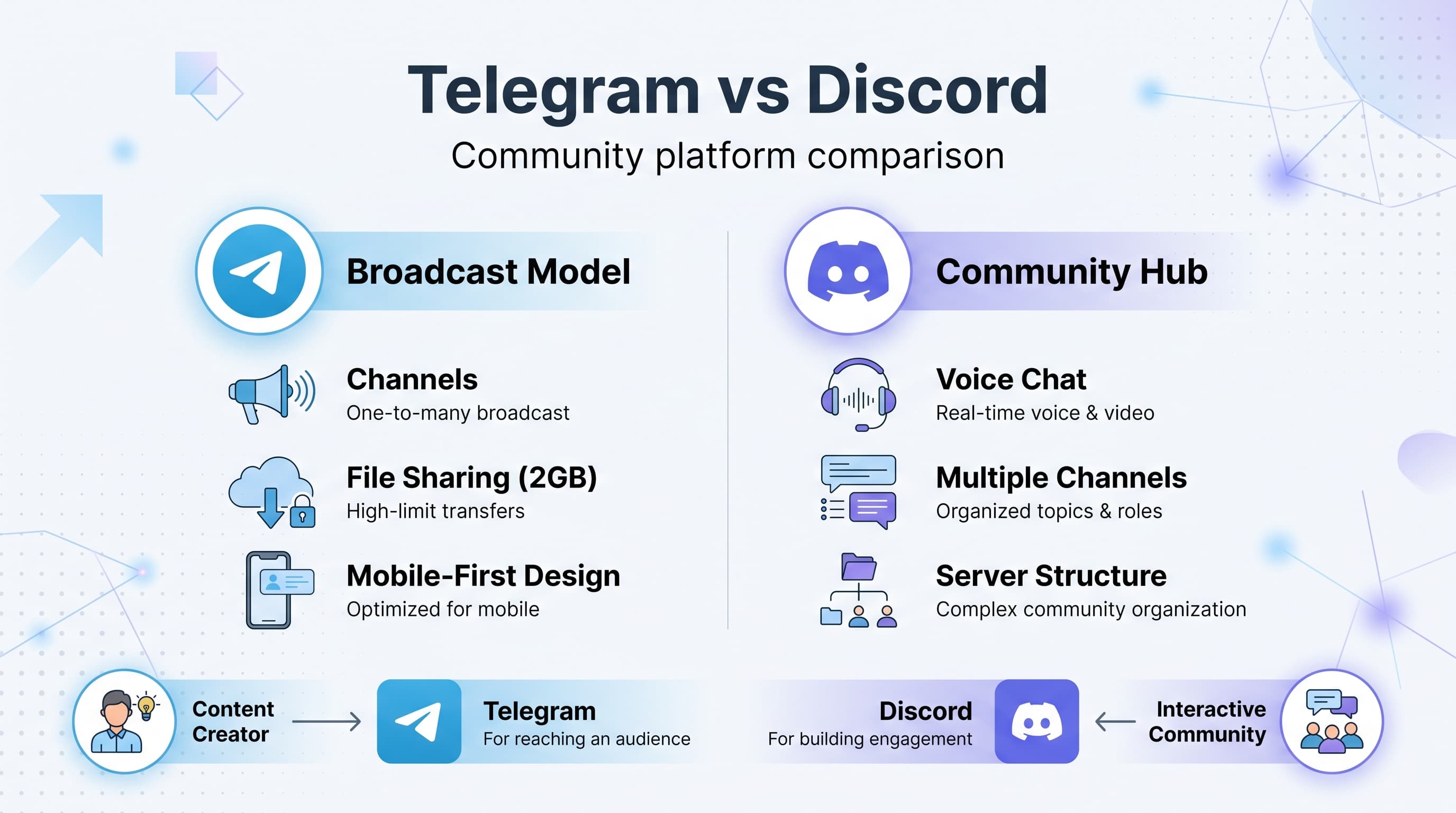
Bots represent Telegram's biggest business advantage. You can create sophisticated automated systems without API fees. Bots can handle customer inquiries, process orders, integrate with external systems, and provide interactive experiences with inline keyboards and custom commands.
Channels allow unlimited broadcast messaging to subscribers. Unlike WhatsApp's 256-contact broadcast limit, Telegram channels can reach millions of subscribers simultaneously. You can schedule posts, pin important messages, and track detailed engagement metrics.
Groups support up to 200,000 members with advanced moderation tools. You can create community spaces, customer support groups, or private client channels with granular permission controls.
File sharing capabilities exceed most platforms with 2GB limits per file and unlimited cloud storage. This works well for businesses sharing large documents, media files, or software with clients.
Pricing and cost considerations
The cost structures of both platforms reflect their different business models and target audiences.
WhatsApp Business costs
The WhatsApp Business app is completely free for small businesses. You get business profiles, catalogs, quick replies, labels, and basic messaging features without any costs. This makes it accessible for micro-businesses and startups.
WhatsApp Business API pricing varies by solution provider but typically includes:
- Setup fees ranging from $500 to $5,000 depending on complexity
- Monthly platform fees from $50 to $500 based on features needed
- Per-message costs varying by country, typically $0.005 to $0.09 per message
- Template message approval fees and maintenance costs
The pricing model favors businesses with predictable, moderate message volumes. High-volume broadcasters or businesses with unpredictable spikes can face significant costs.
However, the cost often justifies itself through improved customer satisfaction and conversion rates, especially for businesses where customer communication directly impacts sales.
Telegram costs
Telegram is free for all business uses. There are no API fees, no message limits, no setup costs, and no subscription requirements. Even advanced features like bots, channels, and file sharing remain free regardless of scale.
The only costs come from development time if you need custom bots or integration work. Many businesses can use existing bot frameworks or hire developers for one-time setup costs rather than ongoing monthly fees.
For businesses with large audiences or high message volumes, this represents significant savings compared to WhatsApp API pricing or other business communication platforms.
However, the hidden cost is opportunity cost. If your target audience primarily uses WhatsApp, focusing solely on Telegram means missing potential customers and sales.
Security and privacy differences
Both platforms prioritize security but with different approaches that impact business use.
WhatsApp uses end-to-end encryption for all messages, including business communications. This means WhatsApp cannot read message content, providing strong privacy protection for sensitive customer interactions.
However, WhatsApp's integration with Facebook's business ecosystem means metadata and business insights flow to Meta's advertising platform. Business accounts also have different privacy policies than personal accounts, allowing more data collection for business features.
Telegram offers multiple security levels. Regular chats use client-server encryption, while secret chats provide end-to-end encryption with additional features like self-destructing messages and screenshot notifications.
The platform's cloud-based architecture means messages sync across devices, which is convenient for business teams but technically less secure than device-only storage.
Telegram has faced government restrictions in various countries due to its privacy stance, which could impact business continuity in certain regions. WhatsApp has broader government acceptance but faces different regulatory pressures around data sharing.
For businesses handling sensitive information, both platforms provide adequate security for most use cases. The choice often comes down to whether you prioritize device-synced convenience (Telegram) or widespread acceptance (WhatsApp).
Marketing and customer engagement
The platforms excel in different types of marketing and customer engagement strategies.
WhatsApp marketing approach
WhatsApp works best for direct, personal customer relationships. The platform's intimate nature means customers expect relevant, valuable communication rather than promotional broadcasts.
Successful WhatsApp marketing focuses on customer service excellence, order updates, appointment confirmations, and personalized product recommendations. The high open rates (over 90%) make it powerful for important communications.
Broadcast lists reach up to 256 contacts simultaneously, making them suitable for targeted promotions to your best customers or specific customer segments. The personal nature of delivery often results in higher engagement than email marketing.
Customer acquisition typically happens through other channels, with WhatsApp serving as a retention and service tool. QR codes, click-to-chat links, and website integration help move customers from discovery to direct communication.
Telegram marketing capabilities
Telegram excels at content marketing and community building. Channels function like blogs or newsletters but with better engagement tracking and interactive features.
You can build large audiences organically through valuable content, then engage subscribers with polls, quizzes, and interactive bots. The platform's forwarding culture helps content spread virally within relevant communities.
Groups create community spaces where customers can interact with each other and your brand. This works particularly well for businesses with passionate user bases or complex products that benefit from peer support.
The bot ecosystem enables sophisticated marketing automation: lead qualification, product recommendations, customer surveys, and e-commerce transactions, all within the messaging interface.
However, customer acquisition can be slower due to the smaller user base and different discovery mechanisms compared to WhatsApp's personal referral patterns.
Technical integration and automation
The technical capabilities of each platform determine how well they integrate with existing business systems and workflows.
WhatsApp Business API provides robust integration options with CRM systems, e-commerce platforms, and customer service tools. Major platforms like Salesforce, HubSpot, and Shopify offer native WhatsApp integrations.
The API supports webhooks for real-time message processing, template messages for automated notifications, and media messaging for rich customer interactions. However, implementation requires technical expertise and ongoing maintenance.
Message templates must be pre-approved by WhatsApp, which ensures quality but slows deployment of new automated messages. The approval process can take several days and requires careful compliance with WhatsApp's guidelines.
Telegram's bot API offers more flexibility with immediate deployment of new features and no template approval requirements. Bots can integrate with any external service that provides API access.
The platform supports webhooks, inline keyboards, file uploads, and payment processing through various providers. Development is often faster and more iterative compared to WhatsApp's structured approach.
However, fewer third-party integrations exist compared to WhatsApp, meaning more custom development work for complex business system integration.
For businesses with existing technical teams, Telegram often provides faster time-to-market for custom solutions. For businesses preferring plug-and-play solutions, WhatsApp's ecosystem offers more ready-made options.
Customer support and user experience
The customer support experience differs significantly between platforms, affecting both business operations and customer satisfaction.
WhatsApp users expect immediate responses similar to SMS conversations. The "last seen" timestamps and read receipts create pressure for quick replies, which can be challenging for small businesses without dedicated support staff.
However, this intimacy also creates opportunities for exceptional customer service. Personal, timely responses on WhatsApp often result in higher customer loyalty and positive word-of-mouth compared to traditional support channels.
The business tools help manage expectations with away messages and quick replies, but the platform works best when humans handle most interactions rather than relying heavily on automation.
Telegram users are more comfortable with bot interactions and asynchronous communication. The platform's culture expects some automation, making it easier to scale customer support without adding staff.
Bots can handle common inquiries, route complex issues to humans, and provide 24/7 availability for basic functions. The threaded conversation model and extensive formatting options support more detailed, informative responses.
Groups can also provide community support where customers help each other, reducing direct support burden while building stronger user communities.
Use case scenarios: who wins where
WhatsApp works best for:
Local businesses like restaurants, salons, and retail stores where customers expect direct, personal communication. The catalog feature works well for showcasing products, and the high local adoption rates ensure customer accessibility.
Service businesses including consultants, real estate agents, and healthcare providers who need to maintain ongoing client relationships with appointment scheduling, updates, and personalized communication.
E-commerce businesses targeting mainstream consumers, especially in WhatsApp-dominant regions like Latin America, Europe, and parts of Asia. Order confirmations, shipping updates, and customer service work exceptionally well.
B2B companies selling to small and medium businesses where decision-makers use WhatsApp personally and professionally. The crossover between personal and business use creates opportunities for relationship building.
Telegram excels for:
Tech companies and startups serving developer communities, cryptocurrency businesses, or privacy-conscious audiences who already prefer Telegram for its technical features and security focus.
Content creators and media companies who want to build large audiences through channels, share high-quality media files, and engage communities with interactive content and polls.
International businesses operating in regions where Telegram has strong adoption or where WhatsApp faces restrictions. The platform's global accessibility and government resistance provide operational advantages.
Businesses with complex products or services that benefit from detailed documentation, file sharing, and community discussions. The unlimited file sizes and group capabilities support comprehensive customer education.
Companies needing sophisticated automation on limited budgets. The free API and powerful bot capabilities can replace expensive customer service and marketing automation tools.
Final verdict and recommendations
The choice between Telegram and WhatsApp for business isn't about finding the "better" platform but matching platform strengths to business needs and customer expectations.
WhatsApp Business wins for most traditional businesses because of its massive user base and established role in customer communication. If your customers are on WhatsApp (and in most markets, they are), your business should be too.
The platform excels at personal customer relationships, direct sales communication, and building trust through intimate, responsive service. For restaurants, retail stores, service providers, and most B2C businesses, WhatsApp provides the best return on investment.
Telegram makes sense for businesses that can leverage its unique strengths: large community building, sophisticated automation, content marketing, or serving tech-savvy audiences. The free API and advanced features provide exceptional value for businesses with development resources.
Many successful businesses don't choose between the platforms but use both strategically: WhatsApp for direct customer service and sales, Telegram for content marketing and community building.
Remember that platform success depends more on execution than platform choice. Responsive customer service, valuable content, and genuine relationship building matter more than technical features or user base size.
Test both platforms with small pilot programs before committing significant resources. Your specific audience and business model will determine which platform delivers better results, regardless of general recommendations.
Try Schedulala for free
Schedule posts to Bluesky, Twitter, and 8 other platforms from one dashboard.
Get started for free→