Local Business Social Media Strategy: Complete Guide to Dominate Your Market
Master local business social media with our complete strategy guide. Boost visibility, engage customers, and grow your business in your community.

Your local business isn't competing with companies across the country. You're fighting for attention in your neighborhood, your city, your community. That changes everything about how you should approach social media. Our Instagram scheduling can help.
See It in Action
This is what scheduling an Instagram post looks like in Schedulala
Generic social media advice falls flat for local businesses. You don't need millions of followers or viral content. You need the right people in your area to know you exist, trust you, and choose you over the competition down the street. See our cross-platform analytics track 9 guide.
This guide breaks down exactly how to build a local business social media strategy that actually drives foot traffic, phone calls, and sales. No fluff, no corporate buzzwords, just proven tactics that work for businesses serving their local communities. Try our how to repurpose content.
Try Schedulala for free
Schedule posts to Bluesky, Twitter, and 8 other platforms from one dashboard.
Get started for free→Why local businesses need different social media strategies
Local businesses operate in a completely different universe than national brands. Your customer base is geographically limited, your competition is visible from your storefront, and your reputation spreads through actual word-of-mouth conversations at coffee shops and community events. Try our content calendar.
1. Geographic constraints create opportunities
While a limited geographic reach might seem like a disadvantage, it's actually your secret weapon. You can build genuine relationships with customers, become part of community conversations, and establish yourself as a local authority in ways that national chains simply cannot. Learn more about best time to post on instagram.
Consider a local bakery versus a national chain. The local bakery can post about using flour from the farm 20 minutes away, sponsor the high school basketball team, and remember customers' names and usual orders. That personal connection translates directly into social media content that feels authentic and resonates with the local community. Our instagram engagement calculator can help.
2. Local search behavior is different
When people search for local businesses, they're usually ready to take action. They're not browsing for entertainment or researching for future purchases. They need a plumber today, want dinner tonight, or are looking for a gift shop this weekend.
This urgency changes how you should approach social media. Your content needs to address immediate needs, showcase availability, and make it incredibly easy for potential customers to contact you or visit your location.
- Location-based searches: "Italian restaurant near me" gets 2x more engagement than generic food posts
- Time-sensitive queries: "Open now" appears in 45% of local business searches
- Review-driven decisions: 87% of people read reviews for local businesses before visiting
3. Community reputation affects everything
In small communities especially, your business reputation extends far beyond online reviews. The way you handle social media reflects your values, customer service, and community involvement. A poorly managed social media presence can damage relationships that took years to build.
Local customers often know each other, which means one bad experience shared on social media can influence multiple potential customers. Conversely, positive engagement with community members can create a ripple effect of referrals and recommendations.
Platform selection for local businesses
Not every social media platform deserves your attention. Local businesses typically have limited time and resources for social media, so choosing the right platforms can make or break your strategy.
Here's how to evaluate platforms based on your local business type and community demographics:
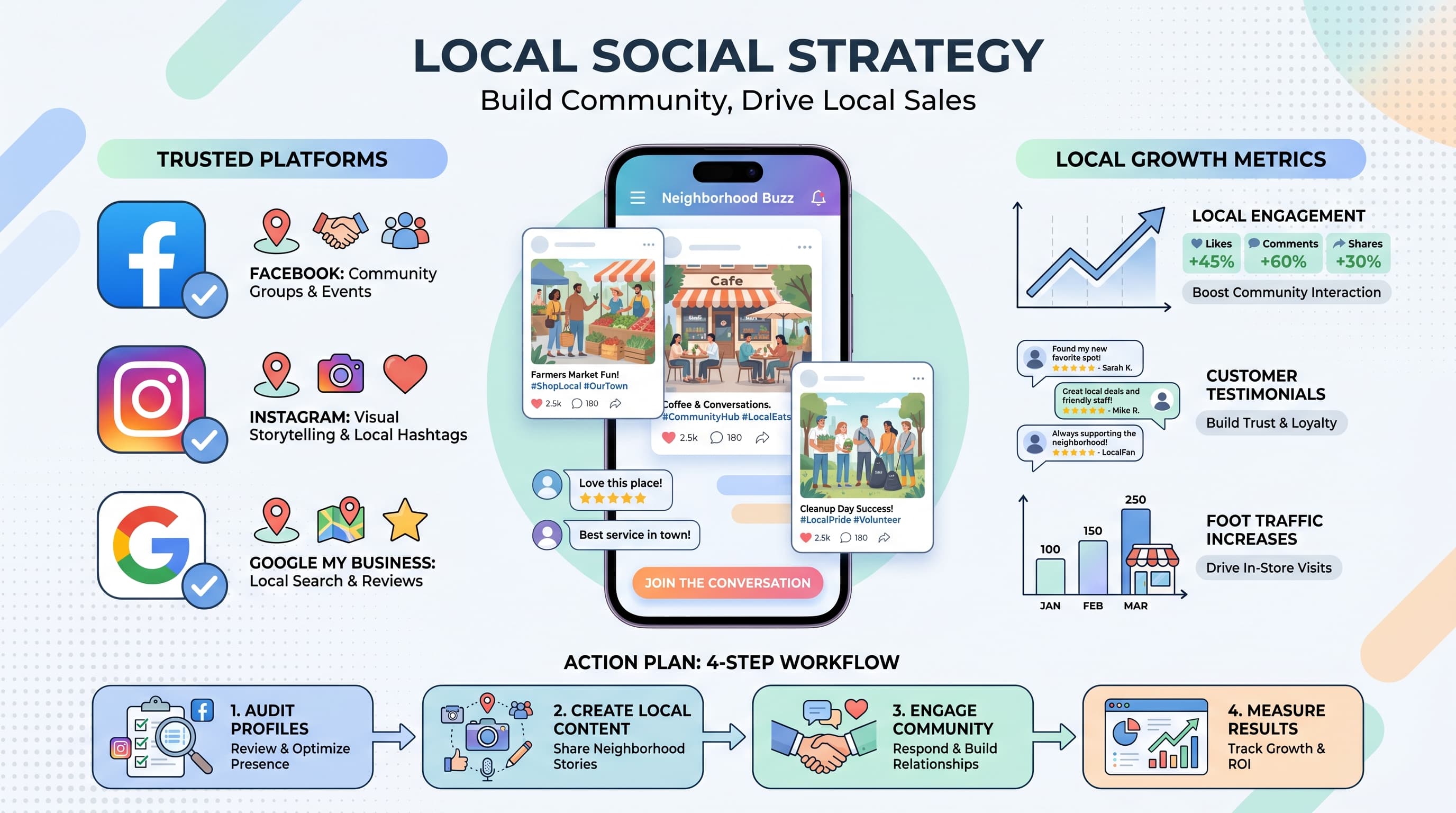
Facebook: The local business workhorse
Facebook remains the most important platform for local businesses, despite what you might read about declining usage. The platform's local features, business tools, and demographic reach make it essential for community-focused businesses.
- Business Page features: Hours, location, phone number, and review integration
- Local audience: 69% of adults use Facebook regularly, with higher usage in suburban and rural areas
- Community groups: Join local Facebook groups where your customers spend time
- Event promotion: Create and promote local events directly to community members
- Facebook Marketplace: List products and services for local discovery
Facebook's algorithm also favors local content and businesses. When users search for businesses or services in their area, Facebook prioritizes local pages and posts in the results.
Instagram: Visual storytelling for lifestyle businesses
Instagram works exceptionally well for businesses with strong visual appeal or lifestyle components. Restaurants, retail stores, fitness studios, salons, and service businesses that can showcase their work perform particularly well.
- Stories features: Behind-the-scenes content, polls, and location stickers
- Local hashtags: Target specific neighborhoods and communities
- User-generated content: Encourage customers to tag your location
- Instagram Shopping: Sell products directly through the platform
- Reels discovery: Short videos can reach new local audiences
The key to Instagram success for local businesses is consistent, high-quality visuals that showcase your products, services, or atmosphere in action. Don't just post product photos; show the experience of being a customer.
Google My Business: Not social media, but essential
While not technically social media, Google My Business functions like a social platform for local businesses. You can post updates, share photos, respond to reviews, and engage with customers. Most importantly, it directly affects your local search rankings.
- Local search dominance: Appears in Google Maps and local search results
- Review management: Respond to customer feedback publicly
- Photo optimization: Upload photos that showcase your business
- Post updates: Share news, events, and special offers
- Q&A section: Answer common customer questions
LinkedIn: B2B and professional services
LinkedIn serves local businesses that work primarily with other businesses or provide professional services. Accounting firms, marketing agencies, consultants, and business-to-business service providers should prioritize LinkedIn over consumer-focused platforms.
- Professional networking: Connect with local business owners and decision-makers
- Industry expertise: Share insights and establish thought leadership
- Local business groups: Participate in chamber of commerce and industry groups
- Employee advocacy: Encourage staff to share company content
- Service showcases: Highlight case studies and client success stories
TikTok: Reaching younger local audiences
TikTok can work for local businesses targeting younger demographics, particularly in urban areas. However, success requires a significant time investment in content creation and trend awareness.
Local businesses that excel on TikTok often focus on educational content, behind-the-scenes videos, or showcasing their personality. A local mechanic explaining car maintenance tips or a bakery showing the bread-making process can build substantial local followings.
| Platform | Best For | Time Investment | Local Impact |
|---|---|---|---|
| All local businesses | Medium | High | |
| Visual businesses | Medium-High | Medium-High | |
| Google My Business | All local businesses | Low | Very High |
| B2B services | Low-Medium | Medium | |
| TikTok | Young demographics | High | Low-Medium |
Creating content that connects with local audiences
Local social media content should feel like conversations with neighbors, not corporate announcements. The most successful local businesses create content that reflects their community involvement, local knowledge, and genuine personality.
1. Community-focused content strategy
Your content should position your business as an active community member, not just a service provider. This means sharing content about local events, supporting other local businesses, and celebrating community achievements.
- Local event coverage: Post about farmers markets, festivals, and community gatherings
- Business partnerships: Showcase collaborations with other local businesses
- Community causes: Support local charities, schools, and nonprofit organizations
- Local news commentary: Share relevant local news with your business perspective
- Seasonal local content: Acknowledge local weather, seasons, and regional traditions
A local coffee shop might post about sourcing beans from a regional roaster, sponsor a local art show, and share photos of customers' dogs on their patio. Each post reinforces their connection to the community while promoting their business naturally.
2. Behind-the-scenes authenticity
Local customers want to know the people behind the business. Behind-the-scenes content humanizes your brand and builds personal connections that national chains cannot replicate.
- Staff introductions: Feature employees and their stories
- Process videos: Show how products are made or services delivered
- Daily operations: Share the reality of running a local business
- Problem-solving: Show how you handle challenges and customer needs
- Personal moments: Owner insights, business history, and family involvement
This content doesn't need professional production value. Phone videos and casual photos often perform better than polished marketing materials because they feel more genuine and relatable.
3. User-generated content and customer stories
Encourage customers to create content featuring your business. User-generated content serves as social proof while reducing your content creation workload.
- Photo contests: Ask customers to share photos using your products or services
- Review highlights: Share positive reviews and customer testimonials
- Customer spotlights: Feature regular customers and their stories
- Before/after showcases: Highlight transformation results
- Community challenges: Create local hashtag campaigns
Always ask permission before sharing customer content, and consider offering small incentives like discounts or free products to encourage participation.
4. Educational and helpful content
Position yourself as a local expert by sharing knowledge related to your industry. Educational content builds trust and keeps your audience engaged between purchases.
- How-to guides: Teach customers to use your products or maintain your services
- Industry insights: Share trends and developments relevant to your field
- Local tips: Provide advice specific to your geographic area
- Maintenance reminders: Help customers get more value from their purchases
- Seasonal advice: Share timely information related to your business
A local hardware store might share winter preparation tips, a fitness studio could post workout modifications for hot weather, or a garden center might provide planting schedules for the local climate zone.
Local SEO and social media integration
Social media and local SEO work together to improve your visibility in local search results. Google considers social signals, local mentions, and community engagement when ranking local businesses.
1. Optimize social profiles for local search
Your social media profiles should include consistent business information that matches your website and Google My Business listing. Inconsistent information confuses search engines and potential customers.
- NAP consistency: Name, Address, and Phone number must match across all platforms
- Local keywords: Include city and neighborhood names in your bio and descriptions
- Business categories: Choose the most specific categories available
- Contact information: Make it easy for customers to reach you
- Website links: Direct traffic back to your main website
Use location-specific keywords naturally in your social media bios. Instead of "Best pizza restaurant," try "Best pizza in downtown Springfield" or "Springfield's favorite family pizzeria."
2. Local hashtag strategy
Local hashtags help community members discover your content and connect with other local businesses and residents. Research and use a mix of broad and specific local hashtags.
- City and neighborhood tags: #Springfield, #DowntownSpringfield, #SpringfieldEats
- Local landmark references: #NearSpringfieldPark, #MainStreetBusiness
- Community event tags: #SpringfieldFarmersMarket, #SpringfieldFestival
- Regional identifiers: #CentralOhio, #MidwestBusiness
- Hyper-local tags: Create unique hashtags for your immediate area
Monitor local hashtags to discover community conversations, potential customers, and collaboration opportunities with other local businesses.
3. Google My Business and social media synergy
Link your social media activity with your Google My Business profile to maximize local search visibility. Regular posting on GMB improves your local search rankings.
- Cross-post content: Share social media posts on Google My Business
- Photo optimization: Upload photos to both platforms with local keywords
- Review responses: Address reviews professionally and promptly
- Event posting: Promote events across all platforms simultaneously
- Local link building: Share links between your social profiles and GMB
4. Local citation building through social media
Social media mentions of your business name, address, and phone number count as local citations. These citations help improve your local search rankings.
- Encourage check-ins: Ask customers to tag your location
- Partner mentions: Tag other local businesses in collaborative posts
- Event participation: Get mentioned when participating in local events
- Media coverage: Share news articles that mention your business
- Customer tags: Respond when customers mention your business
Building genuine community engagement
Community engagement goes beyond likes and comments. Local businesses need to build relationships that translate into real-world connections and customer loyalty.
1. Participate in local conversations
Join existing community conversations rather than only promoting your business. Monitor local Facebook groups, community boards, and neighborhood apps for opportunities to provide value.
- Local Facebook groups: Join neighborhood and community interest groups
- Nextdoor engagement: Participate in neighborhood discussions
- Community forums: Contribute to local online forums and discussion boards
- Event commenting: Engage with posts about local events and news
- Business networking: Connect with other local business owners online
Always provide value first before mentioning your business. Answer questions, offer advice, and be genuinely helpful. When people know you as a helpful community member, they're more likely to support your business.
2. Respond promptly and personally
Local customers expect personal service, including on social media. Quick, personal responses differentiate you from larger competitors with generic customer service.
- Response time goal: Aim for responses within 4 hours during business hours
- Personal tone: Write responses as if talking to a neighbor
- Problem resolution: Address issues publicly and offer solutions
- Thank customers: Acknowledge positive comments and reviews
- Use names: Address customers by name when possible
When handling complaints publicly, respond professionally and offer to continue the conversation privately. Other community members will judge your business based on how you handle difficult situations.
3. Create local meetups and events
Use social media to organize and promote real-world gatherings. Events strengthen relationships with existing customers and attract new ones through word-of-mouth promotion.
- Customer appreciation events: Thank loyal customers with special gatherings
- Educational workshops: Teach skills related to your business
- Community service: Organize volunteer opportunities
- Networking events: Bring together local business owners
- Seasonal celebrations: Host holiday parties or seasonal events
Document events on social media to show community involvement and create content that attracts similar customers. Photos and videos from events often become your highest-engaging content.
4. Support other local businesses
Building relationships with other local businesses creates a supportive network that benefits everyone. Cross-promotion and mutual support strengthen the entire local business community.
- Cross-promotion: Share each other's content and events
- Collaborative events: Partner with complementary businesses
- Referral networks: Recommend other local services to customers
- Joint marketing: Share advertising costs for community events
- Vendor relationships: Highlight local suppliers and partners
A local restaurant might partner with a nearby bookstore for a "dinner and book club" night, or a fitness studio could collaborate with a health food store for nutrition workshops. These partnerships create win-win situations that benefit all businesses involved.
Measuring success for local social media
Local businesses need different metrics than national brands. Focus on measurements that directly relate to your business goals: foot traffic, phone calls, and sales from local customers.
1. Local-specific KPIs
Traditional social media metrics like follower count matter less for local businesses than engagement quality and local reach. Track metrics that indicate genuine community connection.
- Local reach percentage: How much of your audience is in your service area
- Check-ins and location tags: Physical visits prompted by social media
- Local hashtag engagement: Performance of location-specific hashtags
- Community conversation participation: Mentions in local groups and discussions
- Referral traffic: Website visits from social media platforms
A local business with 500 engaged local followers will typically see better results than one with 5,000 followers from around the world. Quality trumps quantity in local social media.
2. Attribution and tracking
Connect social media activity to actual business outcomes by implementing simple tracking methods that work for small businesses.
- Promo codes: Use social-specific discount codes to track conversions
- Customer surveys: Ask how customers heard about you
- Phone tracking: Monitor call volume after social media posts
- Event attendance: Track RSVPs and actual attendance for social media promoted events
- Google Analytics: Set up goals for social media traffic
Train staff to ask new customers how they heard about your business. This simple question provides valuable attribution data that sophisticated tracking systems miss.
3. Return on investment calculation
Calculate social media ROI by comparing the time and money invested against the revenue generated from social media-driven customers.
- Time investment: Track hours spent creating content and engaging
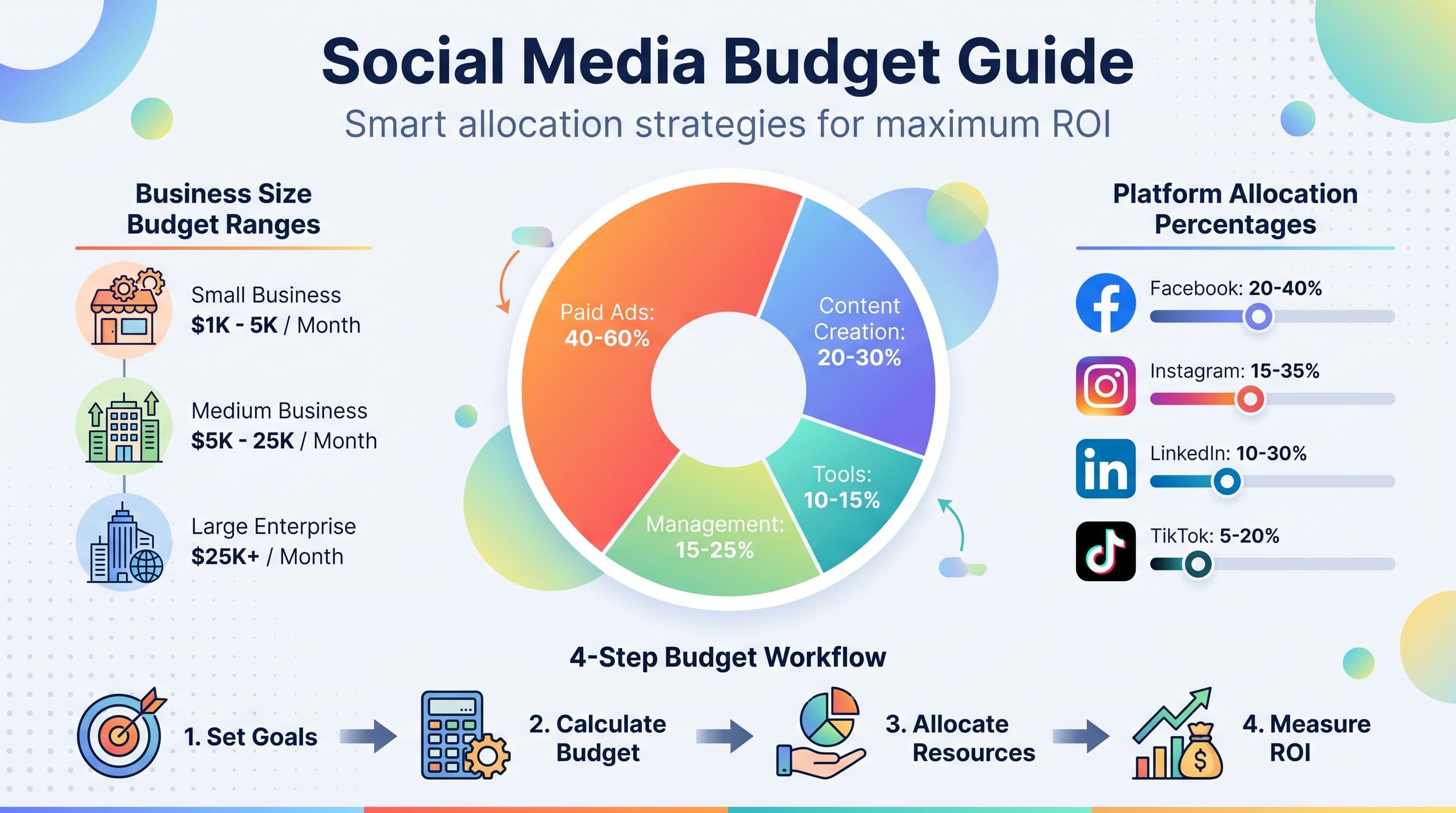
- Direct costs: Paid advertising, tools, and any outsourced content creation
- Revenue attribution: Sales directly traceable to social media
- Lifetime value: Consider repeat business from social media acquired customers
- Cost per acquisition: Compare to other marketing channels
Many local businesses find social media provides better ROI than traditional advertising because of lower costs and higher engagement rates within their community.
| Metric | Good for Local | How to Track | Target Range |
|---|---|---|---|
| Local reach % | All businesses | Platform insights | 60-80% |
| Engagement rate | All businesses | Platform analytics | 3-8% |
| Check-ins/tags | Location-based | Manual monitoring | 5-20/month |
| Referral traffic | All businesses | Google Analytics | 10-30% |
| Conversion rate | All businesses | Promo codes/surveys | 2-5% |
Common local social media mistakes
Local businesses often make predictable mistakes that hurt their social media effectiveness. Avoiding these pitfalls can dramatically improve your results.
1. Copying national brand strategies
Many local businesses try to imitate the social media strategies of national brands, which leads to generic content that doesn't resonate with local audiences.
- Overly polished content: Perfect photos that don't feel authentic
- Generic messaging: Content that could apply to any business anywhere
- Trend chasing: Following viral trends that don't fit your local community
- Corporate tone: Formal language that sounds impersonal
- Ignoring local context: Missing local events, news, and cultural references
Instead, embrace your local authenticity. Show real customers, real staff, and real moments from your business. Imperfection often performs better than polish for local businesses.
2. Neglecting Google My Business
Many local businesses focus on Facebook and Instagram while ignoring Google My Business, which often drives more actual customers than other platforms.
- Outdated information: Wrong hours, phone numbers, or addresses
- No recent photos: Customers want to see current images of your business
- Ignoring reviews: Not responding to customer feedback
- Missing posts: Not using GMB's posting features
- Incomplete profile: Missing business description, services, or attributes
Treat Google My Business as seriously as any other social platform. Regular updates and engagement directly impact your local search rankings and customer acquisition.
3. Being too sales-focused
Constant promotional posts drive away potential customers. Local audiences especially value businesses that contribute to the community rather than just selling.
- Every post is promotional: No valuable or entertaining content
- Generic sales language: "Buy now" and "limited time" in every post
- Ignoring engagement: Only posting without responding to comments
- No personality: Content sounds like advertising copy
- Missing community value: Never sharing anything helpful or interesting
Balance promotional content with valuable information, entertainment, and community involvement. People follow local businesses to feel connected to their community, not to see constant advertisements.
4. Inconsistent posting and engagement
Sporadic posting and delayed responses create an impression of unreliability that carries over to perceptions of your business operations.
- Long gaps: Posting daily for a week, then nothing for a month
- Slow responses: Taking days to respond to comments and messages
- Incomplete profiles: Missing contact information or outdated details
- Platform abandonment: Starting accounts then forgetting about them
- Seasonal neglect: Only posting during busy seasons
Consistency matters more than frequency. Better to post twice a week reliably than to post daily for two weeks then disappear for a month.
Try Schedulala for free
Schedule posts to Bluesky, Twitter, and 8 other platforms from one dashboard.
Get started for free→Creating your local social media action plan
Transform this strategy into actionable steps for your local business. Start with foundation elements, then build toward more advanced tactics as you gain experience and see results.
Week 1-2: Foundation setup
Begin with the essential elements that every local business needs. These foundational steps will support all future social media efforts.
- Audit current profiles: Review all existing social media accounts for consistency
- Update business information: Ensure NAP consistency across all platforms
- Optimize Google My Business: Complete profile with photos, hours, and description
- Research local hashtags: Identify 10-15 relevant local hashtags to use regularly
- Join local groups: Find and join 3-5 relevant community Facebook groups
- Set up tracking: Install Google Analytics and create social media traffic goals
Week 3-4: Content strategy development
Develop content themes and create a sustainable posting schedule based on your available time and resources.
- Define content pillars: Choose 3-4 main content themes for your business
- Create content calendar: Plan one month of posts in advance
- Establish posting schedule: Determine realistic frequency for each platform
- Develop response protocols: Create templates for common customer inquiries
- Plan first community event: Design a small event to bring customers together
- Connect with local businesses: Reach out to 5 potential collaboration partners
Month 2-3: Community building
Focus on building genuine relationships with community members and establishing your business as a valuable community contributor.
- Increase group participation: Actively contribute to local online discussions
- Host first event: Execute your planned community gathering
- Start collaboration: Launch first partnership with another local business
- Implement customer feedback: Ask customers how they found you
- Refine content strategy: Analyze what content performs best with your audience
- Expand platform presence: Consider adding a second platform if first is successful
Month 4+: Optimization and growth
Analyze results, optimize successful tactics, and expand your local social media presence based on proven strategies.
- Analyze performance data: Review metrics and identify successful content types
- Scale successful initiatives: Increase frequency of high-performing activities
- Launch customer advocacy program: Encourage reviews and user-generated content
- Expand local partnerships: Build relationships with more area businesses
- Consider paid promotion: Test small budget local advertising campaigns
- Plan quarterly events: Establish regular community engagement activities
Long-term local social media success
Building a successful local social media presence takes time, but the relationships and reputation you develop create lasting competitive advantages that are difficult for competitors to replicate.
Remember that social media for local businesses is ultimately about building real relationships with real people in your community. Technology and platforms will change, but the fundamental need for connection and community remains constant.
Focus on being genuinely helpful, consistently present, and authentically local. These qualities will serve your business well regardless of which platforms rise or fall in popularity.
Your local social media strategy should evolve with your business and community. Stay flexible, listen to your customers, and always prioritize real-world relationships over online metrics.
Try Schedulala for free
Schedule posts to Bluesky, Twitter, and 8 other platforms from one dashboard.
Get started for free→