Social Media Marketing for Real Estate Agents: Complete Strategy Guide for 2026
Master social media real estate marketing with proven strategies, content ideas, and scheduling tips that generate leads and close deals in 2026.

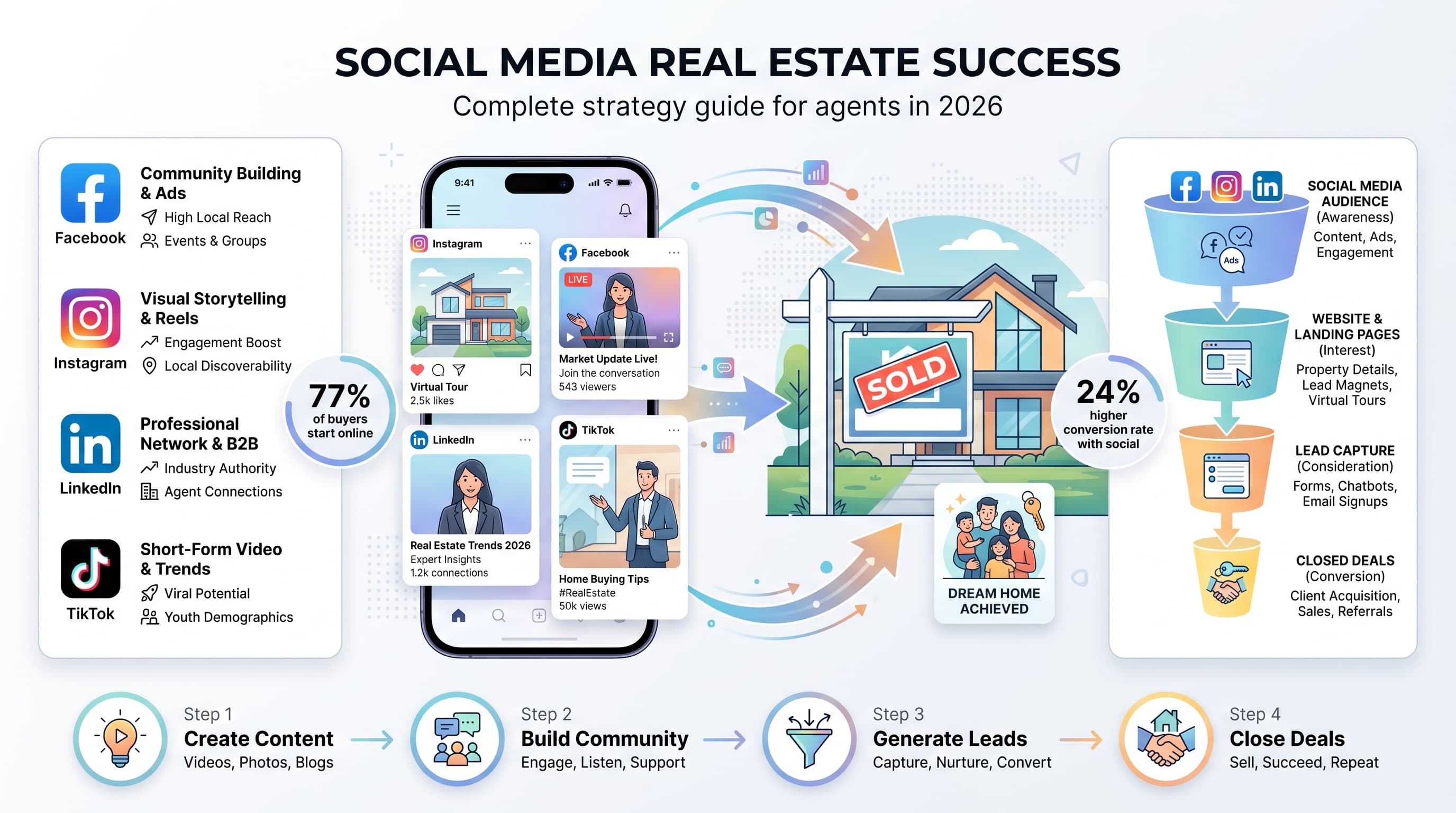
Real estate agents who ignore social media are leaving money on the table. While traditional methods still work, 77% of today's home buyers start their search online, and most of them scroll through social feeds daily. Try our Instagram scheduling.
See It in Action
This is what scheduling an Instagram post looks like in Schedulala
The challenge isn't just being present on social media. It's knowing which platforms drive actual leads, what content converts browsers into buyers, and how to maintain consistency without spending your entire day posting. This guide breaks down everything you need to build a social media strategy that generates real business results. Try our scheduling across platforms.
Try Schedulala for free
Schedule posts to Bluesky, Twitter, and 8 other platforms from one dashboard.
Get started for free→Why social media matters for real estate agents
The numbers tell the story. According to the National Association of Realtors, 51% of buyers found their home through the internet, and social media plays a huge role in that discovery process. But here's what most agents miss: social media isn't just about listing properties. It's about building relationships and establishing yourself as the go-to expert in your market. Try our how to repurpose content.
1. Builds trust before the first meeting
People want to know who they're working with before they pick up the phone. Your social media presence gives potential clients a chance to get to know your personality, expertise, and track record. When someone sees months of helpful content and successful transactions, they're more likely to choose you over a competitor they've never heard of. See our batch content creation guide.
Think about it from a buyer's perspective. Would you rather work with an agent who has three outdated listings on Facebook, or someone who regularly shares market insights, neighborhood highlights, and client success stories? The choice is obvious. Our best time to post on instagram can help.
2. Generates leads while you sleep
Social media works 24/7. A well-crafted post about a neighborhood's amenities might catch the attention of someone considering a move six months from now. Your market update from last Tuesday could be exactly what a potential seller needs to see to finally make the decision to list their home. See our instagram engagement calculator guide.
The key is consistency. One viral post won't transform your business, but showing up regularly with valuable content builds a pipeline of future clients who already know and trust you when they're ready to buy or sell.
3. Positions you as the local market expert
Anyone can post listings. Not everyone can provide deep market analysis, neighborhood insights, and trend predictions. When you consistently share expertise about local market conditions, school districts, upcoming developments, and community events, you become the obvious choice for anyone serious about buying or selling in your area.
This expertise positioning also helps with referrals. Other agents, mortgage brokers, and industry professionals are more likely to send business your way when they see you as a knowledgeable market leader, not just another agent posting pretty house photos.
Choosing the right platforms for real estate
Not all social media platforms work the same way for real estate agents. Each platform has its strengths, audience demographics, and content preferences. Trying to be everywhere at once usually means being effective nowhere. Here's how to choose your platforms strategically.
| Platform | Best for | Content type | Time investment |
|---|---|---|---|
| Local community building | Market updates, listings, events | High | |
| Showcasing properties | Photos, Stories, Reels | Medium | |
| B2B networking | Industry insights, thought leadership | Low | |
| TikTok | Younger demographics | Educational videos, behind-scenes | High |
| YouTube | Long-form education | Market reports, home tours | Very high |
Facebook: Your community headquarters
Facebook remains the most important platform for most real estate agents. The demographics skew older, which aligns perfectly with serious home buyers and sellers. Facebook's local features, like neighborhood groups and local business pages, make it ideal for establishing yourself as a community resource.
Facebook also offers the most robust advertising options for real estate. You can target people who've recently moved, are likely to sell based on life events, or live in specific neighborhoods. The platform's lead generation tools integrate well with most CRM systems, making it easier to track ROI.
Focus on joining and contributing to local Facebook groups, not just posting on your business page. Answer questions about the area, share relevant market news, and build relationships. This organic approach often generates more leads than paid advertising.
Instagram: Visual storytelling at its best
Instagram is where properties shine. High-quality photos and videos perform exceptionally well, making it perfect for showcasing listings, highlighting neighborhood amenities, and sharing behind-the-scenes content from your daily work.
Instagram Stories are particularly valuable for real estate agents. Use them for quick market updates, open house promotions, and day-in-the-life content. The temporary nature of Stories encourages more frequent posting without overwhelming your main feed.
Don't sleep on Instagram Reels. Short, engaging videos about home buying tips, market trends, or property features can reach audiences beyond your followers. The algorithm favors Reels, giving you more organic reach than standard posts.
LinkedIn: B2B relationship building
LinkedIn works differently than other platforms for real estate agents. It's less about direct consumer marketing and more about building professional relationships that generate referrals. Connect with mortgage brokers, attorneys, contractors, and other professionals who work with your target clients.
Share market analysis, industry insights, and thought leadership content. LinkedIn users expect more professional, educational content than what works on Facebook or Instagram. Position yourself as a market expert who understands broader economic trends affecting real estate.
LinkedIn is also excellent for reaching relocated professionals. Many companies use LinkedIn to help transferred employees find local resources, including real estate agents. A strong LinkedIn presence can generate referrals from HR departments and relocation companies.
Content strategy that converts
The biggest mistake real estate agents make on social media is treating it like a listing service. Posting property after property without context or value gets ignored. Your content strategy should follow the 80/20 rule: 80% valuable, educational, or entertaining content, and 20% direct promotion of listings or services.
1. Educational content that builds authority
Educational content positions you as an expert while providing genuine value to your audience. This includes market reports, home buying and selling tips, financing explanations, and legal requirement updates. The goal is to become the person people think of when they have real estate questions.
Create content around common questions you hear repeatedly. If clients always ask about closing costs, make a detailed post or video explaining every fee. If people don't understand market trends, break down what rising interest rates actually mean for buyers and sellers.
- Monthly market reports with local data and trends
- Home maintenance tips for each season
- First-time buyer guides and checklists
- Selling preparation timelines and tips
- Financing options and qualification requirements
- Legal requirements and disclosure explanations
2. Community-focused content
Your expertise isn't just about real estate transactions. It's about knowing your local market inside and out. Share content that highlights why your area is special: new restaurants, school achievements, community events, infrastructure improvements, and neighborhood spotlights.
This type of content serves multiple purposes. It shows potential buyers what makes your area attractive, demonstrates your local knowledge to potential sellers, and keeps you top-of-mind with current residents who might refer friends or need your services in the future.
- New business openings and restaurant reviews
- School district news and achievement highlights
- Community event coverage and upcoming activities
- Local market updates and new development news
- Neighborhood spotlight series with resident interviews
- Historical facts and interesting local stories
3. Behind-the-scenes and personal content
People buy from people they know and trust. Sharing behind-the-scenes content from your daily work helps potential clients understand your process and build a personal connection with you before they ever meet in person.
This doesn't mean sharing every detail of your personal life. Focus on professional behind-the-scenes content: preparing for a listing presentation, walking through a property before a showing, meeting with clients, or working on market analysis.
- Day-in-the-life content showing your work process
- Client success stories and testimonials (with permission)
- Team introductions and office culture glimpses
- Professional development and continuing education
- Industry event attendance and networking
- Technology and tools you use to serve clients better
4. Strategic listing presentations
When you do share listings, make them compelling and informative. Don't just post MLS photos with basic details. Tell the story of the property, highlight unique features, and explain why someone would want to live there.
Consider creating different types of listing content: detailed virtual tours, neighborhood context posts explaining why the location is special, and lifestyle posts showing how someone might use the space. This approach generates more engagement than standard listing posts.
- Property story posts highlighting unique features and history
- Neighborhood context explaining location advantages
- Lifestyle content showing how spaces could be used
- Virtual tour videos or photo carousels
- Price and market positioning explanations
- Open house event promotion and follow-up
Building an engaged local audience
Having followers isn't enough. You need an engaged local audience that actually converts into leads and referrals. This means focusing on quality over quantity and building genuine relationships rather than just accumulating numbers.
1. Engage authentically with your community
Social media is called social for a reason. Don't just broadcast content. Respond to comments thoughtfully, ask questions that encourage discussion, and engage with other local businesses and community members' content.
Set aside time daily for engagement, not just posting. Like and comment on posts from local businesses, community organizations, and potential clients. Share others' content when it's relevant to your audience. This reciprocal engagement builds relationships that often translate into business opportunities.
Join conversations in local Facebook groups and community forums. Answer questions, provide helpful information, and establish yourself as a valuable community resource. Avoid direct self-promotion in these spaces, focus on being helpful.
2. Use local hashtags and geotags strategically
Local hashtags help people in your area discover your content. Research hashtags specific to your city, neighborhoods, and local landmarks. Create a mix of popular local hashtags and more specific neighborhood tags.
Don't forget about geotagging. Adding location tags to your posts, especially on Instagram, helps local users find your content. Tag specific neighborhoods, popular local spots, and even your office location when relevant.
- City and neighborhood-specific hashtags (#YourCityRealEstate)
- Local landmark and popular location tags
- Community event and local business hashtags
- School district and local organization tags
- Regional real estate market hashtags
- Local lifestyle and culture hashtags
3. Collaborate with local businesses and influencers
Partner with other local businesses for cross-promotion opportunities. This could include coffee shops, restaurants, home improvement stores, interior designers, or local photographers. These partnerships expose you to new audiences while providing value to both businesses.
Consider collaborating with local micro-influencers who have engaged followings in your area. This doesn't have to be expensive. Often, local influencers are happy to trade services or do collaborations in exchange for exposure or small gifts.
Create content that features local businesses naturally. Share your favorite coffee shop where you meet clients, the contractor you recommend for home improvements, or the photographer you work with for listings. These businesses often share your content, expanding your reach.
4. Host virtual and in-person events
Events, whether virtual or in-person, create opportunities for deeper engagement with your audience. Host Facebook Live sessions answering real estate questions, Instagram Live home tours, or in-person first-time buyer workshops.
Virtual events are particularly effective because they lower the barrier to participation. People can join from home without the commitment of attending an in-person event. Record these sessions and repurpose them as regular content.
- Monthly market update Facebook Live sessions
- Instagram Live home tours and walkthroughs
- First-time buyer education workshops
- Home selling preparation seminars
- Local market trend presentation webinars
- Q&A sessions addressing audience questions
Lead generation tactics that work
Social media lead generation for real estate agents requires a strategic approach. The goal isn't just to get contact information, but to attract qualified prospects who are genuinely interested in buying or selling in your market area.
1. Create valuable lead magnets
Lead magnets are free resources you offer in exchange for contact information. For real estate agents, the most effective lead magnets solve specific problems your target audience faces during the buying or selling process.
The key is making your lead magnet specific to your local market. Anyone can download a generic home buying checklist, but only you can provide a guide to buying in your specific city, with local lender recommendations, neighborhood insights, and market-specific timelines.
- Local neighborhood guides with insider information
- Home selling checklists specific to your market requirements
- First-time buyer guides with local lender and service provider recommendations
- Market reports with detailed local data and predictions
- Home maintenance calendars tailored to your climate
- Investment property analysis templates for your area
2. Use Facebook and Instagram ads strategically
Organic social media is important, but paid advertising accelerates lead generation. Facebook and Instagram ads allow you to target people based on demographics, interests, behaviors, and life events that indicate real estate intent.
Start with small budgets and test different ad types, audiences, and messages. Track which ads generate not just leads, but qualified leads that turn into actual business. A lower-cost lead that never converts is worthless compared to a slightly more expensive lead that becomes a client.
- Lead generation ads promoting valuable content downloads
- Retargeting ads for website visitors and social media engagers
- Local awareness ads targeting people in specific neighborhoods
- Life event targeting for recent movers or life changes
- Lookalike audiences based on past client characteristics
- Video ads showcasing market expertise and personality
3. Implement social media call-to-actions
Every piece of content should have a purpose and a next step. Don't just post valuable content and hope people will reach out. Include clear calls-to-action that guide interested prospects toward becoming leads.
Make your calls-to-action specific and low-pressure. Instead of 'Contact me if you have questions,' try 'Download my free guide to selling your home in our current market.' The specific, valuable offer converts better than generic contact requests.
- Direct message prompts for specific questions or consultations
- Link-in-bio strategies directing traffic to lead capture pages
- Comment-to-receive campaigns for lead magnet distribution
- Story swipe-up features (if available) for immediate lead capture
- Video descriptions with clear next steps and contact information
- Post captions that naturally suggest consultations or conversations
4. Track and nurture social media leads
Getting the lead is only the beginning. Social media leads often need longer nurturing than traditional leads because they're earlier in their decision-making process. They might not be ready to buy or sell immediately, but they're gathering information and building relationships.
Set up systems to track where leads come from and how they progress through your sales process. This data helps you understand which social media activities generate the best ROI and deserve more investment.
Create nurturing sequences specifically for social media leads. These should provide value while gradually building trust and positioning you as the obvious choice when they're ready to move forward.
Content creation and scheduling workflow
Consistency is crucial for social media success, but it doesn't have to consume your entire day. The key is developing efficient systems for content creation and scheduling that maintain quality while fitting into your busy schedule as a real estate agent.
1. Batch content creation
Instead of creating content daily, set aside dedicated time blocks for content creation. This might be a few hours on Sunday afternoon or one morning per week. During these sessions, create multiple pieces of content at once.
Batching is particularly effective for photo content. When you're at a new listing or interesting location, take photos for multiple future posts. Shoot different angles, details, and contexts that can be used for various content purposes.
Plan your content themes in advance. If you know you want to focus on market trends this month, prepare several trend-related posts during one creation session. This approach ensures consistency while reducing the daily pressure of content creation.
2. Use scheduling tools effectively
Social media scheduling tools save time and ensure consistency, even when you're busy with clients or closings. These tools allow you to prepare content in advance and automatically post at optimal times for your audience.
However, scheduling shouldn't replace real-time engagement. While your posts can be automated, your responses to comments and messages should be authentic and timely. Use scheduling for content distribution, not relationship building.
The best scheduling approach combines planned content with spontaneous posts. Schedule your evergreen educational content, market updates, and regular series, but leave room for timely posts about new listings, market news, or community events.
3. Create content templates and frameworks
Develop templates for common content types to speed up creation without sacrificing quality. This might include templates for market updates, listing presentations, client testimonials, and educational posts.
Templates don't mean every post looks identical. They provide structure and ensure you include important information while allowing for customization based on specific content and audience needs.
- Market update template with consistent data points and format
- Listing post framework highlighting key features and benefits
- Educational post structure for explaining complex concepts
- Client testimonial format that tells complete success stories
- Community spotlight template for featuring local businesses
- Behind-the-scenes post structure for authentic engagement
4. Repurpose content across platforms
Create once, publish everywhere. A single piece of core content can be adapted for multiple platforms and post types. This approach maximizes the value of your content creation time while maintaining platform-specific optimization.
For example, a detailed market analysis blog post can become a Facebook post, an Instagram carousel, a LinkedIn article, several Instagram Stories, and multiple tweets. Each version is tailored to the platform's audience and format, but the core information remains consistent.
Video content is particularly effective for repurposing. A single property tour video can be posted in full on Facebook and YouTube, shortened for Instagram Reels, broken into clips for Stories, and used to create still images for various posts.
Measuring success and ROI
Social media success for real estate agents shouldn't be measured only by follower counts or post engagement. While these metrics matter, they're meaningless if they don't translate into actual business results: leads, clients, and closed transactions.
1. Track the metrics that matter
Focus on metrics that directly relate to business outcomes. Lead generation, website traffic from social media, consultation requests, and ultimately, closed deals attributed to social media efforts are the numbers that matter most.
Set up proper tracking systems to understand your social media ROI. Use UTM parameters on links, track phone calls with unique numbers, and maintain records of how clients found you. This data helps you understand which platforms and content types generate the best results.
- Lead generation numbers from each platform
- Website traffic and time on site from social referrals
- Consultation requests and their conversion rates
- Referral generation from social media connections
- Brand mention tracking and sentiment analysis
- Cost per lead and lifetime value for social media clients
2. Monitor engagement quality over quantity
High engagement from the wrong audience doesn't help your business. Focus on engagement from your target market: people in your geographic area who are potential buyers, sellers, or referral sources.
Pay attention to the types of comments and questions you receive. Thoughtful questions about market conditions or specific properties indicate higher-quality engagement than generic compliments or emoji reactions.
Track which content types generate the most meaningful engagement from your target audience. This information guides your content strategy toward topics and formats that resonate with potential clients rather than just maximizing vanity metrics.
3. Calculate time investment vs. return
Time is your most valuable resource as a real estate agent. Track how much time you spend on social media activities and measure that against the business results you achieve. This analysis helps you optimize your approach and focus on high-return activities.
If you're spending ten hours a week on social media but only generating one qualified lead per month, you might need to adjust your strategy or time allocation. Conversely, if social media is generating significant business with minimal time investment, you might want to increase your efforts.
Consider the lifetime value of clients acquired through social media. If social media clients tend to refer more business or work with you on multiple transactions, the ROI calculation becomes more favorable even if the initial time investment seems high.
Common mistakes to avoid
Even well-intentioned real estate agents make social media mistakes that hurt their professional reputation or waste valuable time. Learning from these common errors saves you from making costly mistakes with your online presence.
1. Over-promoting listings and services
The biggest mistake is treating social media like a listing service. Posting property after property without providing context, education, or entertainment gets ignored. People follow you for value, not constant sales pitches.
Follow the 80/20 rule religiously. Eighty percent of your content should provide value without directly promoting your services. This builds trust and engagement that makes the 20% promotional content more effective.
When you do promote listings, tell stories. Explain why the property is special, highlight unique features, or share the history behind the home. This approach generates more interest than basic MLS information.
2. Inconsistent posting and engagement
Posting sporadically or disappearing from social media for weeks at a time hurts your credibility and momentum. Consistency builds trust and keeps you top-of-mind with your audience.
It's better to post less frequently on a consistent schedule than to post daily for two weeks and then disappear for a month. Choose a posting frequency you can maintain long-term, even during busy periods.
Don't just post and disappear. Social media requires engagement. Respond to comments, answer questions, and participate in conversations. This two-way communication is what builds relationships that translate into business.
3. Ignoring local compliance and legal requirements
Real estate agents must follow advertising laws and brokerage policies on social media just like any other marketing channel. This includes proper disclosures, fair housing compliance, and brokerage identification requirements.
Before posting client testimonials or before-and-after photos, ensure you have proper permissions. Some states require specific disclosures for testimonials, and you should always get written consent before featuring clients in your marketing.
Be careful about making claims or predictions about market performance or investment returns. Stick to factual information and clearly identify opinions as such. When in doubt, consult with your broker or real estate attorney.
4. Neglecting personal brand consistency
Your social media presence should reflect your professional brand consistently across all platforms. Mixed messages, unprofessional photos, or conflicting information confuse potential clients and hurt your credibility.
Use the same professional headshot, bio information, and contact details across all platforms. Your personality can show through, but maintain professional standards that align with how you want clients to perceive you.
Be mindful of personal posts that might appear on your professional profiles. While showing personality is good, controversial political posts, excessive personal information, or unprofessional behavior can cost you business.
Try Schedulala for free
Schedule posts to Bluesky, Twitter, and 8 other platforms from one dashboard.
Get started for free→Advanced strategies for 2026
As social media continues evolving, successful real estate agents must adapt their strategies to new features, changing algorithms, and shifting user behaviors. Here are the advanced tactics that will separate top performers from the competition in 2026.
1. Video-first content strategy
Video content continues dominating social media algorithms and user engagement. Real estate agents who master video creation and optimization will have significant advantages in reach and engagement.
Focus on short-form video content optimized for mobile viewing. This includes Instagram Reels, TikTok videos, YouTube Shorts, and Facebook Reels. These formats get the most organic reach and engagement across all major platforms.
- Quick property tours highlighting unique features
- Market update videos with key data points
- Home buying and selling tip series
- Behind-the-scenes day-in-the-life content
- Client testimonial videos and success stories
- Neighborhood spotlight videos showcasing local amenities
2. AI-powered personalization
Artificial intelligence tools can help real estate agents create more personalized content and improve targeting efficiency. Use AI to analyze which content performs best with different audience segments and optimize your strategy accordingly.
AI-powered chatbots can handle initial lead qualification and appointment scheduling on your social media pages, ensuring faster response times even when you're busy with clients.
Content creation AI can help generate ideas, write post captions, and even create basic graphics, freeing up your time for high-value activities like client meetings and relationship building.
3. Community building over broadcasting
The most successful real estate agents in 2026 will focus on building genuine communities rather than just broadcasting messages. This means creating spaces where your audience can interact with each other, not just with you.
Consider starting Facebook groups focused on your local area, hosting regular virtual events, or creating ongoing series that encourage repeat engagement and discussion.
Community building requires more time investment upfront but generates better long-term results through increased loyalty, referrals, and word-of-mouth marketing.
Getting started: Your 30-day action plan
Ready to implement a social media strategy that generates real business results? This 30-day action plan breaks down everything into manageable daily tasks that build momentum without overwhelming your schedule.
Week 1: Foundation and setup
Start with the basics. Optimize your existing profiles, choose your primary platforms, and set up the systems you'll need for consistent success.
- Day 1-2: Audit and optimize existing social media profiles
- Day 3: Choose 2-3 primary platforms based on your target audience
- Day 4: Set up scheduling tools and content creation workflows
- Day 5: Research and compile local hashtags and targeting options
- Day 6: Create content templates for recurring post types
- Day 7: Plan your first month of content themes and topics
Week 2: Content creation and posting
Focus on creating your first batch of content and establishing a consistent posting rhythm. Start simple and build complexity over time.
- Day 8-9: Create your first week of posts using templates
- Day 10: Schedule posts and set up engagement monitoring
- Day 11: Join relevant local Facebook groups and communities
- Day 12: Create your first lead magnet and landing page
- Day 13: Engage with 20 local business and community posts
- Day 14: Analyze first week performance and adjust strategy
Week 3: Community building and engagement
Shift focus from just posting content to building relationships and engaging with your local community online.
- Day 15-16: Reach out to local businesses for collaboration opportunities
- Day 17: Host your first Facebook Live or Instagram Live session
- Day 18: Create and share your lead magnet for the first time
- Day 19: Respond to all comments and messages from the past week
- Day 20: Share and comment on local community posts and events
- Day 21: Review engagement quality and identify top-performing content
Week 4: Optimization and scaling
Use data from your first three weeks to optimize your approach and plan for sustainable growth.
- Day 22-23: Analyze which content types generated the most engagement
- Day 24: Set up basic paid advertising campaigns for lead generation
- Day 25: Create systems for tracking and following up with social media leads
- Day 26: Plan next month's content calendar based on what worked
- Day 27: Set up email nurturing sequences for social media leads
- Day 28-30: Document your processes and plan for sustainable growth
Final thoughts on social media success
Social media marketing for real estate agents isn't about going viral or having the most followers. It's about building trust, demonstrating expertise, and staying top-of-mind with people who will need your services eventually.
The agents who succeed on social media treat it like relationship building, not advertising. They provide value consistently, engage authentically with their communities, and focus on long-term relationship development rather than quick wins.
Start small, be consistent, and focus on serving your audience. The business results will follow when you build genuine relationships and establish yourself as the trusted real estate expert in your local market.