The Complete Guide to Social Media Marketing for Photographers (2026)
Master social media photographers strategies: grow your photography business, attract clients, and showcase your work effectively across platforms.

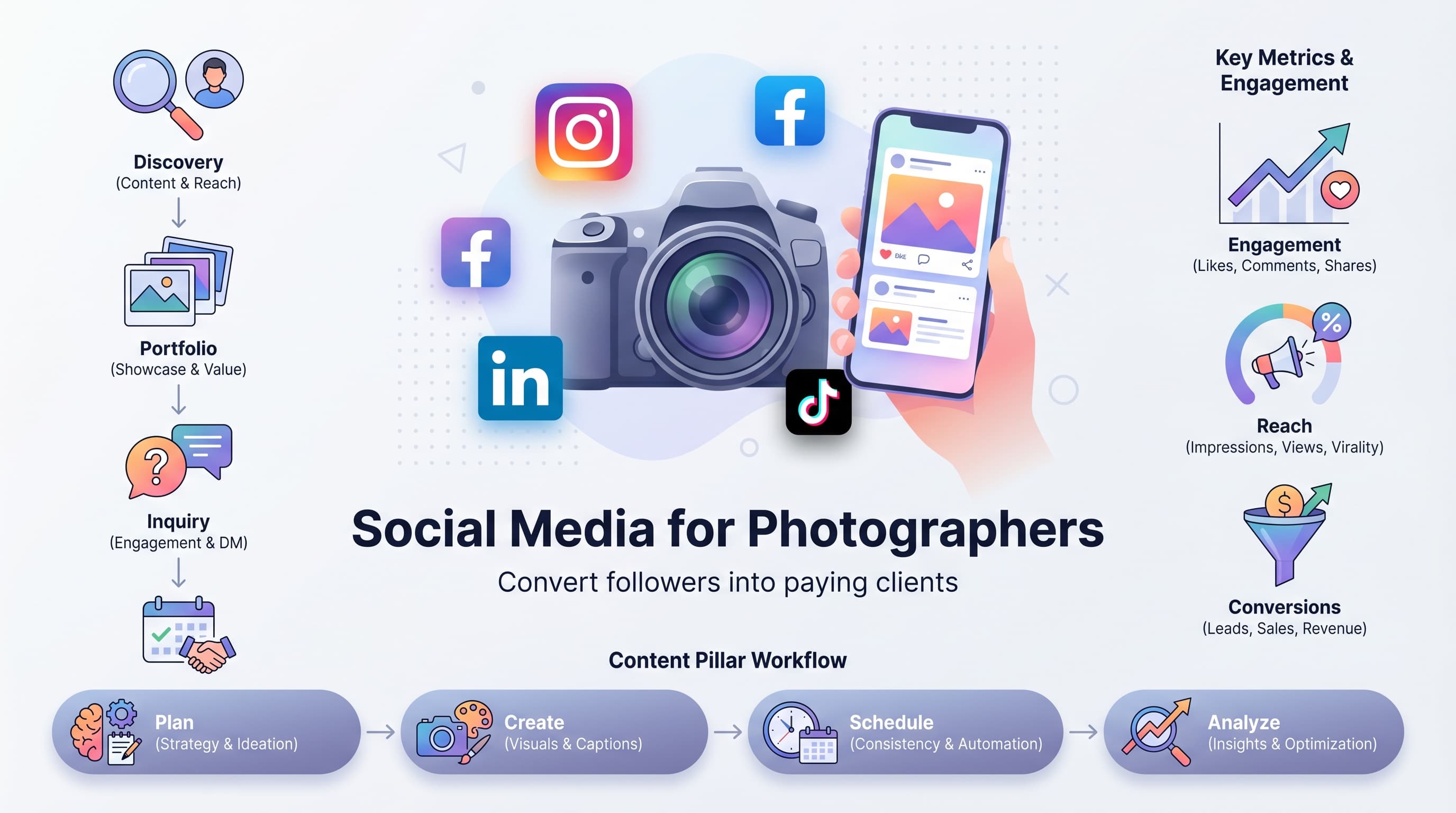
Your photography skills are incredible, but crickets chirp on your social feeds. Sound familiar? Try our Instagram scheduling.
See It in Action
This is what scheduling an Instagram post looks like in Schedulala
You're not alone. Most photographers struggle with social media because what makes a great photo doesn't always translate to what gets engagement online. The good news? Social media photographers who crack the code see 60% more client inquiries and booking rates that would make any business owner jealous. Our scheduling across platforms can help.
This guide breaks down exactly how to build a social media presence that converts followers into paying clients. No fluff, no generic advice about "posting consistently." Just proven strategies that work in 2026. Try our cross-platform analytics track 9.
Try Schedulala for free
Schedule posts to Bluesky, Twitter, and 8 other platforms from one dashboard.
Get started for free→Why social media photographers need a different approach
Photography is a visual medium, which should make social media marketing a slam dunk, right? Wrong. The platforms that drive the most business for photographers aren't necessarily the ones that showcase your artistic vision best. See our how to repurpose content guide.
Wedding photographers often find their biggest client source is Facebook, not Instagram. Portrait photographers see more bookings from LinkedIn than TikTok. Event photographers discover that Twitter connections lead to corporate contracts worth thousands. Learn more about best time to post on instagram.
The platform mismatch problem
Instagram showcases your art but buyers often lurk on Facebook. LinkedIn feels corporate but connects you with event planners who have real budgets. TikTok gets views but converting teenage followers to wedding clients is nearly impossible. See our instagram engagement calculator guide.
The solution isn't picking one platform. It's understanding what role each platform plays in your client journey and creating content accordingly.
Platform strategy breakdown for photographers
Each social platform serves a different purpose in your photography business. Here's how to approach each one strategically, not just aesthetically.
1. Instagram: Your visual portfolio with personality
Instagram remains the go-to platform for photographers, but the algorithm has shifted dramatically. Pretty photos alone won't cut it anymore. The platform rewards engagement and storytelling over pure aesthetics.
What works now: Carousel posts showing before/after shots, behind-the-scenes videos of your setup process, and client testimonials with their photos. The key is mixing your best work with content that starts conversations.
Content mix that converts: 40% client work, 30% behind-the-scenes, 20% educational content about photography, 10% personal posts. This ratio keeps your feed engaging while showcasing your professional capabilities.
- Post 4-6 times per week consistently
- Use all content types: feed posts, stories, reels, and IGTV
- Engage within the first hour after posting
- Use location tags to attract local clients
- Create Instagram highlights for different service categories
2. Facebook: Where clients actually book sessions
Facebook might feel outdated, but it's where people make purchasing decisions. Your potential clients are scrolling Facebook during decision-making moments, not just entertainment.
The Facebook advantage: Longer captions perform well, making it perfect for sharing client stories and detailed testimonials. Plus, Facebook's local business features help nearby clients find you easily.
Business page essentials: Complete your business information, add booking buttons, create photo albums for different services, and post client reviews prominently. Facebook users expect more information before they inquire.
- Join local community groups and share work appropriately
- Use Facebook Events for photo walks or mini sessions
- Share longer-form content about your photography process
- Respond to comments and messages within 2 hours
- Post client testimonials with permission
3. LinkedIn: The corporate photography goldmine
Most photographers ignore LinkedIn, missing out on corporate headshots, company events, and professional branding sessions. Business professionals need photographers regularly and have budgets to match.
LinkedIn content strategy: Share professional insights about corporate photography, post case studies of business photo sessions, and connect with event planners, marketing directors, and business owners.
Corporate clients pay premium rates for professional photography services. A single corporate event can equal five family portrait sessions in revenue, making LinkedIn worth the investment.
4. TikTok and YouTube Shorts: Education and entertainment
Short-form video content helps establish you as a photography expert while attracting clients who want to work with knowledgeable professionals. These platforms excel at showcasing your personality and expertise.
Video content ideas: Quick photography tips, gear reviews, editing before/after reveals, day-in-the-life content during photo shoots, and client reaction videos (with permission).
While direct bookings from TikTok are rare, the platform builds brand awareness that leads to inquiries through your other channels. Think of it as the top of your marketing funnel.
Content pillars that convert followers into clients
Random posting kills photography businesses. Successful social media photographers follow content pillars that systematically move followers through their client journey.
1. Behind-the-scenes content (30% of posts)
Why it works: People hire photographers they trust. Behind-the-scenes content builds that trust by showing your professionalism, personality, and process. Clients want to see how you work before they book.
Content examples: Setting up equipment, directing clients during poses, editing process videos, travel to location shoots, preparing for specific types of sessions.
The trust factor: When potential clients see how you interact with current clients, they can envision working with you. This social proof is more powerful than any portfolio piece.
2. Client spotlight and testimonials (25% of posts)
Real client stories sell sessions. Share not just the final photos, but the experience clients had working with you. Include quotes about your professionalism, creativity, or how the photos exceeded expectations.
Testimonial content formats: Client quote graphics with their photos, video testimonials from recent sessions, before/after comparisons showing your editing skills, and client reaction posts when they see their galleries.
Permission protocol: Always ask clients before sharing their photos and testimonials. Many are happy to help once they see their beautiful photos, but asking first maintains trust and professionalism.
3. Educational photography content (25% of posts)
Position yourself as the expert by sharing photography knowledge. This builds authority and helps potential clients understand the value of professional photography versus DIY attempts.
Educational topics: Lighting tips for different scenarios, posing guides for families or couples, gear explanations, editing techniques, and seasonal photography advice.
The expertise advantage: When you teach photography concepts, followers see your knowledge and skill level. This justifies your pricing and makes clients more likely to book professional services.
4. Portfolio highlights and recent work (20% of posts)
Your best work speaks volumes, but don't just post pretty pictures. Add context about the session, challenges you overcame, or special techniques used to create the final image.
Portfolio post structure: Lead with the stunning visual, then share the story behind it. Explain your creative process, client interaction, or technical details that made the shot special.
Storytelling sells: A beautiful photo with an engaging caption about the shoot performs better than the same photo with no context. Stories create emotional connections that lead to bookings.
Hashtag strategies that actually work in 2026
Hashtag stuffing died years ago, but strategic hashtag use still helps potential clients discover your photography services. The key is mixing broad photography hashtags with specific local and niche tags.
The three-tier hashtag approach
Tier 1: Broad photography hashtags (5-7 tags) like #photographer, #photography, #photoshoot. These have millions of posts but occasionally surface your content to new audiences.
Tier 2: Specific service hashtags (8-12 tags) like #weddingphotographer, #familyportraits, #corporateheadshots. These target people actively searching for your exact services.
Tier 3: Local and niche hashtags (8-15 tags) like #chicagophotographer, #destinationwedding, #newbornphotography. These have smaller audiences but higher booking potential.
Location-based hashtag power
Local hashtags drive bookings more than generic photography tags. Include your city, nearby cities you serve, popular local venues, and regional landmarks in your hashtag mix.
Research local hashtags by checking what other businesses in your area use, looking at venue hashtags, and monitoring local event hashtags. These communities often support local photographers.
Venue partnerships: Tag popular wedding venues, event spaces, and portrait locations in your posts. Venues sometimes share content featuring their space, expanding your reach to engaged couples and event planners.
Building an engagement strategy that books clients
Posting content is only half the social media equation. Engagement builds relationships, and relationships book photography sessions. Your engagement strategy should focus on connecting with potential clients, not just collecting likes.
1. The 15-minute daily engagement routine
Spend 15 minutes daily engaging authentically with your audience and potential clients. This consistent interaction builds relationships that convert to bookings better than sporadic engagement marathons.
- Respond to all comments on your recent posts (5 minutes)
- Like and comment on 10-15 posts from local businesses, venues, or potential clients (5 minutes)
- Check and respond to direct messages promptly (3 minutes)
- Engage with posts using your target hashtags (2 minutes)
Quality over quantity: Thoughtful comments that add value perform better than generic emoji responses. Ask questions, share insights, or compliment specific details in photos.
2. Strategic following and networking
Follow and engage with potential clients and referral sources in your area. This includes engaged couples, new parents, local business owners, event planners, and other wedding vendors.
Vendor network building: Connect with wedding planners, florists, makeup artists, and venue coordinators. These relationships often lead to referrals worth thousands in bookings.
Client journey engagement: Like and comment on posts from past clients' major life events. When they need family photos or refer friends, you'll be top of mind.
3. Community engagement tactics
Join local Facebook groups where your target clients gather. Many communities have mom groups, wedding planning groups, or business networking groups where photography needs come up regularly.
Share value first: Don't immediately pitch your services. Answer photography questions, share tips for phone photography, or offer advice about working with photographers. Build trust before selling.
Event participation: Attend or sponsor local events and share the experience on social media. Tag other attendees and businesses, creating networking opportunities and community visibility.
Converting social media followers into photography clients
Followers don't pay bills, clients do. The most successful social media photographers create clear pathways from social media discovery to booked sessions. This requires strategic calls-to-action and streamlined booking processes.
1. Optimize your social media bio for bookings
Your bio is prime real estate for converting profile visitors into inquiries. Include your photography specialty, location, and a clear call-to-action with your booking link.
Bio formula that works: [Photography Type] in [Location] | [Key Benefit/Style] | [Social Proof Element] | [Clear CTA]
Example: "Wedding Photographer in Denver | Capturing authentic moments | 200+ happy couples | Book your consultation ↓"
- Use a professional headshot, not a logo
- Include contact information and website link
- Add your location for local discovery
- Update seasonally for relevance
- Use relevant keywords for search discovery
2. Create compelling calls-to-action
Every post should guide followers toward the next step in your client journey. This might be visiting your website, viewing your portfolio, or sending a direct message for availability.
CTA examples that convert: "DM me for 2026 wedding availability," "Link in bio for session details," "Comment FAMILY for pricing info," "Book your consultation through the link in stories."
Seasonal CTAs: Adjust calls-to-action based on booking seasons. Wedding photographers should promote engagement sessions in fall, while family photographers push holiday sessions in early November.
3. Use Instagram and Facebook features strategically
Instagram Stories with action stickers create easy ways for followers to engage. Use polls to understand client preferences, question stickers for Q&As, and booking stickers for direct appointment scheduling.
Facebook business features: Enable appointment booking, add service menus with pricing, create photo albums for different session types, and use Facebook Events for mini-sessions or workshops.
Link strategies: Use Linktree or similar tools to provide multiple options from your bio link. Include portfolio, pricing guide, booking calendar, and contact form for different client needs.
Social media scheduling and workflow efficiency
Consistent posting requires systems, not superhuman dedication. Professional photographers juggling shoots, editing, and client communication need efficient social media workflows that don't consume entire days.
1. Batch content creation workflow
Create social media content in batches during slower business periods or immediately after photo sessions while the experience is fresh. This approach is more efficient than daily content creation.
Post-session content capture: During every shoot, take 2-3 behind-the-scenes photos or videos specifically for social media. Capture setup shots, client interactions, and equipment in action.
Monthly planning sessions: Spend 2-3 hours each month planning content themes, writing captions, and organizing assets. This prevents last-minute scrambling and ensures consistent messaging.
- Plan content themes around your business calendar
- Write captions in batches when you're feeling creative
- Create templates for recurring content types
- Organize photos in folders by content pillar
- Prepare seasonal content weeks in advance
2. Smart scheduling for maximum impact
Post timing affects engagement significantly. Most photographers' clients check social media during evening hours and weekends when they're planning personal activities like photo sessions.
Platform-specific timing: Instagram performs best between 6-9 PM on weekdays, Facebook sees peak engagement on weekend mornings, and LinkedIn works best during business hours for corporate photography content.
Scheduling tools save hours by automating posts across platforms while maintaining optimal timing. This consistency improves algorithm performance and keeps your brand visible when clients are browsing.
3. Analytics that matter for photography businesses
Track metrics that correlate with bookings, not just vanity numbers like total followers. Focus on engagement rates, website clicks, and direct message inquiries from social media posts.
Key performance indicators: Profile visits to booking conversion rate, hashtag performance for local discovery, story completion rates for behind-the-scenes content, and click-through rates to your portfolio.
Monthly analysis routine: Review which content types generated the most inquiries, identify your best-performing hashtags, analyze engagement patterns, and adjust strategy based on actual business results.
| Platform | Best Posting Times | Content Focus | Client Type |
|---|---|---|---|
| 6-9 PM weekdays | Visual portfolio + BTS | Couples, families | |
| Weekend mornings | Client stories + testimonials | Local families, events | |
| Business hours | Professional insights | Corporate clients | |
| TikTok | Evening hours | Educational content | Younger demographics |
Common social media mistakes photographers make
Even talented photographers sabotage their social media success with common mistakes that kill engagement and repel potential clients. Avoiding these pitfalls can immediately improve your results.
1. Over-posting portfolio work without context
Beautiful photos without stories get ignored. The biggest mistake photographers make is treating social media like a silent portfolio gallery. Algorithms reward engagement, and engagement requires conversation starters.
The context solution: Share the story behind every portfolio piece. Explain challenges overcome, client reactions, special techniques used, or meaningful moments captured during the session.
Engagement difference: A wedding photo with the caption "Sarah + Mike" gets 12 likes. The same photo with "Sarah surprised Mike with their dog as the ring bearer" gets 50+ likes and multiple comments.
2. Inconsistent branding and messaging
Confused followers don't book sessions. Jumping between photography styles, target audiences, or business messaging confuses potential clients about what you offer and who you serve.
Brand consistency elements: Use similar editing styles across posts, maintain consistent voice in captions, focus on your primary photography niche, and keep visual elements like colors and fonts uniform.
Niche clarity: Wedding photographers shouldn't post corporate headshots regularly, and family photographers shouldn't focus on artistic conceptual work if their business targets busy parents.
3. Neglecting client communication and follow-up
Social media inquiries require faster responses than email or phone calls. People expect immediate acknowledgment of direct messages and comments, especially when asking about availability or pricing.
Response time expectations: Acknowledge DMs within 2-4 hours during business days. Set up auto-responses for after-hours inquiries directing people to your booking system or promising response times.
Follow-up system: Create templates for common inquiry responses, track leads from each platform, and follow up with interested prospects who don't immediately book sessions.
4. Underpricing due to social media pressure
Social media creates artificial pricing pressure when photographers see competitors' posts and assume they need to lower prices to compete. This race to the bottom hurts entire local markets.
Value communication: Use social media to demonstrate your value through client testimonials, behind-the-scenes professionalism, and educational content that shows your expertise level.
Premium positioning: High-end photographers should showcase luxury elements: premium locations, detailed client experience, professional equipment, and polished final products that justify premium pricing.
Advanced strategies for established photography businesses
Once you've mastered basic social media marketing, advanced strategies can scale your photography business beyond local markets and typical pricing tiers. These techniques require more effort but generate significantly higher returns.
1. Social media advertising for photographers
Organic reach has limitations, especially for photographers targeting specific demographics or geographic areas. Paid social media advertising expands your reach to qualified prospects who match your ideal client profile.
Facebook and Instagram ads work exceptionally well for photographers because the platforms excel at targeting based on life events, interests, and behaviors that indicate photography needs.
Advertising targeting options: Recently engaged couples, parents with young children, small business owners needing headshots, or people interested in specific venues where you want to shoot more often.
- Start with $5-10 daily budgets to test audiences
- Use your best client photos as ad creative
- Target lookalike audiences based on past clients
- Create separate campaigns for different services
- Track cost per inquiry, not just clicks or impressions
2. Influencer partnerships and collaborative marketing
Partner with local influencers and businesses for cross-promotion opportunities that expand your audience without traditional advertising costs. These partnerships work especially well for wedding and lifestyle photographers.
Collaboration opportunities: Styled shoots with wedding vendors, headshot sessions with local entrepreneurs, family sessions with parenting bloggers, or event coverage for business networking groups.
Mutual benefit approach: Offer free or discounted sessions in exchange for social media promotion, testimonials, and referrals. Ensure partnerships align with your brand and target audience.
3. User-generated content campaigns
Encourage clients to share their photos and tag your business, creating authentic social proof that potential clients trust more than traditional marketing messages.
UGC campaign ideas: Create branded hashtags for weddings or events, offer incentives for social media shares, provide social media sized images specifically for client posting, or run contests for best client-shared photo.
Amplification strategy: Share client posts in your stories, comment meaningfully on their shares, and create highlight reels featuring client-generated content to show real satisfaction and results.
Try Schedulala for free
Schedule posts to Bluesky, Twitter, and 8 other platforms from one dashboard.
Get started for free→Building long-term social media success as a photographer
Social media marketing for photographers isn't a sprint, it's a marathon that builds compound returns over time. The photographers who succeed long-term focus on relationship building and consistent value creation rather than viral moments.
1. Creating a sustainable content rhythm
Burnout kills social media consistency. Develop a posting schedule you can maintain during your busiest photography seasons without sacrificing client work or personal time.
Seasonal content planning: Plan social media content around your natural business rhythms. Wedding photographers should prepare more content during engagement season, while family photographers need holiday session content ready by September.
Content recycling strategy: Repurpose your best content across platforms and throughout the year. A popular behind-the-scenes post from last year can be reshared with updated captions and hashtags.
2. Building a community, not just an audience
Communities generate referrals, audiences just consume content. Focus on creating genuine connections with followers who become advocates for your photography business.
Community building tactics: Respond personally to comments and DMs, remember details about regular followers, celebrate client milestones and life events, and create exclusive content for your most engaged followers.
Long-term relationship value: A single enthusiastic client can refer multiple bookings over several years. Their social media advocacy is worth far more than hundreds of passive followers.
3. Adapting to platform changes and trends
Social media platforms evolve constantly, and successful photographers adapt their strategies while maintaining core brand messaging. Stay informed about algorithm changes and new features without chasing every trend.
Change adaptation strategy: Test new features early when platforms give them extra reach, but don't abandon working strategies for untested trends. Gradual evolution beats dramatic pivots.
Focus on fundamentals: Great photography, authentic storytelling, and genuine client relationships never go out of style. Platform features change, but quality content and real connections remain valuable.
Your social media action plan
Implementation beats perfection when it comes to social media marketing. Start with these actionable steps today, then refine your approach based on results and audience feedback.
Week 1: Optimize your social media profiles with professional photos, clear service descriptions, and booking links. Audit your recent posts to identify content gaps.
Week 2-4: Implement the content pillar strategy with consistent posting schedules. Focus on behind-the-scenes content and client testimonials to build trust and engagement.
Month 2-3: Develop your engagement routine and start tracking metrics that matter for your photography business. Adjust content based on what generates actual inquiries.
Month 4+: Scale successful strategies with paid advertising, influencer partnerships, or expanded content creation. Always prioritize tactics that directly impact your booking calendar.