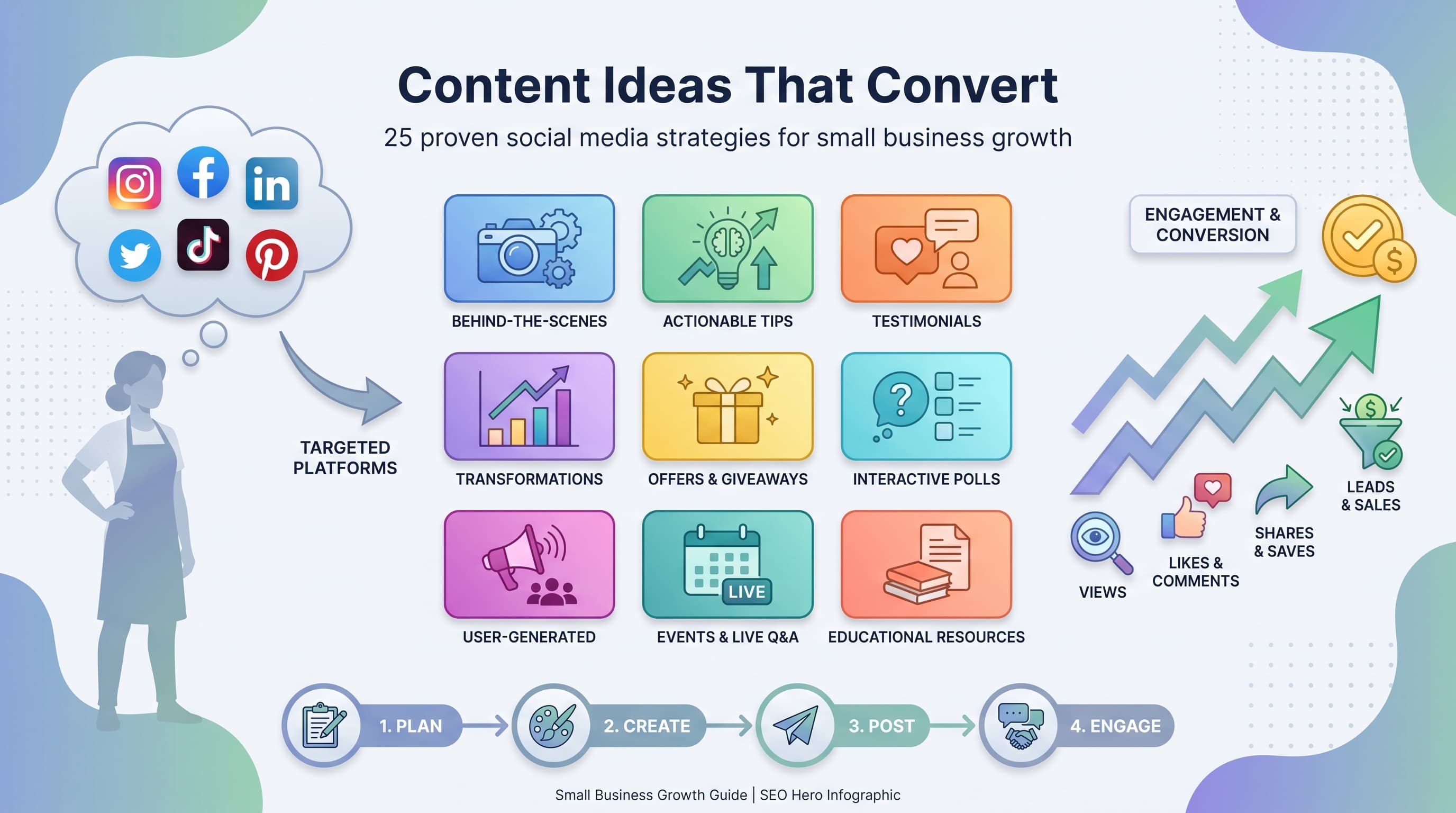
25 Social Media Content Ideas for Small Businesses That Actually Convert
Discover 25 proven social media content ideas for small business that boost engagement and drive sales. Stop the content struggle with these actionable ideas.

Staring at a blank social media post box again? You're not alone. Learn more about Instagram scheduling.
See It in Action
This is what scheduling an Instagram post looks like in Schedulala
Small business owners waste hours each week trying to come up with fresh content ideas. The pressure to post consistently while running a business is real. But here's the thing: great social media content doesn't have to be complicated or time-consuming. Learn more about cross-platform analytics track 9.
This list gives you 25 proven content ideas that small businesses actually use to connect with customers and drive sales. No fluff, no generic advice. Just specific, actionable ideas you can implement today. Our ai social media post can help.
Try Schedulala for free
Schedule posts to Bluesky, Twitter, and 8 other platforms from one dashboard.
Get started for free→Behind-the-scenes content that builds trust
1. Show your workspace
People love seeing where the magic happens. Share photos of your office, workshop, or even your home office setup. This humanizes your brand and makes you more relatable. See our batch content creation guide.
A local bakery could show their kitchen at 5 AM with flour everywhere and fresh bread coming out of the ovens. A consultant might share their organized desk setup or their messy whiteboard full of client strategy notes. Learn more about best time to post on instagram.
Pro tip: Don't make it too perfect. Real workspaces have coffee stains and sticky notes. That's what makes it authentic. Our instagram engagement calculator can help.
2. Document your daily routine
Share what a typical day looks like for you or your team. This gives followers insight into your work process and dedication.
A fitness trainer might document their 6 AM client session, meal prep at lunch, and evening workout routine. A freelance designer could show their morning coffee ritual, client calls, and late-night creative sessions.
Use Instagram Stories or TikTok for quick, casual updates throughout the day. Keep it natural and don't overthink the production value.
3. Introduce your team members
Even if your 'team' is just you, introduce the person behind the business. Share fun facts, hobbies, or what they love most about their job.
Create a simple template: photo, name, role, and three interesting facts. Maybe your bookkeeper also rescues dogs, or your part-time assistant is studying to become a chef.
This content performs exceptionally well on LinkedIn and Facebook, where people want to connect with real humans behind businesses.
Educational content that positions you as an expert
4. Quick tips in your expertise area
Share bite-sized tips that your audience can implement immediately. These should solve small problems or make life easier in some way.
An accountant might share tax-saving tips for small businesses. A photographer could post quick lighting tricks for better phone photos. A personal trainer might demonstrate proper form for common exercises.
Keep tips to one main point per post. Use carousel posts on Instagram to break down multi-step processes visually.
5. Common mistakes to avoid
People love learning what NOT to do. Share the most common mistakes you see in your industry and how to avoid them.
A web designer might list common website mistakes that hurt conversions. A financial advisor could share investment mistakes that cost people money. A marketing consultant might highlight social media mistakes that damage brands.
Present these as helpful guidance, not criticism. Use phrases like 'I see this often' or 'Here's how to avoid this common pitfall' to keep the tone supportive.
6. Before and after transformations
Visual transformations are incredibly engaging and show the tangible value of your work. Every business has some form of transformation story.
A landscaper shows overgrown yards becoming beautiful gardens. A business coach shares client revenue growth charts. A decluttering service posts messy rooms transformed into organized spaces.
Always get permission before sharing client work. Consider creating anonymized versions or using your own projects as examples.
Customer-focused content that builds relationships
7. Customer success stories
Share real stories of how your product or service helped customers achieve their goals. These work as social proof and inspiration for potential customers.
A marketing agency might share how they helped a local restaurant increase takeout orders by 200%. A life coach could highlight a client who finally launched their dream business.
Include specific numbers and outcomes when possible. Vague success stories don't carry the same weight as concrete results. Always get customer permission first.
8. User-generated content featuring customers
Encourage customers to share photos or videos using your product or service. Repost their content with proper credit and enthusiastic captions.
A clothing boutique could repost customer outfit photos. A meal prep service might share customer kitchen setups with their meals. A fitness studio could feature member workout videos.
Create a branded hashtag for customers to use. Offer incentives like discounts or features for the best posts. This creates a community around your brand while generating free content.
9. Customer testimonials and reviews
Turn positive reviews into visual content. Screenshot glowing Google reviews, create quote graphics from testimonials, or film video testimonials.
Design simple templates to make reviews look professional and branded. Include the customer's name and photo (with permission) to add credibility.
Don't just post five-star reviews. Share four-star reviews that mention specific benefits or improvements customers experienced. These feel more authentic.
Product and service showcase content
10. Product demonstration videos
Show your products in action or demonstrate your service process. Video content consistently outperforms static posts across all platforms.
A skincare brand could show their morning routine using their products. A house cleaning service might create time-lapse videos of rooms being transformed. A software consultant could screen-record solving a common problem.
Keep videos short and focused on one main benefit or feature. Add captions since many people watch videos without sound, especially on LinkedIn and Facebook.
11. New product or service announcements
Generate excitement around launches with teaser posts, countdown timers, and reveal content. Build anticipation before the big announcement.
Share the story behind why you created this new offering. What problem does it solve? How did customer feedback influence the development?
Use Instagram Stories highlights to save announcement content permanently. Create a dedicated highlight called 'New' or 'Latest' that showcases recent additions.
12. Seasonal or limited-time offers
Create urgency with time-sensitive promotions tied to seasons, holidays, or special events. Limited availability drives action.
A photography studio might offer holiday mini-sessions. A business consultant could launch a New Year planning package. A restaurant might feature summer menu items.
Use countdown stickers on Instagram Stories and create urgency without being pushy. Focus on the value and benefit, not just the discount.
Interactive and engaging content formats
13. Polls and questions
Ask your audience for opinions, preferences, or advice. This boosts engagement and gives you valuable insights about your customers.
A restaurant might ask 'Pizza or pasta for tonight's special?' A consultant could poll 'What's your biggest business challenge right now?' A fitness trainer might ask 'Morning or evening workouts?'
Use Instagram and Facebook polls, LinkedIn polls, or Twitter polls. Always engage with the responses to keep the conversation going.
14. This or that comparisons
Present two options and let your audience choose. These generate lots of comments and help you understand customer preferences.
A graphic designer might show two logo concepts for feedback. A bakery could present two cake flavors for the next special. A marketing agency might compare two campaign strategies.
Create visual posts with clear images of both options. Use split-screen layouts or side-by-side comparisons to make the choice obvious.
15. Fill-in-the-blank posts
Create sentence starters that encourage followers to complete the thought in the comments. These posts drive high engagement rates.
Examples: 'My biggest business goal for next year is ___', 'The best part of my morning routine is ___', or 'I wish more people knew that ___'.
Tailor the fill-in-the-blank to your industry and audience interests. Respond to every comment to build stronger connections with followers.
Industry insights and trending topics
16. Industry news and your take
Share relevant industry news and add your expert commentary. This positions you as someone who stays current and has valuable opinions.
Don't just share the news article. Add 2-3 sentences about what this means for your customers or industry. Share your prediction about how this will impact businesses like theirs.
Use Google Alerts or industry newsletters to stay updated on relevant topics. Set up alerts for keywords related to your business and expertise areas.
17. Trend predictions and analysis
Share your thoughts on where your industry is heading. What trends do you see emerging? What changes should your audience prepare for?
A digital marketing expert might predict upcoming social media algorithm changes. A retail consultant could share insights on consumer behavior shifts. A tech consultant might discuss emerging software trends.
Back up predictions with data or examples when possible. Reference industry reports, studies, or your own client experiences to add credibility.
18. Myth-busting posts
Address common misconceptions in your industry. These posts often go viral because people love sharing surprising or counterintuitive information.
A nutritionist might debunk popular diet myths. A financial advisor could correct common investing misconceptions. A marketing consultant might address social media myths that hurt businesses.
Use the format 'Myth: [false belief]' followed by 'Reality: [truth]' to make these posts easily scannable and shareable.
Try Schedulala for free
Schedule posts to Bluesky, Twitter, and 8 other platforms from one dashboard.
Get started for free→Personal and lifestyle content
19. Personal milestones and celebrations
Share business anniversaries, personal achievements, or team celebrations. People love celebrating success stories and feeling part of your journey.
Celebrate your first year in business, hitting revenue goals, moving to a new office, or completing professional certifications. Share what these milestones mean to you and your customers.
Include behind-the-scenes photos from celebrations or milestone moments. Thank the people who helped you reach these goals, including customers, mentors, or team members.
20. Values and mission statements
Share what drives your business beyond making money. What causes do you support? What values guide your decisions?
A sustainable fashion brand might share their environmental commitment. A local business could highlight their community involvement. A service provider might discuss their client-first philosophy.
Don't just state your values. Show them in action. Share examples of how these values influenced recent business decisions or customer interactions.
21. Work-life balance insights
Share how you manage running a business alongside personal life. This resonates strongly with other entrepreneurs and working professionals.
Discuss your morning routine, how you handle stress, or ways you disconnect from work. Share both successes and struggles with maintaining balance.
Be honest about the challenges. Perfect work-life balance posts feel fake. Share real struggles and solutions you're trying.
Community and relationship building content
22. Local community involvement
Show how your business contributes to the local community. This builds strong connections with local customers and demonstrates your commitment beyond profit.
Share photos from local events you sponsor, volunteer work your team does, or partnerships with other local businesses. Highlight local suppliers or vendors you work with.
Tag local organizations, businesses, and community leaders in these posts. This expands your reach to their networks and strengthens community ties.
23. Collaborations and partnerships
Announce and showcase partnerships with other businesses, influencers, or organizations. Cross-promotion expands your audience and adds credibility.
A fitness studio might partner with a healthy meal delivery service. A marketing consultant could collaborate with a web designer. A boutique might team up with a local photographer.
Share the story behind the partnership. Why did you choose to work together? What can customers expect from this collaboration?
24. Shout-outs to other businesses
Recommend other businesses you genuinely love and use. This builds goodwill and often leads to reciprocal recommendations.
Share your favorite coffee shop, the accountant you recommend to clients, or the supplier who always delivers quality work. Explain specifically why you recommend them.
Tag the businesses you're recommending and use specific hashtags. Many businesses will share your post to their audience, expanding your reach organically.
Bonus content ideas for special situations
25. Lessons learned from failures
Share business mistakes you've made and what you learned from them. This vulnerability builds trust and helps others avoid similar pitfalls.
Maybe you launched a product that flopped, hired the wrong person, or chose the wrong marketing strategy. Share what went wrong and how you pivoted.
Frame these as learning experiences, not pity parties. Focus on the lessons and how they made your business stronger. Other entrepreneurs will appreciate the honesty.
How to implement these content ideas effectively
Having great content ideas means nothing if you don't execute them consistently. Here's how to turn these ideas into a sustainable content strategy.
- Batch create content: Spend 2-3 hours once a week creating multiple pieces of content instead of scrambling daily
- Mix content types: Don't post the same type of content repeatedly. Alternate between educational, personal, and promotional posts
- Track what works: Pay attention to which posts get the most engagement and create more similar content
- Stay authentic: Choose ideas that align with your personality and business values. Forced content feels fake
- Engage with responses: Reply to comments and messages. Social media is about building relationships, not broadcasting
Content creation mistakes that kill engagement
Even with great content ideas, these common mistakes can sabotage your social media efforts.
Posting without a strategy
Random posting confuses your audience and algorithm. Create a content calendar that balances different types of posts throughout the week.
Plan your content around business goals. If you're launching a new service, build awareness with educational posts before the announcement. If you need more local customers, focus on community-related content.
Being too promotional
The 80/20 rule still applies. Eighty percent of your content should provide value, entertainment, or education. Only twenty percent should directly promote your business.
Even promotional posts can provide value. Instead of 'Buy our service,' try 'Here's how our service solved this specific problem for a client like you.'
Ignoring platform differences
What works on Instagram won't necessarily work on LinkedIn. Tailor your content format and tone to each platform's audience and culture.
LinkedIn audiences prefer professional insights and industry news. Instagram users want visual content and behind-the-scenes glimpses. Facebook users engage with community-focused content and local business updates.
Tools to streamline your content creation
Creating consistent content doesn't have to consume your entire day. These tools help small businesses maintain active social media presence without burning out.
| Tool Type | Purpose | Best For |
|---|---|---|
| Design Tools | Create professional graphics | Canva, Adobe Express |
| Scheduling Tools | Plan and automate posts | Schedulala, Buffer, Later |
| Stock Photos | Find royalty-free images | Unsplash, Pexels, Pixabay |
| Video Editing | Edit short-form videos | InShot, CapCut, Canva Video |
| Analytics | Track performance | Native platform insights, Sprout Social |
Start with free versions of these tools and upgrade only when you've established a consistent posting routine. The best tool is the one you'll actually use regularly.
Measuring content success beyond vanity metrics
Likes and follows feel good, but they don't pay the bills. Focus on metrics that indicate real business impact.
Engagement quality over quantity
One comment asking about your services is worth more than ten generic 'great post' comments. Look for comments that indicate genuine interest or intent to buy.
Track how many social media interactions turn into actual business inquiries. This helps you identify which content types attract your ideal customers.
Website traffic from social media
Use Google Analytics to see how much traffic comes from each social platform. This shows which platforms drive the most qualified visitors to your website.
Create unique landing pages for social media campaigns to track conversions more accurately. This data helps you allocate time and resources to the most effective platforms.
Direct message inquiries
Many potential customers will message you privately instead of commenting publicly. Track how many DMs turn into consultations, quotes, or sales.
Respond to DMs quickly and professionally. Set up auto-responses for common questions to maintain good customer service even when you're busy.
Adapting content for different business types
These 25 content ideas work for most small businesses, but some adaptations can make them more effective for specific industries.
Service-based businesses
Focus heavily on educational content that demonstrates expertise. Share case studies, client transformations, and process explanations.
Since you can't show physical products, use before/after scenarios, client testimonials, and behind-the-scenes content to build trust and credibility.
Product-based businesses
Leverage user-generated content and product demonstration videos. Show your products being used in real-life situations by actual customers.
Share the story behind product development, sourcing, or manufacturing. People love knowing where their products come from and how they're made.
Local businesses
Emphasize community involvement and local partnerships. Share content about local events, seasonal changes, and neighborhood news.
Use location tags consistently and engage with other local businesses online. Cross-promotion with complementary local businesses can expand your reach significantly.
Creating a sustainable content workflow
Consistency beats perfection in social media marketing. Here's how to create a workflow that you can maintain long-term without burning out.
- Monday planning: Spend 30 minutes planning the week's content based on business priorities and current events
- Tuesday creation: Batch create all visual content and write captions for the week
- Wednesday scheduling: Use a scheduling tool to queue up posts across all platforms
- Daily engagement: Spend 15 minutes responding to comments and engaging with other accounts
- Friday analysis: Review which posts performed well and note ideas for next week
This workflow takes about 2-3 hours per week once you get into the rhythm. Compare this to scrambling for content ideas daily, which often takes longer and produces inconsistent results.
Your content creation action plan
Don't try to implement all 25 ideas at once. Pick 5-7 that resonate most with your business and audience, then gradually expand your content variety.
Start with the content types that feel most natural to you. If you love teaching, begin with educational posts. If you're naturally social, start with behind-the-scenes content. Build confidence before tackling more challenging content types.
Remember that social media marketing is a marathon, not a sprint. Consistent, authentic content shared over months and years builds much stronger business relationships than viral posts that disappear from memory.
The small businesses that succeed on social media are the ones that show up regularly, provide value consistently, and engage genuinely with their communities. Pick your content ideas, create your workflow, and start building those relationships today.
Try Schedulala for free
Schedule posts to Bluesky, Twitter, and 8 other platforms from one dashboard.
Get started for free→