TikTok Monetization: Complete 2026 Guide to Earning Real Money
Learn TikTok monetization strategies that work in 2026. Complete guide covering Creator Fund, brand deals, live gifts, and alternative income streams.

TikTok has 1.7 billion active users, but only 3% of creators make real money from it. The gap between viral views and actual cash in your bank account has never been wider. Our TikTok scheduling can help.
See It in Action
This is what scheduling a TikTok post looks like in Schedulala
Here's the truth: TikTok's built-in monetization tools pay pennies compared to what savvy creators earn through alternative strategies. While everyone chases the Creator Fund, smart creators are building million-dollar businesses using TikTok as their traffic engine. Our cross-platform analytics track 9 can help.
This guide breaks down every TikTok monetization method that actually works in 2026. We'll cover the official programs, but more importantly, the proven strategies that turn your followers into paying customers. See our telegram engagement tips get guide.
Try Schedulala for free
Schedule posts to Bluesky, Twitter, and 8 other platforms from one dashboard.
Get started for free→TikTok monetization landscape in 2026
The TikTok monetization game changed completely in 2025. The Creator Fund got a major overhaul, brand partnerships became more regulated, and new income streams emerged that didn't exist a year ago. Learn more about scheduling across platforms.
The average TikTok creator with 100K followers now earns between $200-$1,000 monthly from platform features alone. But creators who think beyond TikTok's walls are pulling in $5,000-$50,000 monthly with the same follower count. See our best time to post on tiktok guide.
The key difference? They treat TikTok as a marketing channel, not a paycheck. They use viral content to drive traffic to higher-value monetization methods like courses, coaching, affiliate marketing, and product sales. Our tiktok engagement calculator can help.
Official TikTok monetization programs
Let's start with what TikTok actually pays you for. These are the platform's official monetization features, and while they won't make you rich, they're worth understanding.
1. TikTok Creator Fund 2.0
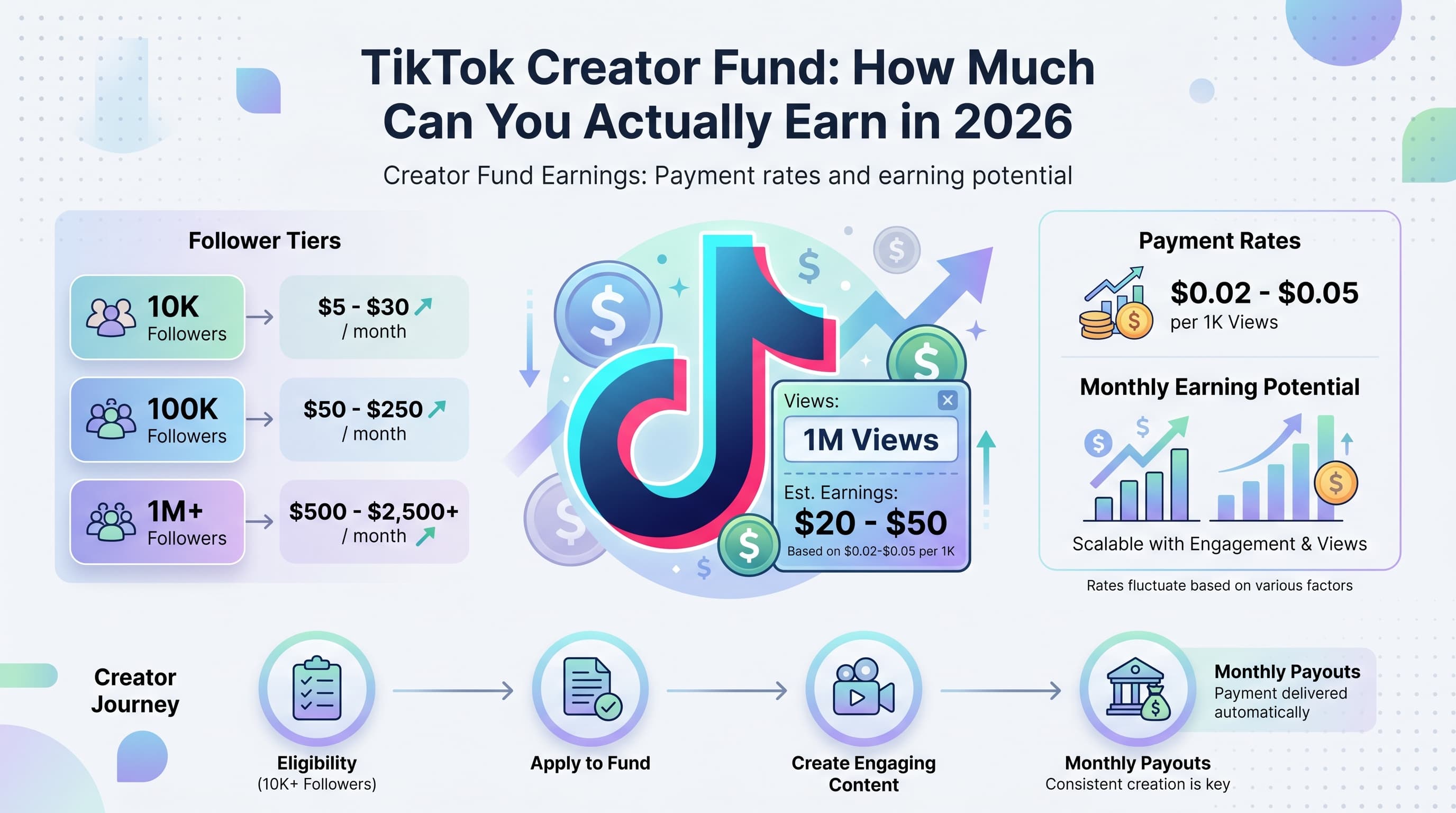
The Creator Fund got rebuilt from scratch in 2025. The new version pays $20-$40 per million views, up from the pathetic $2-$4 of the original program. You need 1,000 followers and 100,000 video views in the last 30 days to qualify.
The catch? Payments are based on "qualified views" which excludes views from users under 18, repeat views, and views from certain countries. Your actual payout will be 30-50% lower than the headline rate suggests.
A creator with 500K followers averaging 100K views per video might earn $80-$120 monthly from the Creator Fund. It's beer money, not rent money.
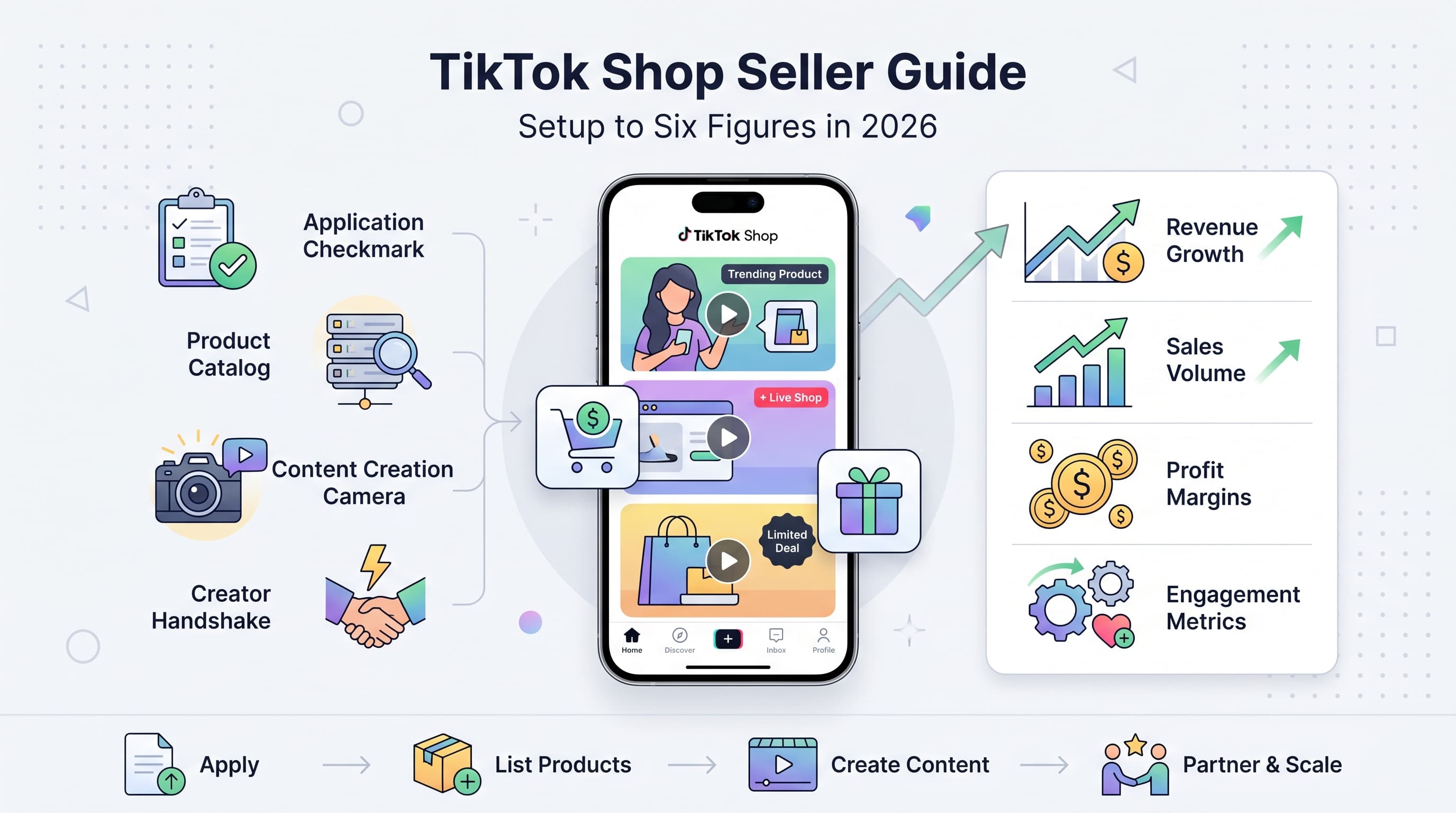
2. TikTok Shop Creator Program
This is where TikTok's monetization gets interesting. The Creator Program pays 5-20% commission on products you promote through TikTok Shop. Unlike the Creator Fund, there's no cap on earnings.
Top performers in the Creator Program earn $10,000+ monthly. The secret is finding products that match your audience and creating authentic reviews, not obvious sales pitches. Beauty, fashion, and tech products typically have the highest commission rates.
To get accepted, you need 5,000 followers and a track record of engaging content. TikTok reviews your application manually, so your content quality matters more than follower count.
3. Live streaming gifts
Live streaming on TikTok can generate immediate cash through virtual gifts. Viewers buy coins with real money and send gifts during your streams. You keep 50% of the gift value.
Successful live streamers earn $500-$2,000 monthly from gifts alone. Gaming streamers and "just chatting" content perform best. The key is consistency - streaming at the same time daily builds a loyal audience that returns and spends.
You can start receiving gifts immediately once you hit 1,000 followers. No application required, just go live and engage with your audience authentically.
4. TikTok Pulse (Ad Revenue Sharing)
TikTok Pulse shares ad revenue with creators whose videos appear in the top 4% of all videos on the platform. You get 50% of ad revenue from ads shown alongside your content to users 18 and older.
The barrier to entry is high - you need 100,000 followers to apply. But creators who qualify report earning $200-$800 monthly from Pulse, with higher earnings for videos that stay viral longer.
Pulse payments are unpredictable since they depend on your content reaching the top 4%. Treat it as bonus income, not a reliable revenue stream.
| Program | Requirements | Earning Potential | Payment Timeline |
|---|---|---|---|
| Creator Fund | 1K followers, 100K monthly views | $50-$300/month | Monthly |
| Creator Program | 5K followers, application | $1,000-$10,000+/month | Weekly |
| Live Gifts | 1K followers | $200-$2,000/month | Instant |
| TikTok Pulse | 100K followers, top 4% content | $200-$800/month | Monthly |
High-value monetization strategies beyond TikTok
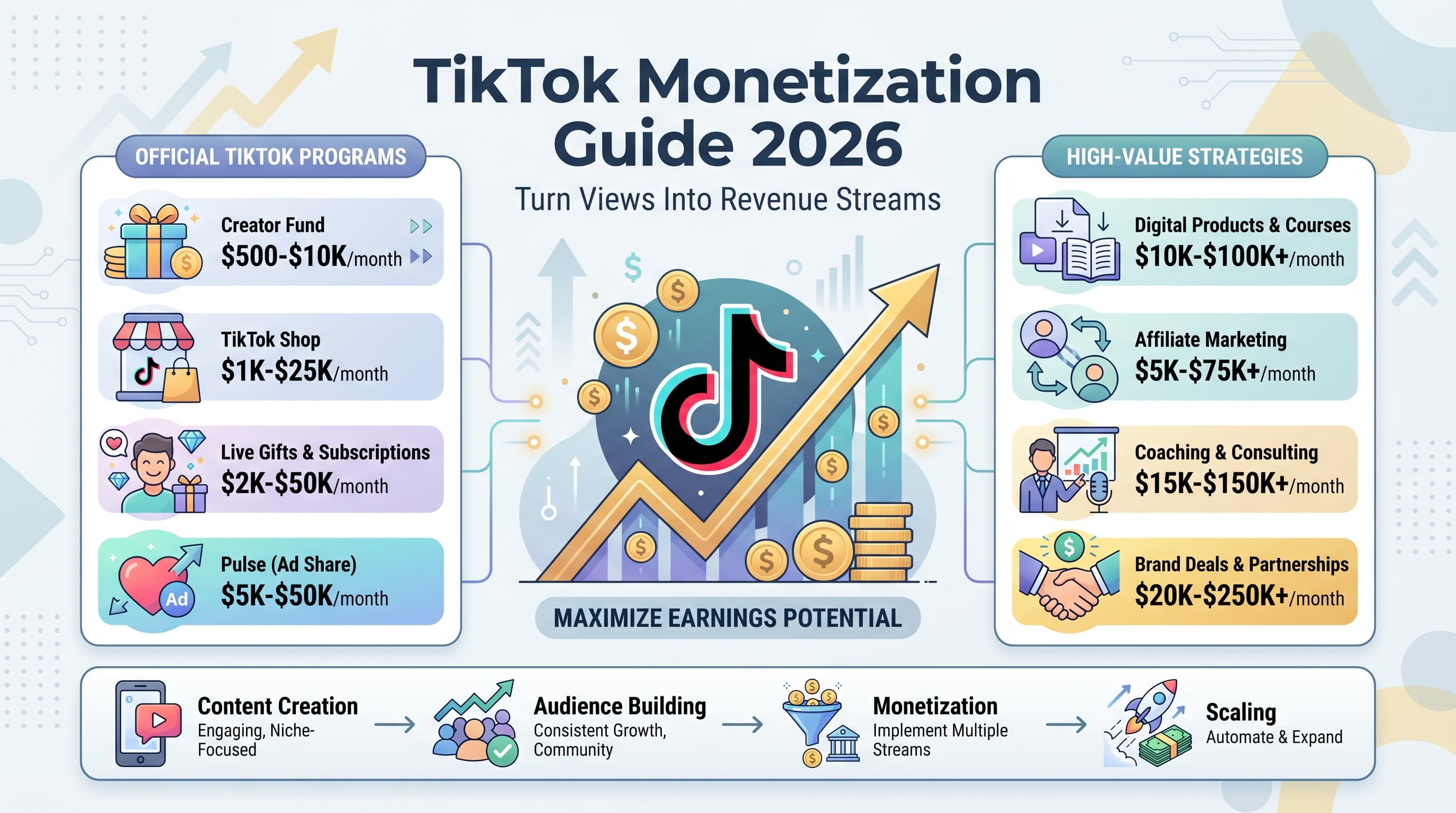
Here's where real money gets made. Smart TikTok creators use the platform to build audiences, then monetize those audiences through higher-value channels. These strategies can generate 10x more revenue than TikTok's built-in programs.
1. Digital product sales
Digital products have 90%+ profit margins and can be sold infinitely without additional costs. Successful TikTok creators are selling courses, ebooks, templates, presets, and digital tools to their audiences.
A fitness creator with 50K TikTok followers might sell a $97 workout program to 1% of their audience monthly. That's $48,500 in monthly revenue from a single product. Compare that to the $200 they'd earn from the Creator Fund.
The key is creating products that solve problems your content already addresses. If your TikToks teach guitar, sell a comprehensive guitar course. If you share productivity tips, create a productivity planner.
Use platforms like Gumroad, Teachable, or Kajabi to host your products. Drive traffic through your TikTok bio link, and mention your products naturally in your content without being pushy.
2. Affiliate marketing mastery
Affiliate marketing through TikTok is exploding. Creators are earning $5,000-$50,000 monthly promoting products they actually use. The authenticity is crucial - your audience can smell fake recommendations from a mile away.
High-converting niches include tech gadgets, software tools, online courses, beauty products, and home goods. Amazon Associates is the easiest starting point, but direct affiliate programs often pay 2-3x higher commissions.
Create product review videos, comparison content, and "day in my life" videos featuring affiliate products naturally. Always disclose partnerships with #ad or #affiliate hashtags to stay compliant.
Track your affiliate links with tools like Pretty Links or Bitly to see which content converts best. Double down on high-performing product categories and video styles.
3. Coaching and consulting services
If you're an expert in your niche, coaching and consulting can generate $2,000-$10,000+ monthly with just a few clients. TikTok is perfect for demonstrating your expertise and attracting high-value clients.
Business coaches charge $500-$2,000 per month per client. Fitness coaches get $200-$800 monthly. Marketing consultants command $100-$300 per hour. Even "life coaches" with strong personal brands earn $1,000+ monthly per client.
Use TikTok to share valuable tips, behind-the-scenes content, and client success stories (with permission). Create a simple booking system with Calendly and accept payments through Stripe or PayPal.
Start with lower prices to build testimonials and case studies. Once you have social proof, gradually increase your rates. Confident experts charge premium prices and get them.
4. Brand partnerships and sponsorships
Brand deals are the holy grail of TikTok monetization. Rates vary wildly, but expect $100-$1,000 per 100K followers for a single sponsored post. Macro-influencers with 1M+ followers can command $10,000+ per post.
Don't wait for brands to find you. Reach out to companies whose products you genuinely use and love. Create a simple media kit showing your follower count, engagement rate, and demographics.
Platforms like AspireIQ, Grin, and Creator.co connect creators with brands actively seeking partnerships. Having 10K+ followers and consistent engagement rates above 3% will get you approved for most platforms.
Negotiate beyond one-off posts. Smart creators secure monthly retainers, affiliate commission bonuses, and multi-platform deals. A $500 TikTok post becomes a $2,000 package when you include Instagram, YouTube, and email promotion.
Building your monetization foundation
Before diving into monetization strategies, you need the right foundation. Most creators fail at monetization because they skip these fundamentals and jump straight to promoting products nobody wants.
1. Define your niche and audience
Generic creators don't make money. Niche creators do. Your niche should be specific enough that you become known for something, but broad enough to create diverse content. "Fitness" is too broad. "Home workouts for busy moms" is perfect.
Study your analytics to understand who's actually watching. Age, gender, location, and interests all matter for monetization. A teenage audience won't buy your $500 course, but they might buy $20 presets.
Create an audience avatar - a detailed profile of your ideal follower. What are their problems? What do they spend money on? What social media language do they use? Tailor your content and products to this specific person.
Test different content angles to see what resonates. Behind-the-scenes content often builds stronger connections than polished tutorials. Vulnerability and authenticity convert better than perfection.
2. Optimize your profile for conversions
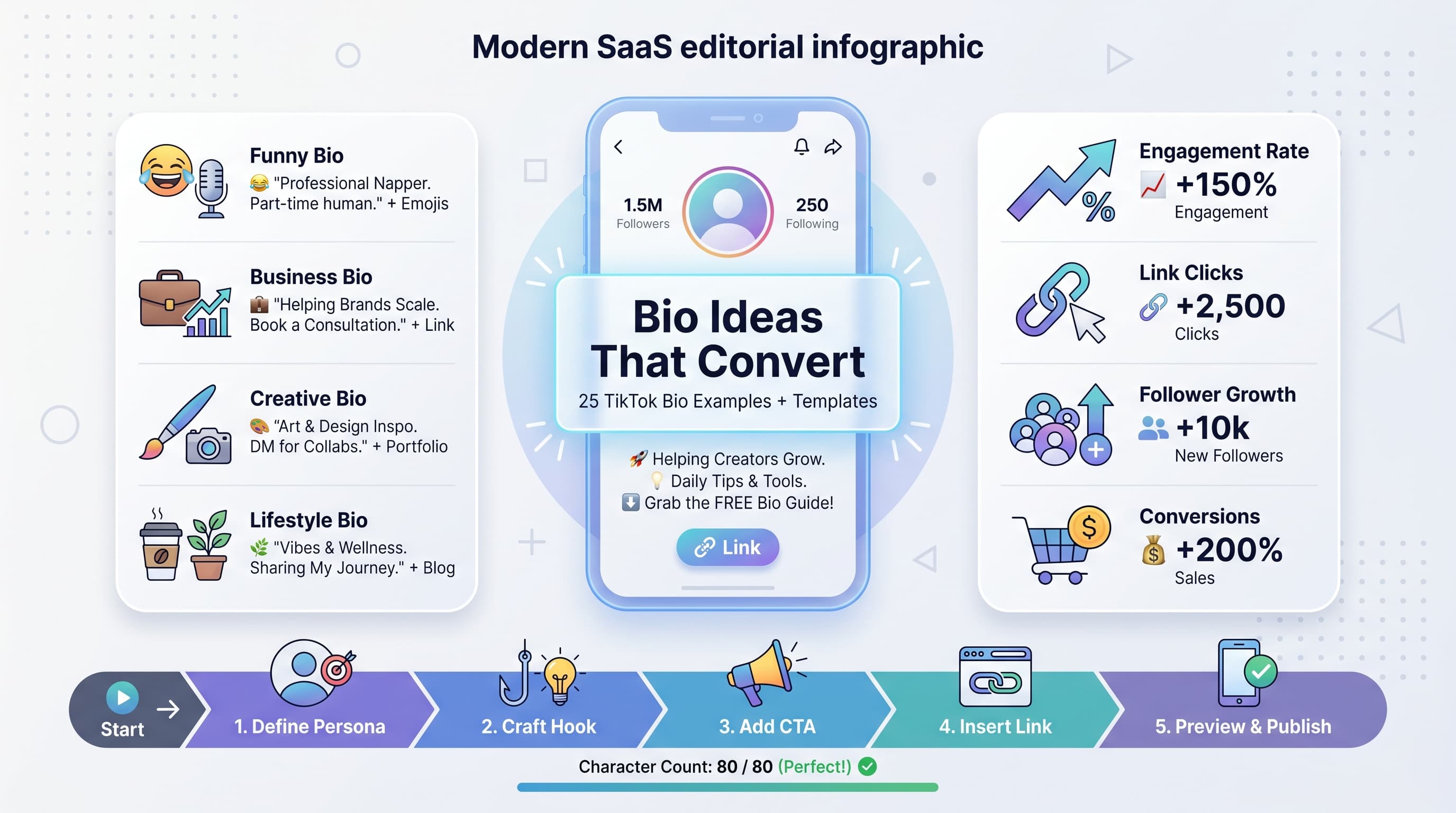
Your TikTok profile is your storefront. Most creators waste this valuable real estate with generic bios and random profile photos. Your bio should clearly state who you help and how.
Use your bio to filter your audience. "Helping busy entrepreneurs scale without burnout" attracts different followers than "Just here for fun." The right bio repels wrong-fit followers and attracts potential customers.
Your profile photo should be professional and recognizable at small sizes. Faces convert better than logos or graphics. Use the same photo across all platforms for consistency.
The bio link is crucial for monetization. Use a link-in-bio tool like Linktree, Beacons, or Stan Store to showcase multiple offers. Update it regularly to match your current content and promotions.
3. Content strategy for monetization
Monetizable content follows the 80/20 rule: 80% valuable, entertaining, or educational content, 20% promotional. Lead with value, sprinkle in soft promotion, and save hard sells for stories or bio links.
Document your process, don't just teach. "Day in my life as a freelancer" videos perform better than "How to start freelancing" tutorials. People buy from creators they feel connected to, not lecture halls.
Address objections through content. If you're selling a course, create videos answering "Is this worth it?" or "What if I don't have time?" Objection-handling content pre-qualifies your audience and increases conversion rates.
Use calls-to-action strategically. Instead of "Link in bio," try "Comment GUIDE for the free template I mentioned." Engagement-driven CTAs boost your reach while building your audience.
4. Cross-platform content amplification
TikTok shouldn't exist in isolation. Repurpose your best TikTok content for Instagram Reels, YouTube Shorts, and Twitter. Each platform has different monetization opportunities, so maximize your content's reach.
YouTube pays better ad revenue than TikTok. Instagram has better brand partnership rates. Twitter builds thought leadership. LinkedIn converts B2B audiences. Use TikTok as your content laboratory, then distribute winners everywhere.
Create platform-specific variations. A 60-second TikTok becomes a 15-second Instagram Reel, a 5-minute YouTube video, and a Twitter thread. Same core content, different formats for different audiences.
Tools like Later, Buffer, or Schedulala help you maintain consistent posting across platforms without burning out. Batch create content once, then schedule it everywhere for maximum impact.
Try Schedulala for free
Schedule posts to Bluesky, Twitter, and 8 other platforms from one dashboard.
Get started for free→Step-by-step monetization implementation
Theory is useless without action. Here's exactly how to implement each monetization strategy, with specific steps you can start today. Pick one method, master it, then add others.
Phase 1: Foundation (Weeks 1-4)
Week 1: Audit your current content and identify your strongest niche. Look at your top 10 videos - what themes connect them? That's your monetization niche.
Week 2: Optimize your profile with a clear bio, professional photo, and strategic bio link. Create accounts on monetization platforms (Creator Program, affiliate networks, etc.).
Week 3: Set up analytics tracking with TikTok Pro Account. Install Google Analytics on your website or bio link page. You can't optimize what you don't measure.
Week 4: Create your first lead magnet - a free resource that captures emails. This could be a PDF guide, template, checklist, or video series related to your niche.
Phase 2: Content optimization (Weeks 5-8)
Week 5: Implement the 80/20 content strategy. For every promotional post, create four value-driven posts. Track which content types generate the most profile visits and link clicks.
Week 6: Start incorporating soft CTAs into your content. Ask viewers to follow for more tips, comment their biggest challenge, or share with someone who needs this.
Week 7: Test different content formats - tutorials, behind-the-scenes, day-in-the-life, Q&As. Identify which formats your audience engages with most.
Week 8: Begin cross-promoting on other platforms. Adapt your best TikTok content for Instagram and YouTube. Start building your presence everywhere.
Phase 3: Monetization activation (Weeks 9-12)
Week 9: Launch your first monetization method. If you chose affiliate marketing, start promoting products you genuinely use. If you picked digital products, begin pre-selling your course or guide.
Week 10: Apply for official TikTok monetization programs you qualify for. Set up Creator Fund, TikTok Shop, or Live Gifts depending on your follower count.
Week 11: Reach out to 10 brands in your niche for potential partnerships. Even with a small following, local businesses and startups often say yes to reasonable proposals.
Week 12: Analyze your first quarter results. Which monetization methods worked? Which content drove the most revenue? Double down on winners, eliminate losers.
Advanced monetization tactics
Once you've mastered the basics, these advanced strategies can multiply your revenue. These tactics separate six-figure creators from hobbyists who make beer money.
1. Create recurring revenue streams
One-time sales are nice, but recurring revenue is life-changing. Membership sites, subscription boxes, and monthly coaching programs create predictable income that grows over time.
A creator earning $5,000 monthly from course sales might hit $20,000 monthly by converting some customers to a $97/month membership. Same audience, 4x the lifetime value.
Platforms like Circle, Skool, or Mighty Networks make membership creation simple. Start with a low-priced tier ($19-$47 monthly) and add premium tiers as you gain confidence.
Offer different value at each tier - basic members get access to a community, premium members get monthly Q&As, VIP members get one-on-one coaching calls.
2. Build strategic partnerships
Partner with other creators in your niche for cross-promotion, joint products, and audience sharing. Two creators with 50K followers each can reach 100K people through strategic collaboration.
Create joint courses, host collaborative livestreams, or develop co-branded products. The key is finding creators with complementary skills and similar audience sizes.
Revenue sharing partnerships work well for digital products. One creator handles content creation, the other manages marketing and sales. Split profits 50/50 or based on contribution.
Guest appearances on podcasts, YouTube channels, and other creators' content expand your reach without creating new content. Pitch yourself as an expert in your niche topic.
3. Leverage user-generated content
Your customers are your best marketers. User-generated content (UGC) builds social proof while reducing your content creation workload. Create hashtags and encourage customers to share their results.
Run UGC campaigns with prizes for the best submissions. Feature customer success stories in your content. Nothing sells better than real people getting real results from your products.
Create templates, challenges, or frameworks your audience can customize and share. A productivity planner becomes shareable when users post their completed pages with your hashtag.
Repost UGC to your feed (with permission) and tag the original creator. This encourages more submissions while showing appreciation for your community.
4. Scale with automation and systems
Manual processes don't scale. Use automation tools to handle repetitive tasks like email sequences, content posting, customer onboarding, and payment processing.
Set up email automation sequences for new subscribers, customers, and different audience segments. A well-crafted email sequence can convert 15-25% of subscribers into customers over 30 days.
Use scheduling tools to maintain consistent posting across platforms. Batch create content once weekly, then schedule it throughout the week for maximum efficiency.
Create standard operating procedures (SOPs) for your most common tasks. When you're ready to hire help, documented processes make delegation seamless.
Common monetization mistakes to avoid
Most creators sabotage their monetization potential with preventable mistakes. Learn from others' failures instead of making these costly errors yourself.
- Promoting too early: Building an audience takes time. Don't start selling until you have at least 1,000 engaged followers who know and trust you.
- Copying other creators exactly: What works for them might not work for your audience. Adapt successful strategies to your unique voice and niche.
- Focusing only on follower count: 10K engaged followers who trust you beat 100K passive followers who scroll past your content.
- Neglecting email marketing: TikTok controls your access to followers. Email is the only marketing channel you truly own.
- Underpricing your products: New creators often undercharge out of fear. Price your products based on value delivered, not your comfort level.
- Inconsistent posting: Algorithms reward consistency. Posting daily for a week then disappearing for two weeks kills your reach.
- Not tracking metrics: You can't improve what you don't measure. Track views, engagement, clicks, conversions, and revenue religiously.
- Ignoring customer feedback: Your audience tells you what they want through comments and DMs. Listen and create products they're already asking for.
Tools and resources for TikTok monetization
The right tools can 10x your productivity and revenue. Here are the essential platforms, apps, and services successful TikTok creators use to monetize their content.
Content creation and scheduling
Video editing: CapCut Pro ($9.99/month) offers advanced editing features without the learning curve of professional software. InShot and VN Editor are solid free alternatives.
Content scheduling: Later, Buffer, and Schedulala help maintain consistent posting across multiple platforms. Schedulala specifically excels at TikTok optimization and analytics.
Design tools: Canva Pro ($15/month) creates thumbnails, bio graphics, and promotional materials. Figma is free and more powerful but has a steeper learning curve.
Stock footage: Unsplash and Pexels offer free stock photos and videos. Artgrid ($29/month) has premium footage that makes your content look more professional.
Analytics and optimization
TikTok analytics: The built-in TikTok Pro analytics are comprehensive and free. Focus on follower growth rate, average watch time, and traffic sources.
Link tracking: Bitly, Pretty Links, or Rebrandly track clicks on your bio links and affiliate links. Essential for measuring which content drives traffic and sales.
Email analytics: ConvertKit, Mailchimp, or Beehiiv track email open rates, click rates, and revenue attribution. Email often converts 10x better than social media.
Revenue tracking: Stripe Dashboard, PayPal Analytics, or dedicated tools like ProfitWell help you understand which monetization methods generate the most revenue.
Monetization platforms
Course platforms: Teachable, Thinkific, or Kajabi for selling online courses. Kajabi costs more but includes email marketing, website building, and payment processing.
Digital products: Gumroad (free + fees) is perfect for beginners. Stan Store ($29/month) integrates beautifully with social media and offers higher conversion rates.
Affiliate networks: Amazon Associates for physical products, ShareASale for digital products, ClickBank for high-commission offers in business/marketing niches.
Membership sites: Circle, Skool, or Mighty Networks for building communities. Patreon works well for content creators who want simple recurring payments.
| Tool Category | Free Option | Premium Option | Best For |
|---|---|---|---|
| Video Editing | CapCut | Adobe Premiere Pro | Quick mobile editing vs. professional desktop editing |
| Scheduling | Later Free Plan | Schedulala Pro | Basic posting vs. advanced TikTok optimization |
| Email Marketing | Mailchimp Free | ConvertKit | Simple newsletters vs. advanced automation |
| Course Creation | Thinkific Basic | Kajabi | Course-only vs. all-in-one business platform |
| Analytics | TikTok Pro (Free) | Sprout Social | Platform analytics vs. comprehensive reporting |
Legal and tax considerations
Making money from TikTok creates legal and tax obligations many creators ignore until it's too late. Protect yourself and your revenue with proper business practices from day one.
Business structure and taxes
Once you're earning $1,000+ monthly, consider forming an LLC or corporation. This protects your personal assets if someone sues you, plus offers tax advantages through business expense deductions.
Track every business expense - equipment, software subscriptions, home office costs, travel for content creation. These deductions can save thousands in taxes annually.
Set aside 25-30% of revenue for taxes if you're in the US. Quarterly estimated payments prevent massive tax bills and penalties at year-end.
Consider working with a CPA who understands creator businesses. Tax laws for influencers are complex and constantly changing.
FTC compliance and disclosures
The FTC requires clear disclosure of paid partnerships, affiliate links, and sponsored content. "#ad" and "#sponsored" are the safest disclosure methods.
Disclosures must be visible without clicking "more" or scrolling. Place them at the beginning of captions, not buried in hashtags.
Affiliate links require disclosure even if you weren't paid upfront. "I earn a commission if you buy through my links" satisfies FTC requirements.
Keep records of all brand communications, contracts, and payments. If the FTC investigates, documentation proves compliance.
Contracts and negotiations
Never work without a contract, even for small brand deals. Contracts protect both parties and prevent misunderstandings about deliverables, payment, and usage rights.
Negotiate usage rights carefully. Brands often want unlimited usage of your content forever. Limit usage to specific timeframes and platforms for higher rates.
Include kill fees in contracts - payment if brands cancel projects after you've started work. Typically 25-50% of the total project fee.
Set clear payment terms. Net 30 is standard, but Net 15 or payment upfront is better for cash flow. Include late payment penalties to encourage prompt payment.
Scaling your TikTok monetization business
Once you're consistently earning $5,000+ monthly, it's time to think like a business owner, not a content creator. Scaling requires systems, team members, and strategic thinking.
Building your team
Your first hire should handle your biggest time sink - usually video editing or social media management. A good editor costs $500-$1,500 monthly but frees up 20+ hours weekly for strategic work.
Virtual assistants can manage comments, DMs, email responses, and basic admin tasks. Expect to pay $800-$1,200 monthly for a skilled VA who understands social media.
As revenue grows, consider hiring specialists - a copywriter for sales pages, a course creator for educational content, or a business manager for partnerships and negotiations.
Use platforms like Upwork, Fiverr, or specialized agencies like Motion or VidChops to find experienced freelancers who understand creator businesses.
Diversifying revenue streams
Successful creator businesses have 3-5 revenue streams. If TikTok changes its algorithm or shuts down tomorrow, diversified creators survive while single-platform creators fail.
Expand beyond TikTok to YouTube, Instagram, LinkedIn, or Twitter. Each platform has unique monetization opportunities and audience demographics.
Create different price points for different customer segments. A $27 mini-course, $297 comprehensive course, and $2,997 done-with-you program serve the same audience at different investment levels.
Explore offline opportunities - speaking engagements, workshops, consulting contracts. In-person work often pays 5-10x higher rates than digital products.
Long-term business planning
Set specific revenue and growth goals for 1, 3, and 5 years. "Get more followers" isn't a goal - "reach 100K followers and $10K monthly revenue by December 2026" is measurable and actionable.
Build an emergency fund covering 6 months of expenses. Creator income is unpredictable, and algorithms change overnight. Financial stability enables smart long-term decisions.
Reinvest profits into growth - better equipment, team members, paid advertising, or business education. Successful creators reinvest 20-30% of profits back into their businesses.
Consider exit strategies early. Some creators sell their businesses for 3-5x annual revenue. Others pivot into traditional business roles or use their influence to launch product companies.
Future of TikTok monetization
TikTok monetization is evolving rapidly. Understanding upcoming changes helps you position your business for long-term success instead of chasing yesterday's opportunities.
Emerging monetization features
TikTok is testing subscription features similar to YouTube memberships, allowing creators to charge monthly fees for exclusive content. Early beta testers report $500-$3,000 monthly recurring revenue.
Live shopping events are becoming more sophisticated, with integrated payment processing and inventory management. Expect TikTok to compete directly with Amazon Live and Instagram Shopping.
AI-powered content creation tools will lower production barriers but increase competition. Creators who build strong personal brands and authentic connections will survive the AI flood.
Virtual and augmented reality features are in development, creating new opportunities for immersive brand experiences and premium content offerings.
Platform risks and mitigation
TikTok faces ongoing regulatory pressure in multiple countries. Smart creators build audiences on owned platforms (email, websites) and multiple social platforms to reduce platform risk.
Algorithm changes happen frequently and can devastate reach overnight. Diversify your traffic sources and focus on building direct relationships with your audience.
Competition from YouTube Shorts, Instagram Reels, and emerging platforms means attention is fragmenting. Go deep on platforms where your audience is most engaged rather than spreading thin everywhere.
New creator economy platforms like Beehiiv, ConvertKit, and Stan Store are building creator-first business tools. These platforms often offer better revenue sharing and creator support than social media giants.